
Telecom APIs: Powering Omnichannel Customer Experiences

Telecom APIs are revolutionizing the customer experience by enabling seamless integration between voice, chat, CRMs, and messaging channels for truly unified omnichannel engagement.
- Companies with robust omnichannel strategies retain up to 89% of their customers compared to single-channel approaches.
- Unified communication platforms reduce operational costs through automated, intelligent routing and real-time channel switching.
- Omnichannel API integration creates competitive advantages that directly impact your bottom line while meeting evolving customer expectations for seamless, context-aware communications across every touchpoint.
The future belongs to businesses that can orchestrate voice, chat, SMS, and video through unified telecom ecosystems that eliminate channel silos and create effortless customer journeys.
Consumers don’t think in channels but rather in conversations. Whether they start a support inquiry via chat, continue it through a voice call, or complete it via SMS, they expect their context to follow them seamlessly. This expectation is driving a massive transformation in how businesses approach customer engagement, with telecom API technology serving as the backbone of this revolution.
The voice chat API market alone is projected to reach $3.5 billion by 2033, growing at a 12.5% compound annual growth rate. Businesses that can unify their communication channels through intelligent APIs are winning the customer experience battle.
Telecommunications resellers face an opportunity to provide their clients with the comprehensive communication infrastructure needed to compete. But success requires understanding how telecom APIs change the customer engagement game.
What Are Telecom APIs in the Omnichannel Context?
Telecom APIs serve as the bridge between communication platforms and third-party applications, enabling businesses to connect their phone systems with CRMs, databases, and other business tools. This integration allows applications to trigger voice calls, send messages, manage video conferences, and access communication data through a unified interface. Unlike siloed telecom infrastructure, telecom APIs integrated with omnichannel platforms create powerful connections between your phone system and the business applications where customer data actually lives.
APIs solve the challenge of disconnected systems. When a customer starts a conversation through a website chat and needs to escalate to a phone call, the telecom API connects the phone system to the CRM where previous chat interactions are stored. The agent receiving the call can then access complete context from those earlier conversations. The resulting customer experience feels natural and effortless.
The customer experience with telecom technology has evolved significantly. Today’s APIs leverage artificial intelligence, natural language processing, and real-time analytics to enable intelligent decisions about routing, escalation, and channel optimization. By connecting phone systems to CRMs and customer databases, businesses can deliver faster resolutions, more personalized interactions, and the flexibility customers expect when engaging through their preferred communication methods.
How Has Communication Evolved From Single-Channel to Unified Experiences?
The traditional approach to customer communications created “channel chaos.” Customers would call a support line, get transferred multiple times, and then be asked to email documentation that was already discussed. Each touchpoint existed in isolation, forcing customers to repeat their stories and creating frustration at every step.
Modern omnichannel API architecture eliminates these pain points by creating unified customer journeys. Instead of managing separate systems for phone, chat, email, and messaging, businesses can orchestrate all interactions through a single API ecosystem that maintains context, personalizes responses, and routes communications.
Companies implementing unified communication platforms report improvements in first-call resolution rates, customer satisfaction scores, and operational efficiency. The ability to seamlessly transition between voice and chat channels based on customer preference or issue complexity creates experiences that feel intuitive and responsive.
This evolution particularly benefits small and medium-sized businesses that previously couldn’t afford enterprise-level communication infrastructure. Cloud-based telecom APIs now provide access to sophisticated routing, analytics, and integration capabilities without requiring massive upfront investments or technical expertise.
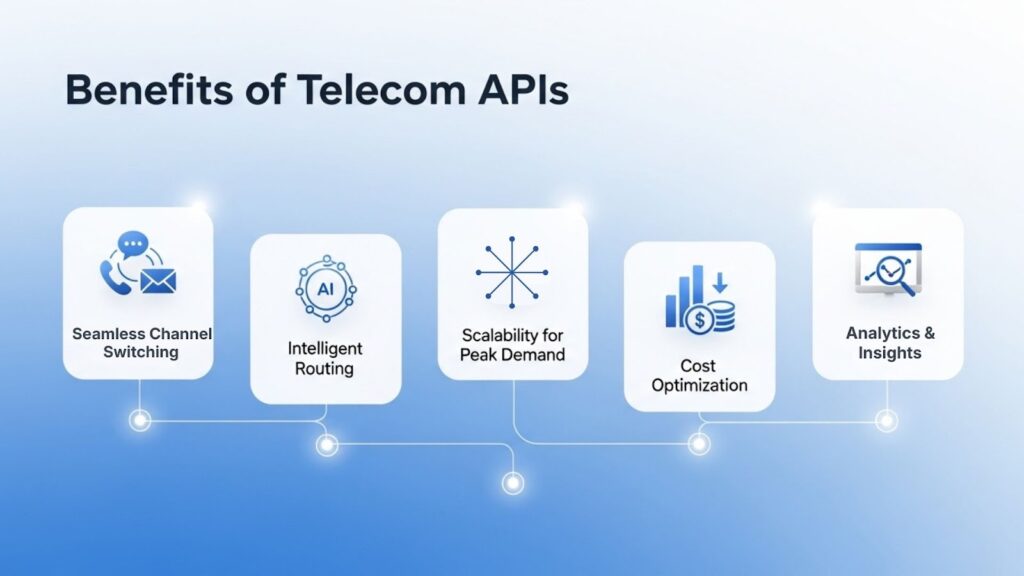
5 Game-Changing Benefits of Telecom API Integration
Integrated platforms deliver measurable business advantages that transform how organizations approach customer engagement. Understanding these core advantages helps resellers position omnichannel API solutions as strategic investments rather than mere technology upgrades.
1. Seamless Channel Switching Without Context Loss
The advantage that stands out the most is eliminating the dreaded “start over” experience. When customers can move from chat to voice to email while maintaining their conversation history, support resolution times dramatically decrease. Advanced APIs automatically sync customer data within a CRM or database, interaction history, and current issue status across all channels, ensuring that every touchpoint feels like a continuation rather than a new beginning.
2. Intelligent Routing Based on Customer Intent and History
Modern voice+chat integration uses AI-powered analytics to route customers to the most appropriate channel and agent based on their specific needs, previous interactions, and current context. Technical issues automatically route to technical specialists, billing questions reach the finance team, and high-value customers connect with senior representatives. The result is faster resolution and more personalized service delivery.
3. Real-Time Scalability for Peak Demand Management
Modern contact center solutions excel at managing traffic spikes and varying demand patterns across multiple channels. During high-volume periods, the system can automatically distribute load between voice, chat, and self-service options, preventing bottlenecks and maintaining service quality. This flexibility is particularly valuable for businesses with seasonal peaks or unexpected demand surges.
4. Cost Optimization Through Prioritization
Smart omnichannel systems identify inquiries that can be resolved through self-service or automated responses, redirecting them away from more expensive channels like voice support. By analyzing customer intent and inquiry complexity, the platform maximizes resolution efficiency while minimizing operational costs. Successful implementations can reduce support expenses while maintaining satisfaction levels.
5. Enhanced Analytics and Customer Insights
Unified platforms generate comprehensive data across all customer touchpoints, providing insights that single-channel systems can’t deliver. Businesses gain visibility into customer journey patterns, channel preferences, resolution effectiveness, and satisfaction drivers. This data is invaluable for optimizing service delivery and identifying opportunities for proactive engagement.
How Voice+Chat Integration Is a Game-Changing Combination
Combining voice and chat capabilities are a major boost in customer communications. This integration creates dynamic, adaptive conversations that leverage the strengths of each communication method.

Voice communication is great for handling complex, emotional, or nuanced discussions where tone and immediate interaction matter most. Chat platforms shine for quick questions, document sharing, and situations where customers prefer written records. Voice+chat integration allows conversations to flow naturally between these modalities based on context and customer preference.
Real-time AI now supports features like live transcription, sentiment analysis, and automatic escalation triggers. When a chat conversation becomes complex or emotional, the system can seamlessly transition to voice while maintaining full context. Conversely, voice calls can smoothly move to chat for sharing links, documents, or detailed follow-up information.
The technical implementation will sometimes rely on WebRTC standards and cloud-based processing that ensures high-quality audio and reliable connections across all devices. Modern platforms support browser-based calling, mobile app integration, and traditional phone connectivity through a single API endpoint, eliminating the technical barriers that previously made omnichannel communication challenging.
For resellers, voice+chat integration is a powerful differentiation opportunity. Clients implementing unified platforms typically experience improvements in customer satisfaction scores and reductions in average handling times across all channels.
Real-World Applications Transforming Industries
The practical applications of omnichannel API technology span across industries, but several use cases demonstrate particularly compelling value propositions for resellers and their clients.

Healthcare providers leverage voice+chat integration to create secure patient communication channels that comply with HIPAA requirements while providing flexible engagement options. Patients can start appointment scheduling through chat, escalate to voice for complex discussions with nurses, and receive follow-up care instructions via SMS, all while maintaining complete medical record integration.
Financial services companies use omnichannel platforms to provide secure, authenticated communications across channels. Customers can begin account inquiries through mobile chat, authenticate through voice biometrics, and complete transactions with context preserved throughout the entire interaction. This approach reduces fraud risk while improving customer convenience.
E-commerce businesses implement these platforms to create shopping experiences that seamlessly blend browsing, consultation, and purchase completion across multiple touchpoints. Customers can research products online, chat with sales representatives for detailed questions, escalate to voice for complex customization discussions, and complete purchases through their preferred channel.
The key to success is choosing telecom API platforms that provide robust security, compliance features, and integration capabilities. Companies that prioritize these technical requirements while focusing on user experience achieve the highest improvements in customer engagement metrics.
How Resellers Implement API Strategies
Rolling out an omnichannel solution takes purposeful planning and the right execution strategy. Resellers who see the best results account for both the technical setup and the business needs behind it.

Assessment and Planning Phase
Begin every implementation with a comprehensive analysis of your client’s current communication infrastructure, customer journey mapping, and business objectives. Understanding existing pain points, channel usage patterns, and technical constraints informs strategic decisions about feature prioritization and integration. Include stakeholder interviews, customer feedback, and technical architecture review.
Pilot Program Development
Rather than attempting full-scale deployment immediately, implement pilot programs that demonstrate value while managing risk. Focus on specific use cases or customer segments that show clear ROI and provide learning opportunities. Successful pilot programs typically target high-impact scenarios like technical support escalation or sales consultation workflows.
Integration and Testing
Technical implementation requires careful attention to API documentation standards, security protocols, and performance optimization. Ensure that authentication systems, data encryption, and compliance requirements are properly configured before enabling customer-facing features. Comprehensive testing should include load testing, failover scenarios, and user acceptance validation across all supported channels.
Training and Change Management
The human element often determines success more than technical factors. Develop comprehensive training programs for customer service representatives, sales teams, and management personnel who will interact with the new omnichannel capabilities. Focus on practical scenarios and provide ongoing support during the transition period.
Performance Monitoring and Optimization
Deploy robust analytics and monitoring systems that track key performance indicators across all channels. Monitor metrics like first-call resolution rates, customer satisfaction scores, channel utilization patterns, and operational costs. Use this data to continuously optimize routing logic, staffing models, and customer experience design.
What Is the Future of Telecom APIs in Customer Experiences?
The evolution of telecom API technology is driven by advances in artificial intelligence, 5G networks, and emerging communication channels. Understanding these trends helps resellers position their clients for long-term success.
Artificial Intelligence Integration
AI-powered features are becoming standard components of omnichannel platforms. Natural language processing enables more sophisticated chat interactions, while machine learning algorithms optimize routing decisions based on historical data and real-time context. Advanced voice API implementations now support accurate transcription, sentiment analysis, and automated response generation across multiple languages.
The next generation of AI features will include predictive engagement capabilities that proactively reach out to customers based on behavioral patterns, automated quality assurance monitoring that identifies training opportunities, and dynamic personalization that adapts communication styles to individual customer preferences.
Emerging Channel Integration
Social messaging platforms, video calling, and augmented reality are becoming important customer touchpoints that require integration with traditional voice and chat channels. Future API platforms will need to support seamless transitions between these emerging channels while maintaining security, compliance, and quality standards.
5G Network Capabilities
The widespread deployment of 5G networks enables new possibilities for real-time, high-bandwidth customer communications. Ultra-low latency connections support more sophisticated voice processing, high-quality video interactions, and immersive customer service experiences that weren’t previously possible with legacy network infrastructure.
Privacy and Compliance Evolution
Increasing privacy regulations and customer expectations around data protection are driving enhanced security features. Future implementations will need to support advanced encryption, zero-trust security models, and comprehensive audit trails while maintaining the seamless user experiences that drive customer satisfaction.
Frequently Asked Questions
What’s the difference between traditional phone systems and telecom APIs for omnichannel experiences?
Traditional phone systems operate as isolated channels with limited integration capabilities, while telecom APIs create unified platforms that connect voice, chat, SMS, and other channels through a single interface. APIs enable context preservation and connect phone systems to customer information located in 3rd party CRMs or databases.
How do telecom APIs handle security and compliance requirements?
Modern API platforms include enterprise-grade security features like end-to-end encryption, secure authentication protocols, and comprehensive audit logging. They support compliance requirements for industries like healthcare (HIPAA), finance (PCI DSS), and others through built-in security controls and monitoring capabilities.
How quickly can omnichannel API systems be deployed?
Implementation timelines vary based on complexity and integration requirements. Basic omnichannel API capabilities can often be deployed relatively quickly, while advanced features and custom integrations may require several months of development and optimization, depending on the existing infrastructure and business needs.
Revolutionize Your Clients’ Customer Experience
The transformation toward omnichannel customer experience through API integration creates new value through customer relationships. Companies that embrace unified communications position themselves to meet evolving customer expectations while building operational efficiencies that drive sustainable growth.
The businesses that will thrive in the next decade understand that customer experience is the ultimate differentiator. By leveraging comprehensive API platforms to create seamless, intelligent, and personalized communication experiences, they transform routine customer interactions into opportunities for loyalty, growth, and competitive advantage.
SkySwitch provides the white-label platform and expertise you need to deliver next-generation omnichannel capabilities that drive real business results. Get started today with cutting-edge telecom API solutions.

Jessica is a marketing and sales strategist with deep expertise in VoIP telecommunications. As a Marketing Director, she specializes in channel marketing, account management, and product marketing within the communications industry. Jessica is passionate about helping partners grow through compelling messaging and hands-on support.