
Top Billing Automation Tools for MSPs
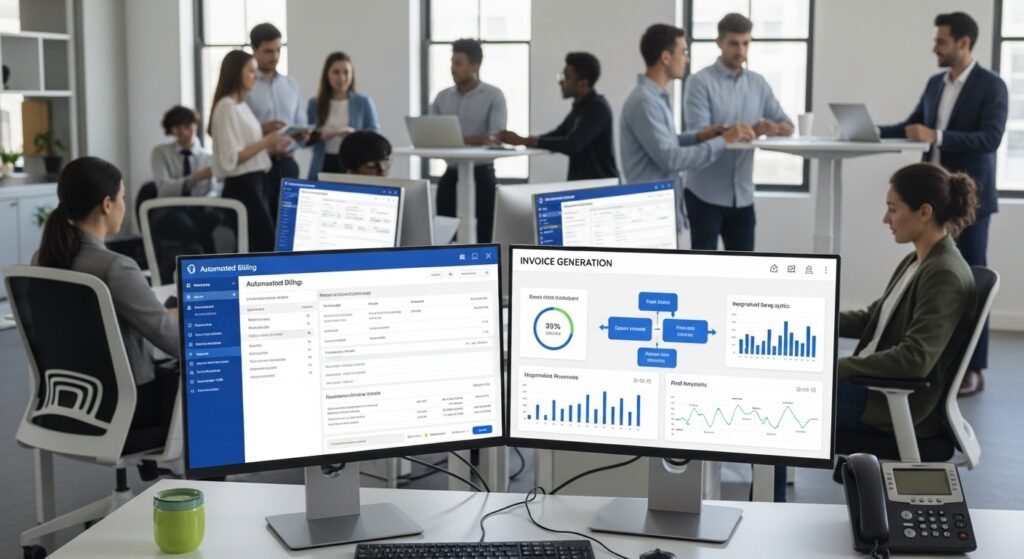
Billing automation for MSPs transforms manual invoicing into streamlined revenue generation, with some MSPs reducing monthly billing time from hours to minutes.
- Modern white-label UCaaS platforms include integrated billing automation that handles recurring services, usage-based charges, and reseller invoicing.
- Automated billing systems reduce operational costs and help prevent monthly revenue loss caused by inefficient payment processing.
Choose platforms with built-in billing capabilities, PSA integrations, and compliance features that scale with your business growth.
The managed service provider industry continues expanding, with the global market valued at $390.21 billion in 2025 and expected to reach over $642.57 billion by 2030. Yet many MSPs still wrestle with manual billing processes that drain resources and create revenue leaks. More than a quarter of companies lose 6–10% of monthly revenue due to inefficient payment processing, making billing automation for MSPs essential for sustained growth.
MSPs manage complex billing scenarios involving multiple service tiers, usage-based pricing, and diverse client agreements. Manual processes can’t keep pace with this complexity while maintaining accuracy and efficiency. Automated billing systems are the solution, transforming how service providers manage their financial operations and scale their businesses profitably.
What Is Billing Automation for MSPs?
Billing automation for MSPs is a no-brainer when you consider integrated software capabilities that streamline the entire billing lifecycle, from service tracking and invoice generation to payment processing and revenue recognition. When billing processes are connected with your unified communications platform and business management tools, you can automatically capture financial activities, apply pricing rules, and generate accurate invoices without manual intervention.
Modern automated billing systems handle recurring revenue management, subscription billing, usage-based charges, and compliance billing to meet regulatory requirements. When integrated directly with white-label UCaaS platforms, they enable MSPs to bill for voice services, collaboration tools, and additional communications features under their own brand.
Upgrading from manual tasks to automation impacts every aspect of revenue management. Service delivery data automatically flows into billing systems, pricing rules consistently apply across all clients, and invoices promptly reach customers with minimal human oversight. Automation eliminates the traditional bottlenecks that slow cash flow and create administrative burden for growing MSPs.
Why MSPs Need Automated Billing Systems
Manual billing processes create challenges that compound as MSPs scale their operations. Administrative teams spend countless hours reconciling service delivery with billing records, often discovering discrepancies that require time-consuming corrections. These inefficiencies directly impact profitability and customer satisfaction, particularly when managing multiple service lines.

Automation can reduce annual operational costs for MSPs by 25% while improving service delivery and margins. Some MSPs report that billing automation has cut their monthly invoicing time from several hours to just minutes. Those time savings allow technical teams to stay focused on service delivery instead of getting bogged down in administrative work that doesn’t drive revenue.
Cash flow benefits emerge immediately with automated billing systems. Invoices are automatically generated based on service delivery, ensuring that no billable activities slip through the cracks. Payment reminders are automatically sent, reducing collection times and improving working capital. Real-time reporting provides visibility into revenue trends and payment patterns that lead to better financial planning and business decisions.
Scalability naturally follows when billing processes operate independently of manual intervention. MSPs can add clients and expand service offerings without proportionally increasing administrative overhead. The systems adapt to complex pricing models, handle multiple billing frequencies, and accommodate custom arrangements without requiring additional staff resources or creating bottlenecks.
Essential Features MSPs Need in Billing Automation
Knowing which billing automation features matter most helps MSPs compare platforms confidently and choose a solution that supports their day-to-day operations and long-term growth.
Integrated White-Label UCaaS Billing
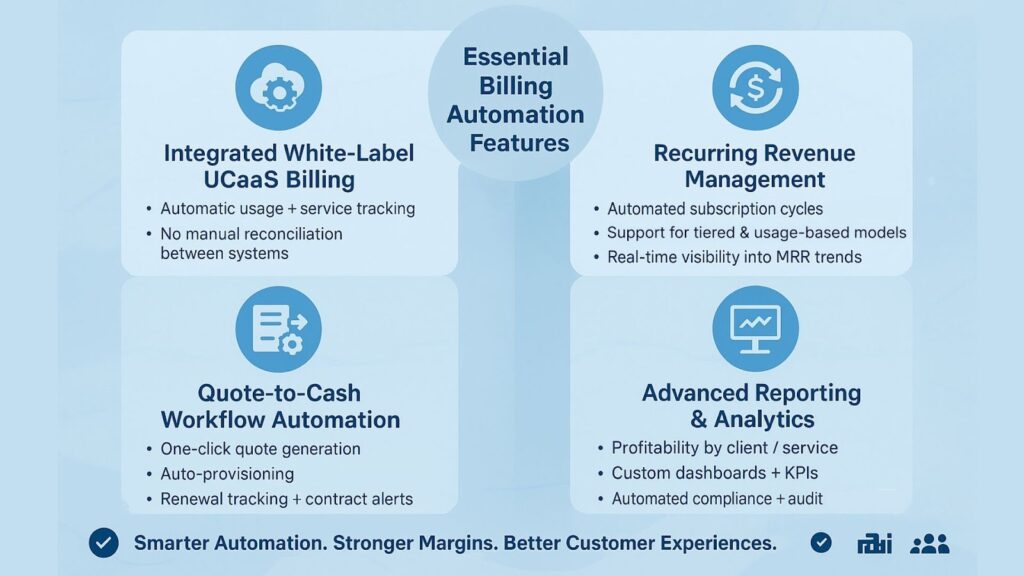
The most efficient billing automation comes integrated directly with white-label UCaaS platforms rather than as separate systems. Integrated solutions automatically track voice usage, collaboration tool utilization, and additional services without manual data entry or reconciliation between multiple systems.
This integration ensures that MSPs can bill accurately for all communications services delivered under their brand. Usage data flows seamlessly from the underlying platform into billing calculations, supporting both flat-rate and consumption-based pricing models. The unified approach eliminates data silos while reducing the complexity of managing multiple vendor relationships.
White-label billing allows MSPs to maintain their brand identity throughout the customer experience. Invoices, payment portals, and customer communications reflect the MSP’s branding rather than the underlying platform provider, strengthening customer relationships and brand recognition.
Recurring Revenue Management
Subscription billing capabilities must handle various frequencies, proration scenarios, and service modifications. Automated recurring invoicing ensures consistent cash flow while reducing administrative burden. Advanced platforms automatically manage subscription upgrades, downgrades, and mid-cycle changes without requiring manual intervention.
Revenue recognition capabilities are vital for accurate financial reporting and business planning. The system should handle different revenue models and integrate with accounting systems to ensure compliance with relevant standards. This automation provides real-time visibility into monthly recurring revenue trends and growth patterns.
The best platforms also support complex pricing structures, including tiered services, volume discounts, and custom arrangements for enterprise clients. This flexibility allows MSPs to compete effectively across different market segments while maintaining billing accuracy and efficiency.
Quote-to-Cash Workflow Automation
Automated quoting tools allow MSPs to quickly generate accurate proposals, incorporating current pricing, available services, and custom configurations without manual calculations or pricing errors.
Once quotes are accepted, the system should automatically provision services, create billing records, and initiate recurring billing cycles. This seamless workflow reduces time-to-revenue while ensuring accuracy in service delivery and billing alignment. Integration with customer onboarding processes further streamlines operations.
Contract management capabilities automatically track service level agreements, billing terms, and renewal dates. Automated notifications ensure MSPs never miss renewal opportunities while providing visibility into contract performance and profitability across their client base.
Advanced Reporting and Analytics
Real-time financial reporting provides insights into business performance, cash flow trends, and profitability by client, service type, and geographic region. Advanced analytics help MSPs identify opportunities for growth, optimize pricing strategies, and make data-driven decisions.
Customizable dashboards display key performance indicators relevant to MSP operations, including monthly recurring revenue growth, customer acquisition costs, and service profitability. Historical trend analysis supports planning and helps MSPs understand the impact of operational changes on financial performance.
Detailed reporting also supports compliance requirements and provides audit trails for financial activities. Automated report generation and distribution ensure stakeholders receive timely information without manual effort from administrative staff.
How White-Label Platforms Transform MSP Billing
White-label UCaaS platforms with integrated billing offer unique advantages for MSPs seeking to maximize efficiency while maintaining brand identity. These comprehensive solutions eliminate the complexity of managing multiple vendor relationships while providing all necessary tools for successful reselling.

Streamlined Vendor Management
Integrated platforms consolidate billing, service delivery, customer support, and technical infrastructure under single vendor relationships. This consolidation reduces administrative overhead while ensuring consistent service quality and simplified support escalation paths. MSPs can focus on customer relationships rather than managing complex vendor ecosystems.
The unified approach also simplifies compliance management, as MSPs work with single vendors who handle regulatory requirements, security standards, and industry certifications. This support is particularly valuable for smaller MSPs that lack dedicated compliance resources but need to meet enterprise customer requirements.
Single vendor relationships also provide better negotiating power for pricing, service level agreements, and customization requirements. As MSPs grow, they can leverage their relationship history to secure better terms and access to advanced features that support continued expansion.
Branded Customer Experience
White-label billing ensures customers interact exclusively with the MSP’s brand throughout their entire experience. From initial quotes through ongoing billing and support interactions, customers see consistent branding that reinforces the MSP’s value proposition and market position.
This brand consistency builds customer loyalty and reduces the risk of customers seeking services directly from underlying providers. MSPs maintain complete ownership of customer relationships, supporting higher customer lifetime values and more predictable revenue streams.
Branded customer portals provide self-service capabilities that reduce support costs while improving customer satisfaction. Customers can view invoices, make payments, and access service information through interfaces that reflect the MSP’s brand identity rather than generic platform interfaces.
MSPs exploring reseller opportunities should understand that billing automation becomes even more critical when managing white-label UCaaS and VoIP services. The complexity of reseller invoicing requires systems that can accurately track service usage, apply appropriate markup rates, and generate branded invoices that reflect the reseller’s identity rather than the underlying provider.
Scalable Operations Model
Integrated billing automation supports rapid scaling without proportional increases in administrative staff or operational complexity. As MSPs add customers and expand service offerings, the automated systems handle increased transaction volumes while maintaining accuracy and efficiency standards.
The scalability extends to geographic expansion, with automated systems supporting multiple currencies, tax jurisdictions, and regulatory requirements without requiring separate implementations or complex customizations. MSPs can pursue opportunities across broader markets without operational constraints.
Advanced platforms also support partner and sub-reseller models, allowing successful MSPs to expand through channel partnerships while maintaining billing accuracy and brand consistency across their entire ecosystem.
Key Capabilities to Evaluate in Your Platform
Choosing the right platform means looking closely at the capabilities that actually move the needle, such as those that streamline operations, improve the customer experience, and support long-term growth. Prioritize features that solve today’s challenges while giving you room to scale and expand into new markets.
Integration and Workflow Efficiency
Seamless integration eliminates data silos and reduces manual processes that create inefficiencies and errors. Look for platforms that connect natively with popular accounting systems, CRM platforms, and business management tools without requiring complex custom development.
Workflow automation should include customer onboarding, service provisioning, and support ticket management. Integrated platforms provide better data consistency and user experiences while reducing training requirements and system management overhead.
API availability and documentation quality become important for MSPs with unique requirements or existing system investments. Robust APIs enable custom integrations and automation that can provide competitive advantages in specific market segments.
Compliance and Security Features
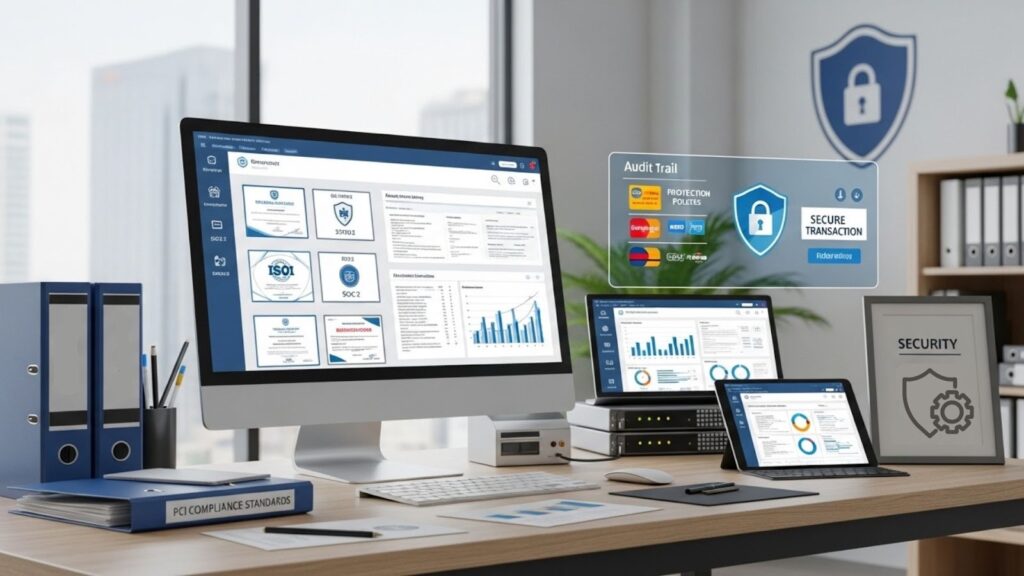
Regulatory compliance requirements vary by industry and jurisdiction but often include audit trails, data protection measures, and specific reporting capabilities. Ensure chosen platforms support relevant compliance frameworks without requiring extensive customization or additional tools.
Security features should include data encryption, secure payment processing, and regular security audits by the platform provider. These capabilities are particularly important when serving enterprise customers with strict security requirements and compliance obligations.
Compliance billing features and automated reporting reduce administrative burden while ensuring MSPs can demonstrate adherence to relevant standards. Look for platforms that automatically generate required reports and maintain the documentation needed for compliance audits.
Customer Portal and Self-Service Options
Modern customers expect self-service capabilities to view invoices, make payments, and access service information independently. Comprehensive customer portals reduce support requests while improving customer satisfaction and loyalty.
The portal should reflect the MSP’s branding, with customizable layouts, color schemes, and messaging that reinforce brand identity. White-label portals ensure customers never see references to underlying platform providers during their interactions.
Mobile accessibility is increasingly important as customers expect to manage their services from any device. Responsive portal designs and mobile-optimized payment processes improve customer satisfaction while reducing barriers to timely payments.
Frequently Asked Questions About MSP Billing Automation
How does integrated billing automation differ from standalone billing software?
Integrated billing automation connects directly with service delivery platforms, eliminating data entry and ensuring billing accuracy. Standalone systems require manual data import or complex integrations that can create delays and errors. Integrated solutions provide real-time billing capabilities and simplified operations.
What’s the typical implementation timeline for billing automation?
Implementation timeframes depend on complexity and existing system integration requirements. White-label platforms with built-in billing automation typically deploy within weeks since the billing capabilities are native to the service delivery platform. This approach eliminates complex integrations and data migration challenges.
Can automated billing handle complex reseller markup structures?
Advanced platforms support sophisticated pricing models, including tiered markups, volume discounts, and client-specific pricing arrangements. White-label UCaaS platforms often include specialized reseller billing capabilities that handle the complexity of reselling while maintaining transparency and accuracy.
How does billing automation improve cash flow?
Automated billing systems help prevent monthly revenue loss that many companies experience due to inefficient payment processing. They automatically generate invoices, send payment reminders, and provide multiple payment options that reduce collection times and improve working capital management.
Transform Your MSP Operations with Integrated Billing Solutions
Billing automation for MSPs has evolved from a luxury to a necessity as the industry continues its rapid growth and increasing complexity. The most effective solutions integrate billing capabilities directly with service delivery platforms, eliminating the challenges of managing multiple systems while ensuring accuracy and efficiency.
SkySwitch’s white-label UCaaS platform includes comprehensive billing automation tools designed specifically for reseller success, with integrated quoting, automated invoicing, and complete white-label branding capabilities. Get started today to discover how our integrated billing solutions can transform your MSP operations and drive sustainable revenue growth.

Jessica is a marketing and sales strategist with deep expertise in VoIP telecommunications. As a Marketing Director, she specializes in channel marketing, account management, and product marketing within the communications industry. Jessica is passionate about helping partners grow through compelling messaging and hands-on support.