
UCaaS Compliance Tools Every Reseller Needs in 2026
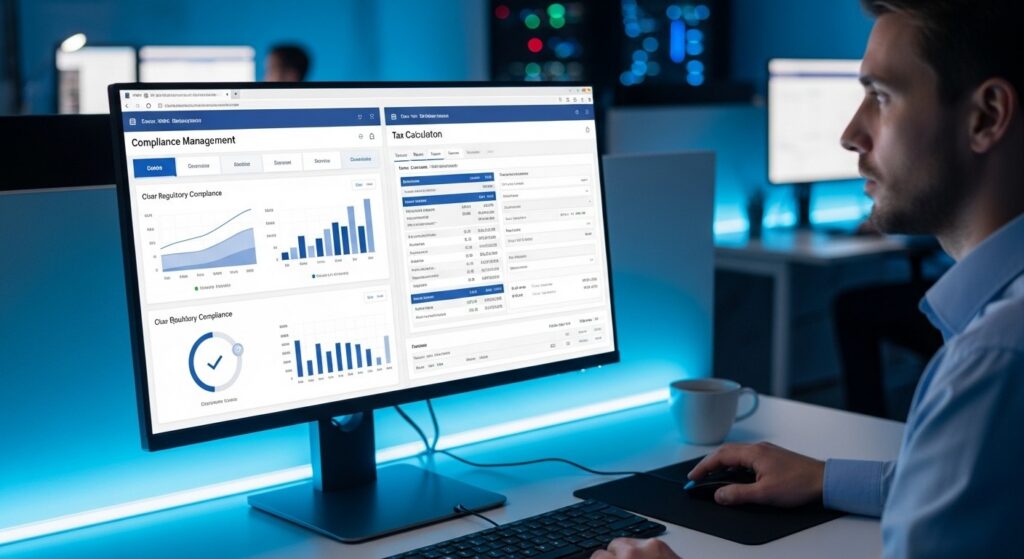
UCaaS compliance tools are essential for protecting your reseller business from costly penalties and audit risks.
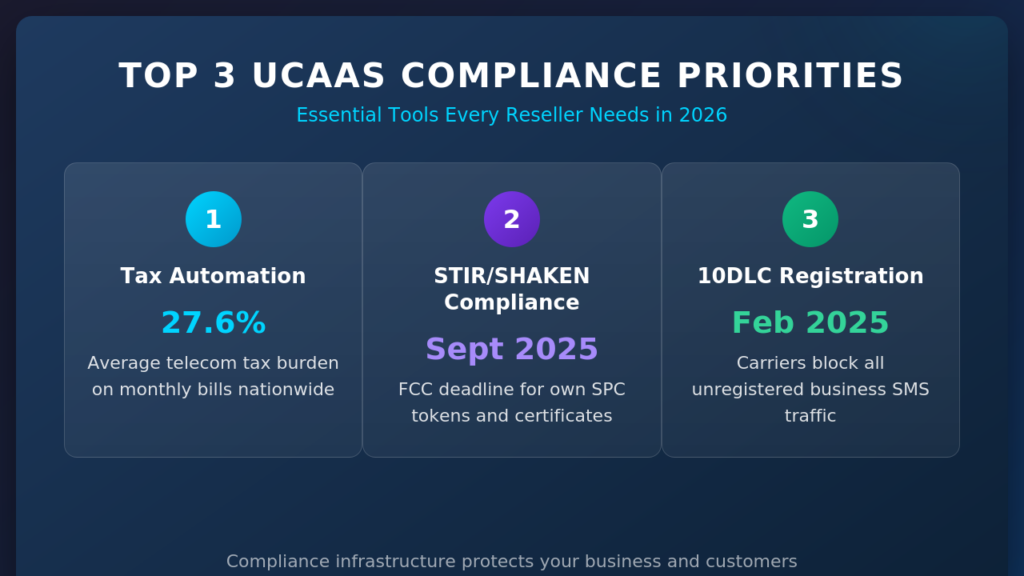
- Telecom taxes now average 27.6% of monthly bills nationwide, with some states exceeding 36%, making automated tax calculation non-negotiable for resellers.
- New FCC STIR/SHAKEN rules, effective September 2025, require voice providers to obtain their own certificates and tokens.
- 10DLC registration became mandatory in February 2025, and carriers actively blocked unregistered business SMS traffic.
Partnering with a white-label platform that handles compliance infrastructure lets you focus on sales and customer relationships instead of regulatory headaches.
Telecommunications is one of the most heavily regulated industries in the United States, and that burden falls directly on UCaaS resellers. Taxes and fees on wireless services reached 27.6% of the average monthly bill in 2025, marking another record high. For resellers trying to build profitable businesses, navigating this compliance maze without the right tools is like filing your taxes manually while everyone else uses software.
Federal regulations around call authentication are tightening. Business SMS messaging now requires formal registration with mobile carriers. States continue adding their own unique requirements and surcharges. Miss any of these obligations, and you could face penalties ranging from blocked message delivery to costly fines and audit liabilities.
The right UCaaS compliance tools can transform these challenges from overwhelming burdens into manageable backend processes. This guide breaks down the essential compliance tools every UCaaS reseller needs to protect their business and confidently serve customers in 2026.
Why Do UCaaS Compliance Tools Matter for Resellers in 2026?
Compliance for telecom resellers has grown increasingly complex over the past few years, and 2026 brings even more requirements to track. Understanding why these tools matter starts with recognizing the unique position resellers occupy in the telecommunications value chain.
The Reseller’s Regulatory Position
When you resell VoIP and UCaaS services, you inherit many of the same compliance obligations that apply to traditional telephone companies. Regulatory bodies treat your business as a telecommunications provider the moment you start billing customers for voice services. You’re responsible for collecting and remitting applicable reseller taxes, contributing to federal programs like the Universal Service Fund, and ensuring your services meet FCC requirements.
The complexity multiplies because the telecom nexus works differently than standard retail sales tax. States generally take the position that telecom providers have nexus wherever they have customers. Unlike traditional businesses that only worry about states where they have physical or economic presence above certain thresholds, a telecom reseller with customers in 30 states may need to file returns and remit taxes in all 30 states from day one.
The Cost of Getting It Wrong
Compliance failures in telecommunications can be extraordinarily expensive. Beyond the obvious risk of back taxes and interest, telecom providers face penalties for late filing, incorrect collection, and audit deficiencies. The FCC can issue enforcement actions for violations of caller ID authentication rules. Mobile carriers will block your customers’ text messages if your 10DLC registration lapses or was never completed properly.
Perhaps most damaging is the impact on customer relationships. If an audit reveals you’ve been under-collecting taxes for years, you may need to go back to customers for additional payments. Nothing erodes trust faster than unexpected bills for services already rendered. The right compliance tools help you avoid these scenarios by getting things right from the start.
What Tax Automation Tools Should UCaaS Resellers Use?
Tax automation is the foundation of any serious compliance strategy for UCaaS resellers. Manual tax calculation isn’t viable when you’re dealing with the complexity of telecom taxation.
Understanding the Telecom Tax Burden
Telecom services carry tax burdens roughly double what applies to general retail goods. A typical VoIP customer’s bill might include federal excise tax, state sales or communications services tax, local utility taxes, E911 fees, state universal service fund contributions, and various regulatory surcharges. In high-tax states like Illinois, Washington, and Nebraska, the combined burden can exceed 35% of the service charge.

The Federal Universal Service Fund contribution factor alone has reached historic levels. For Q1 2025, the contribution factorhit 36.3% of assessable interstate revenues, a record high according to the FCC. If your customer pays $100 for interstate services, you may owe more than $36 to the USF. These rates change quarterly, requiring constant monitoring and adjustment.
Tax Calculation Software Options
Several established platforms specialize in telecommunications tax compliance. CCH SureTax from Wolters Kluwer has been the industry leader for over a decade, offering comprehensive rate databases that are updated constantly as jurisdictions change their rules. Avalara provides communications-specific tax calculation that integrates with many billing systems. CereTax is a newer entrant gaining traction with its API-first approach that works particularly well with modern cloud billing platforms.
These platforms handle the heavy lifting of determining which taxes apply to each transaction based on the service type, the customer’s location, and the specific features being billed. They maintain databases covering thousands of tax jurisdictions, so you don’t need to manually research rate changes in every county where you have customers.
Integration with Billing Systems
Tax calculation software delivers the most value when tightly integrated with your billing platform. Look for solutions that can:
- Pull customer service addresses and validate them against standardized databases
- Apply the correct taxes in real time as invoices are generated
- Handle the nuances of bundled services where different components may have different tax treatments
- Generate the data exports needed for filing returns with various state and local authorities
The best white-label UCaaS platforms offer billing platform integrations or built-in tax calculation capabilities that handle these requirements for their reseller partners. This approach means you don’t need to become a tax expert or invest in standalone software. Your provider handles the compliance infrastructure, and you focus on growing your customer base.
How Can Resellers Stay Compliant with FCC Regulations?
UCaaS resellers face a growing list of FCC regulatory requirements. These rules aim to combat robocalls, protect emergency services, and ensure network reliability, but they create compliance obligations that resellers must address.
STIR/SHAKEN Call Authentication
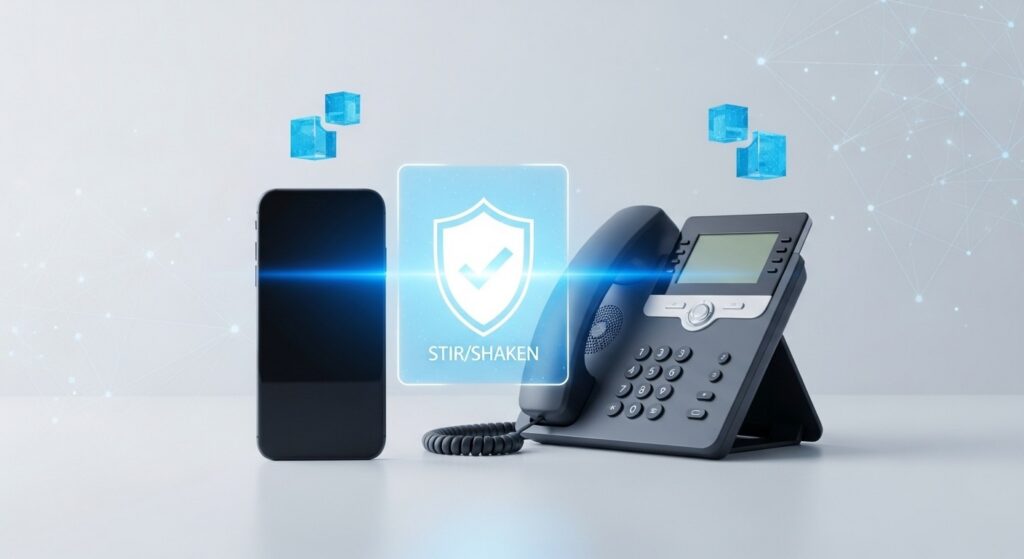
The FCC’s STIR/SHAKEN framework requires voice providers to authenticate the caller ID information transmitted with calls. The goal is to reduce spoofed calls by verifying that callers have the right to use the phone numbers displayed on recipients’ caller ID.
New rules that took effect September 18, 2025 changed how providers can comply. Voice service providers must now obtain their own Service Provider Code tokens from the STIR/SHAKEN Policy Administrator and use their own certificates obtained from a Certificate Authority. Providers can still work with third parties to perform the technical signing of calls, but they must make all attestation decisions themselves and ensure calls are signed with their own certificates.
For UCaaS resellers, your upstream provider handles the technical implementation. However, you need to verify that your provider maintains proper compliance and that your services are authenticated. Calls without proper authentication may be flagged as potential spam by receiving carriers, damaging your customers’ ability to reach their contacts.
Robocall Mitigation Database Requirements
All voice service providers must file certifications in the FCC’s Robocall Mitigation Database confirming their compliance with caller ID authentication or robocall mitigation requirements. These certifications must be updated as circumstances change, and the FCC actively monitors the database for compliance.
If your provider handles your voice infrastructure, they should maintain proper database entries that cover your services. Verify these details with your partner and understand how their compliance status affects your ability to originate calls onto the public network.
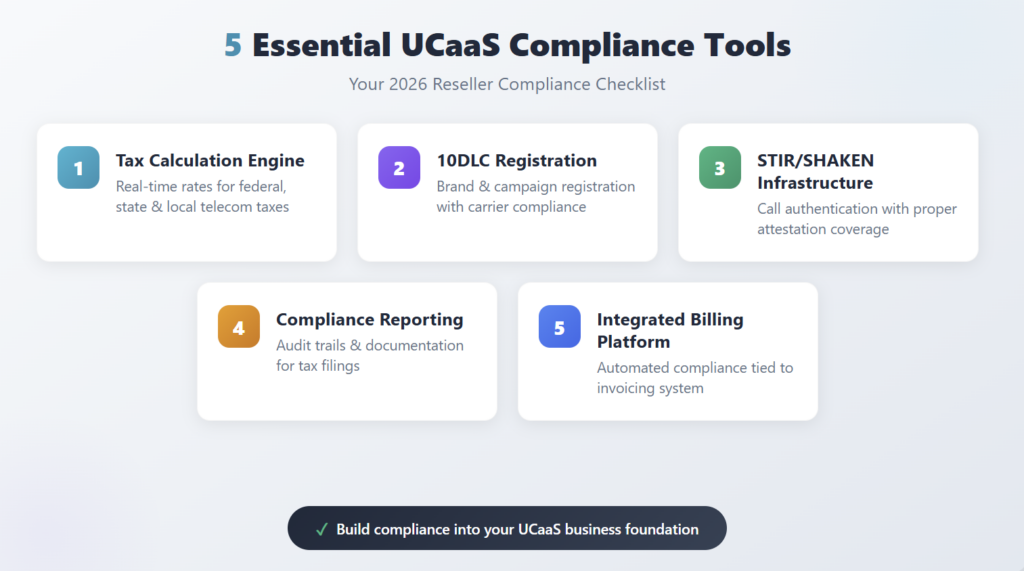
6 Essential UCaaS Compliance Tools Every Reseller Needs
Building a compliant UCaaS reseller business requires the right toolkit. Here are the essential capabilities you need, whether you build them yourself or partner with a platform that provides them:
- Automated Tax Calculation Engine: A solution that maintains current rates for federal, state, and local telecommunications taxes, calculates applicable charges in real time, and handles the nuances of service-specific tax treatments.
- 10DLC Registration and Management: Register your business and messaging campaigns with The Campaign Registry, track approval status, and ensure ongoing compliance with carrier requirements for business SMS.
- STIR/SHAKEN Compliance: Either your own implementation or verification that your provider properly authenticates calls on your behalf with full attestation coverage.
- Compliance Reporting and Documentation: Systems that generate the data needed for tax return filing, maintain audit trails, and provide documentation of regulatory compliance for review.
- Automated Billing with Compliance: A billing platform that ties all compliance elements together, ensuring proper charges appear on customer invoices and creating the records needed for filing and remittance.
What Are the Biggest VoIP Compliance Challenges for Resellers?
Even with the right tools in place, UCaaS resellers face ongoing compliance challenges that require attention and management.
Multi-State Filing Complexity
Telecommunications tax filing isn’t a matter of submitting one return per state. Many states have separate local tax jurisdictions, each requiring its own filings. States like California, Texas, and Illinois have dozens of local tax jurisdictions, each potentially requiring separate filings depending on where your customers are located. Some jurisdictions want monthly filings, others quarterly, and deadlines rarely align conveniently.
This filing burden leads many resellers to either outsource compliance entirely or partner with platforms that handle these obligations. The economics simply don’t work for most small to mid-size resellers to maintain in-house compliance teams capable of managing hundreds of returns across dozens of jurisdictions.
Keeping Up with Regulatory Changes
Telecom regulations change constantly. The USF contribution factor adjusts quarterly. States modify their tax rates and add new surcharges. The FCC issues new rules and deadlines. Carriers update their messaging requirements.
Staying current requires dedicated attention or robust partnerships with providers who monitor these changes. Missing a regulatory change can mean months of incorrect billing before discovery, creating liability exposure that could have been avoided with proper monitoring.
SMS and Messaging Compliance
Business SMS messaging has become heavily regulated over the past few years. 10DLC registration is now mandatory for all A2P messaging from 10-digit phone numbers in the United States. Carriers began blocking unregistered traffic in February 2025, and enforcement continues to tighten.
TCPA compliance requires documented consent for marketing messages, clear opt-out mechanisms, and adherence to quiet hours and content restrictions. Your UCaaS platform should provide 10DLC-compliant messaging capabilities and help you understand the consent and content rules that apply to business SMS.
Frequently Asked Questions About UCaaS Compliance Tools
What happens if a UCaaS reseller fails to comply with tax regulations?
Non-compliance with telecom tax regulations can result in back tax assessments, interest charges, and penalties from multiple jurisdictions. States conduct audits that can go back several years, and telecom providers are frequent targets due to the industry’s complexity and high tax rates. Beyond financial penalties, audit findings may require you to collect additional amounts from past customers, damaging relationships and reputation. The cumulative cost of a multi-state audit can easily exceed the cost of proper compliance systems many times over.
How does 10DLC registration work for UCaaS resellers?
10DLC registration involves two steps: brand registration and campaign registration. Brand registration verifies your business identity by submitting your legal name, EIN, address, and contact information to The Campaign Registry. Campaign registration then defines each messaging use case, including sample messages and how recipients opted in to receive your texts. Approval timelines vary from a few days to several weeks, depending on the complexity of your use case and the accuracy of submitted information.
Do white-label UCaaS platforms handle compliance for their resellers?
The best white-label platforms handle significant portions of compliance infrastructure for their resellers. This typically includes STIR/SHAKEN implementation on the voice network, 10DLC registration support, and integration with tax calculation or billing systems that automate tax collection. However, resellers retain responsibility for proper configuration, maintaining accurate customer information, and filing their own tax returns or engaging services to do so. The key is understanding exactly what your platform provides and what remains your responsibility.
What should resellers look for in a UCaaS compliance solution?
Prioritize solutions that integrate compliance into normal business operations rather than treating it as a separate burden. Look for platforms offering automated tax calculation with real-time rate updates, STIR/SHAKEN authentication on all voice traffic, 10DLC registration capabilities for business SMS, and reporting tools that simplify tax return preparation. Choose a partner whose compliance infrastructure makes regulatory obligations manageable rather than overwhelming.
Build Your UCaaS Business on a Foundation of Compliance
Compliance isn’t the most exciting aspect of building a UCaaS reseller business, but it’s absolutely essential. The regulations governing telecommunications services protect consumers, support critical infrastructure, and ensure network reliability. As a reseller, you’re part of that ecosystem and share responsibility for meeting these obligations.
You don’t have to figure it all out alone. The right white-label UCaaS provider builds compliance infrastructure into their platform, handling the technical complexity so you can focus on sales, customer service, and growing your business. From tax calculation to STIR/SHAKEN authentication and 10DLC registration, platform-level solutions make compliance manageable instead of overwhelming.
SkySwitch provides resellers with comprehensive compliance support, including integrated billing with tax automation capabilities, HIPAA-compliant communications, 10DLC-ready business SMS, and STIR/SHAKEN support. Get started today to see how SkySwitch makes UCaaS compliance a competitive advantage instead of a burden.

Jessica is a marketing and sales strategist with deep expertise in VoIP telecommunications. As a Marketing Director, she specializes in channel marketing, account management, and product marketing within the communications industry. Jessica is passionate about helping partners grow through compelling messaging and hands-on support.