
UCaaS Explained: What MSPs Need to Know in 2025

UCaaS platforms integrate voice, video, messaging, and collaboration tools in a single cloud solution, creating massive opportunities for MSPs in 2025.
- White-label UCaaS offers MSPs high profit margins with recurring revenue streams.
- Three options (single-tenant, multi-tenant, hybrid) serve different business needs.
- AI integration and hybrid work trends are driving unprecedented UCaaS adoption.
- MSPs can launch UCaaS services in 90 days with the right platform partner.
With hybrid work models becoming permanent for 43% of US companies and the global UCaaS market projected to reach $262.37 billion by 2030, managed service providers face an unprecedented opportunity to capture market share in unified communications.
What is a UCaaS platform, and why are companies adopting it? Modern businesses are abandoning fragmented communication tools and legacy phone systems in favor of integrated, cloud-based solutions that enable seamless collaboration across distributed teams. For MSPs, this shift is a gateway to recurring revenue streams, stronger client relationships, and competitive differentiation.
What Is a UCaaS Platform, and How Does It Transform Business Communications?
Understanding what a UCaaS platform is starts with recognizing that Unified Communications as a Service is a shift from traditional business communications infrastructure. Rather than managing separate systems for voice calls, video conferencing, instant messaging, email, and file sharing, UCaaS consolidates these functions into one unified, cloud-based interface accessible from any internet-connected device.
75% of organizations adopted unified communication platforms in 2024, driven primarily by the need for flexible, scalable solutions that support hybrid work and digital transformation initiatives. Modern UCaaS platforms deliver comprehensive communication capabilities through subscription-based models, eliminating the need for expensive on-premises hardware, complex installations, and dedicated IT staff to manage infrastructure. Organizations access their entire ecosystem through web browsers, desktop applications, and mobile apps, creating seamless connectivity regardless of location or device.
The core value proposition extends beyond simple tool consolidation. UCaaS platforms enable real-time collaboration, integrate with existing business applications, and provide advanced features like call analytics, automated attendants, and contact center capabilities that would traditionally require separate investments and vendor relationships.
Understanding UCaaS Architecture Options: Which Model Serves Your Clients Best?
UCaaS features and deployment models vary based on underlying architecture choices, and understanding these options helps MSPs recommend appropriate solutions for different client scenarios. The three primary architecture models each offer distinct advantages and serve specific business requirements.
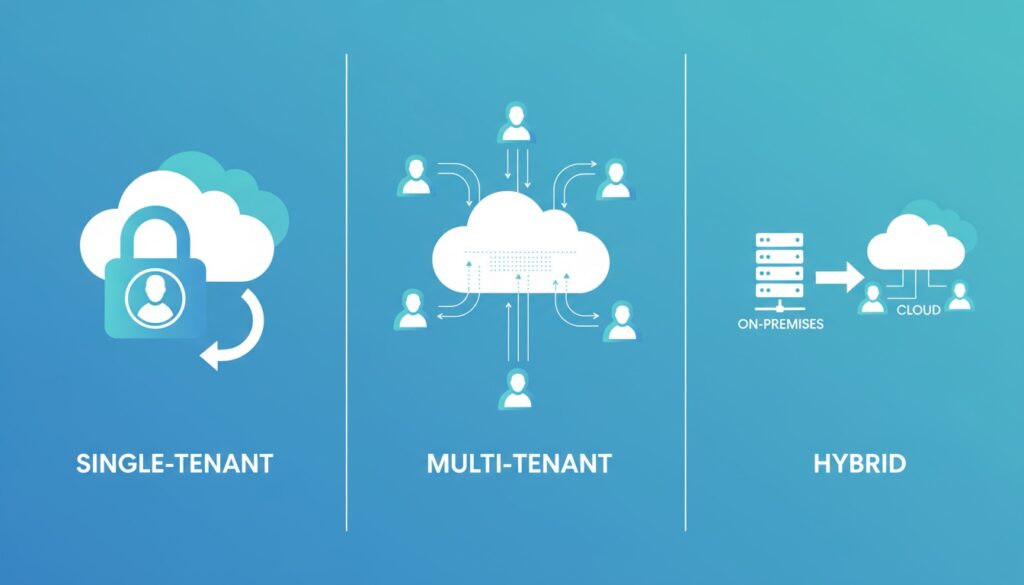
Single-Tenant Architecture
Single-tenant UCaaS architectures provide dedicated software instances for individual organizations, offering maximum customization and control. Each client operates within their own isolated environment, maintaining complete authority over data location, security policies, feature rollouts, and integrations.
This model particularly appeals to organizations in regulated industries such as healthcare, financial services, and government agencies, where data sovereignty and compliance requirements mandate strict control over information handling. Single-tenant deployments typically support extensive customization options, allowing businesses to modify workflows, interface elements, and functionality to match specific operational needs.
The trade-off involves higher costs and longer implementation timelines compared to shared infrastructure models. However, organizations prioritizing security, customization, and regulatory compliance often consider these investments essential for their communication infrastructure.
Multi-Tenant Architecture
Multi-tenant UCaaS platforms share infrastructure and software instances across multiple customers, delivering cost-effective solutions with rapid deployment capabilities. The UCaaS provider manages all platform maintenance, security updates, and feature enhancements, pushing improvements to all customers simultaneously.
This architecture model dominates the market, with public cloud deployments representing 72% of UCaaS implementations. Small to medium-sized businesses benefit from multi-tenant platforms because they access enterprise-grade features and reliability without requiring dedicated technical resources or substantial upfront investments.
Multi-tenant environments offer excellent scalability, allowing organizations to add users, locations, or features with minimal complexity. The shared infrastructure model enables UCaaS providers to offer competitive pricing while maintaining high service levels through economies of scale.
Hybrid UCaaS Models
Hybrid architectures combine elements of single-tenant and multi-tenant approaches, allowing organizations to maintain sensitive applications on-premises while leveraging cloud-based services for standard communication functions. This model provides flexibility for businesses with mixed security requirements or legacy systems integration needs.
Organizations often choose hybrid deployments when regulatory requirements mandate specific data handling for certain functions, while other communication tools can operate in shared environments. The approach enables gradual cloud migration strategies and accommodates complex enterprise environments with diverse technical requirements.
Hybrid models require more sophisticated planning and management but offer the flexibility to optimize security, compliance, and cost considerations across different aspects of the communication infrastructure.
Essential UCaaS Features Every MSP Should Know About
Modern UCaaS platforms encompass far more than basic voice communication, and understanding the full feature spectrum helps MSPs position comprehensive solutions that address diverse client needs. The most successful MSP voice platform deployments leverage integrated capabilities that transform business operations beyond simple phone system replacement.

Voice over IP (VoIP) is the foundation, delivering crystal-clear voice communication through internet connections rather than traditional phone lines. Advanced telephony features include automated attendants, call routing, voicemail transcription, call recording, and sophisticated call analytics that provide insights into communication patterns and system utilization.
Video conferencing capabilities have evolved from basic meeting support to comprehensive collaboration platforms. UCaaS solutions include screen sharing, virtual backgrounds, meeting recording, live streaming, and integration with calendar systems for seamless scheduling and participation.
Team collaboration tools within UCaaS platforms provide persistent chat channels, file sharing, project management integration, and real-time document collaboration. These features create digital workspaces that maintain continuity across different communication modalities and support asynchronous collaboration for distributed teams.
Mobile integration ensures consistent functionality across devices, allowing users to maintain professional communication capabilities whether working from headquarters, home offices, or mobile environments. Native mobile applications provide access to all platform features, including presence management, instant messaging, and full-featured calling capabilities.
Contact center functionality integrated within UCaaS platforms enables organizations to manage customer interactions across voice, email, chat, and social media channels. These omnichannel capabilities include intelligent routing, queue management, agent performance analytics, and customer interaction history tracking.
Business messaging features, including SMS and MMS capabilities, extend communication reach. Organizations can implement appointment reminders, marketing campaigns, customer notifications, and two-way messaging workflows directly within their unified communication platform.
Why MSPs Are Embracing UCaaS in 2025: Market Drivers and Revenue Opportunities
The combination of technological advancement, changing work patterns, and business modernization has created an environment where UCaaS adoption is accelerating across all business segments. Market projections show the UCaaS industry growing at a remarkable 19.8% CAGR, as organizations prioritize communication infrastructure investments.

Remote and hybrid work has altered communication requirements. Organizations need solutions that provide consistent experiences regardless of employee location, device preference, or network environment. Traditional phone systems can’t accommodate the flexibility to maintain productivity and collaboration effectiveness.
Cost optimization pressures drive many UCaaS adoption decisions. Organizations reduce capital expenditures by eliminating expensive on-premises equipment, decrease operational expenses through simplified management, and achieve better predictability through subscription-based pricing models. Small businesses report up to 55% cost savings over premises-based telephony systems.
Digital transformation initiatives include communication infrastructure modernization as a priority. Businesses recognize that outdated communication systems create bottlenecks that limit overall productivity and customer experience quality. UCaaS platforms provide the foundation for advanced capabilities like artificial intelligence, automated workflows, and data-driven insights.
For MSPs, these market dynamics translate into substantial business opportunities. White-label UCaaS partnerships typically offer high profit margins with recurring revenue models that create predictable income streams. Unlike traditional hardware sales or project-based services, UCaaS generates ongoing monthly revenue that compounds as client bases expand.
The total addressable market continues expanding as more than 56% of organizations plan to increase UCaaS spending in 2025. This growth creates opportunities for MSPs to establish market presence, build competitive differentiation, and develop expertise that drives continued business expansion.
UCaaS Platform Comparison: What MSPs Need to Evaluate
A thoughtful UCaaS comparison helps MSPs identify the best fit, aligning with their growth objectives and client requirements.
Technology Infrastructure and Reliability
Evaluate provider network architecture, particularly focusing on georedundant data centers, automated failover capabilities, and uptime guarantees. Look for providers that maintain multiple network nodes across different geographic regions to ensure service continuity and optimal performance. Review historical uptime statistics and incident response procedures to understand reliability standards.
Feature Breadth and Integration Capabilities
Assess the complete feature set, including core communication tools, advanced collaboration capabilities, contact center functionality, and business messaging options. Examine integration options with popular business applications, CRM systems, and productivity suites. Consider API availability and customization options that enable tailored solutions for specific client needs.
White-Label Capabilities and Branding Control
Investigate the extent of white-labeling support, including portal customization, billing system branding, and customer-facing interface modifications. Ensure the provider allows complete brand control without visible third-party references that could undermine client relationships or brand equity.
Support and Training Programs
Review onboarding processes, technical training availability, ongoing support structures, and escalation procedures. Look for providers that offer comprehensive partner enablement programs, including sales training, technical certification, and marketing support resources.
Pricing Models and Margin Opportunities
Analyze wholesale pricing structures, volume discounts, minimum commitments, and fee structures. Calculate potential profit margins at different customer volume levels and evaluate pricing flexibility for competitive positioning in target markets.
Geographic Coverage and Compliance
Verify service availability in target markets, including local number portability, emergency services integration, and regulatory compliance capabilities. Consider expansion possibilities if serving clients with multi-location operations.
Migration and Implementation Support
Assess tools and services available for migrating customers from existing platforms, including number porting assistance, configuration migration utilities, and project management resources.
Partner Ecosystem and Community
Evaluate the quality and engagement of the provider’s partner community, including access to peer learning opportunities, best practice sharing, and collaborative problem-solving resources.
How to Choose the Right UCaaS Platform for Your MSP Practice
Where should MSPs start?
- Begin with an assessment of your current client base, communication gaps, and market opportunities.
- Identify which customers are most likely to benefit from UCaaS (e.g., SMBs needing scalability, regulated industries needing compliance).
What criteria matter most in a UCaaS comparison?
- Technology infrastructure: Look for georedundant networks, automated failover, and proven uptime history.
- Feature breadth: Confirm that core communications, contact center, business SMS, and integrations are included.
- White-label capabilities: Ensure full brand control over portals, billing, and client interfaces.
- Support & training: Evaluate onboarding programs, technical certifications, and partner enablement.
- Pricing models: Understand wholesale rates, margins, and minimum commitments.
How should MSPs engage potential providers?
- Request demos and sandbox access to test features.
- Review technical architecture and partnership terms in detail.
- Ask about migration support, such as number porting and legacy system integration.
What about profitability and scalability?
- Map out implementation timelines. Leading platforms enable MSPs to launch in under 90 days.
- Calculate break-even points using expected client acquisition rates and recurring revenue.
- Plan phased rollouts: start with core voice and video, then expand into advanced features like contact center or AI integrations.
What metrics signal long-term success?
- Client acquisition rate
- Customer satisfaction scores (CSAT/NPS)
- Average revenue per client
- Gross profit margins
With the right evaluation framework and a thoughtful UCaaS comparison, MSPs can confidently select a platform that accelerates time to market, strengthens client relationships, and drives long-term recurring revenue.
Frequently Asked Questions
What’s the difference between UCaaS and VoIP?
VoIP (Voice over Internet Protocol) refers specifically to voice communication delivered through internet connections. UCaaS encompasses VoIP as one component within a comprehensive unified communication platform that also includes video conferencing, messaging, collaboration tools, and business applications integration. While VoIP solves telephony needs, UCaaS addresses complete communication and collaboration requirements.
How long does it take to become profitable with UCaaS?
Profitability timelines vary based on existing client relationships, pricing strategies, and implementation approaches. For MSPs already selling UCaaS or similar products who are migrating their customer base, profitability is achievable nearly immediately. For businesses new to the UCaaS industry without an existing customer base, it typically takes about six months to turn a profit.
Can MSPs white-label UCaaS solutions?
Yes, white-label UCaaS is the preferred approach for most MSPs because it enables complete brand control, customer relationship ownership, and pricing flexibility. White-label partnerships allow MSPs to deliver communication services under their own branding while leveraging provider infrastructure, maintenance, and technical support capabilities.
What size businesses are ideal UCaaS clients?
UCaaS solutions serve organizations across all size categories, but small to medium businesses with up to 250 employees often provide optimal opportunities for MSPs. These organizations typically need professional communication capabilities without requiring dedicated technical resources for system management, making managed UCaaS services particularly attractive.
Your UCaaS Opportunity Awaits
The UCaaS market presents one of the most significant growth opportunities available to MSPs, combining strong market demand, attractive financial returns, and the potential for long-term client relationships. With organizations across all industries prioritizing communication modernization, the timing has never been better to establish a UCaaS practice.
Success requires partnering with a provider that offers comprehensive technology, extensive feature sets, robust support programs, and true white-label capabilities. The right partnership enables rapid market entry, sustainable profitability, and scalable growth potential that transforms your business model.
SkySwitch delivers the complete UCaaS reseller platform MSPs need to build thriving communication practices. With georedundant infrastructure, comprehensive feature sets, extensive training programs, and proven partner success, we provide everything necessary to capitalize on this remarkable market opportunity. Get started today and discover how our white-label UCaaS platform can accelerate your business growth.

Jessica is a marketing and sales strategist with deep expertise in VoIP telecommunications. As a Marketing Director, she specializes in channel marketing, account management, and product marketing within the communications industry. Jessica is passionate about helping partners grow through compelling messaging and hands-on support.