
UCaaS vs VoIP: Choosing the Right Model for Hybrid Work

Hybrid workforces need communication solutions that go beyond basic calling, with UCaaS delivering better collaboration than standalone VoIP systems.
- UCaaS provides integrated voice, video, messaging, and collaboration tools, while VoIP focuses primarily on voice calling.
- Remote workers using UCaaS platforms report higher productivity compared to those using separate communication tools.
- Reselling UCaaS generates higher margins than traditional VoIP reselling.
- Businesses plan permanent hybrid work models, creating massive demand for unified communication solutions.
For resellers targeting hybrid workforces, UCaaS white-label platforms offer superior revenue potential and customer retention compared to standalone VoIP solutions.
The way businesses communicate has changed since remote work became mainstream. When comparing all generations, more than 50% of workers prefer a hybrid setup, creating a high demand for flexible communication solutions. This shift presents enormous opportunities for telecom resellers seeking to expand their service offerings.
Understanding the difference between UCaaS vs VoIP is crucial for making profitable decisions. While both solutions use internet connectivity to deliver communication services, they serve distinctly different purposes in the modern workplace. The choice between these technologies directly impacts your ability to effectively serve hybrid workforces and build sustainable recurring revenue streams.
How Does UCaaS vs VoIP Impact the Communication Technology Landscape?
Voice over Internet Protocol (VoIP) revolutionized business communications by replacing physical phone lines with internet-based calling. VoIP offers significant advantages over traditional telephony, including predictable monthly costs, advanced calling features, and mobility options. Users can access their business phone system from any internet-connected device, making it valuable for basic remote work scenarios. However, VoIP primarily focuses on voice communication and requires separate applications for video conferencing, messaging, and collaboration.
Unified Communications as a Service (UCaaS) is the evolution of business technology. UCaaS platforms integrate multiple communication channels, including voice calling, video conferencing, instant messaging, file sharing, and collaboration tools into a single cloud-based solution. This integration eliminates the need for separate applications and creates seamless communication experiences across all business functions.
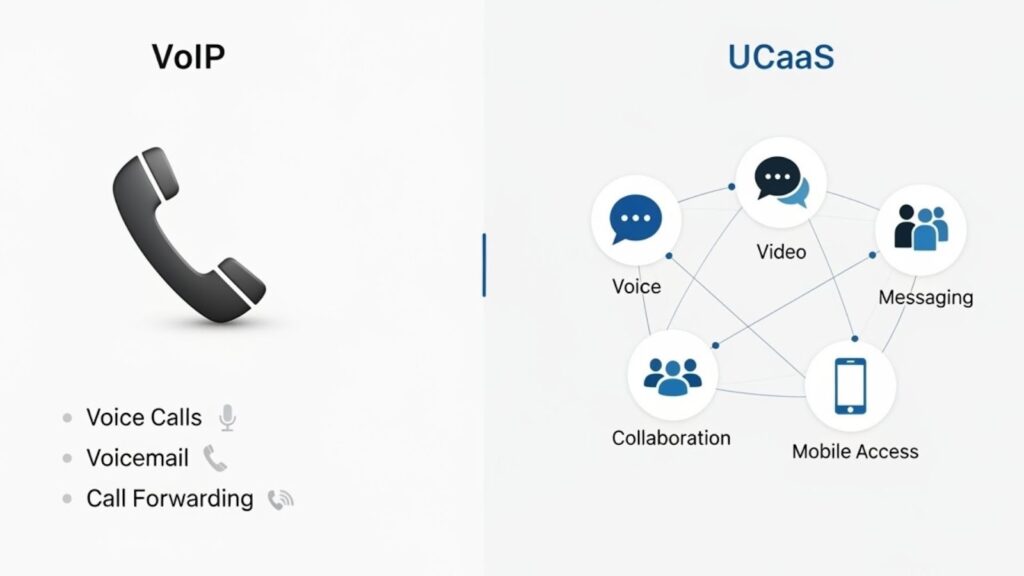
UCaaS vs VoIP differences become apparent when examining how each technology supports modern work environments. While VoIP excels at replacing traditional phone systems, UCaaS addresses the comprehensive needs of hybrid workforces by unifying all communication methods under one platform.
How Has Hybrid Work Transformed Communication Requirements?
Digital transformation has accelerated across industries, with hybrid work models becoming permanent fixtures in many organizations. Stanford research indicates that 25% of employees now work remotely full-time, with projections suggesting that this percentage will rise over the next 10 years. This distributed workforce model creates complex communication challenges that traditional systems can’t address.
Hybrid workers need seamless transitions between communication methods throughout their workday. They might start with a video meeting, continue discussions through instant messaging, share files during collaboration sessions, and conclude with voice calls to external customers. When these functions require separate applications, productivity suffers and user experience deteriorates.
Poor communication costs the economy approximately $37 billion annually, highlighting the financial impact of inefficient communication systems. Organizations using UCaaS platforms report better collaboration compared to those relying on separate communication tools, demonstrating the tangible benefits of integrated solutions.

When reselling UCaaS, these statistics highlight lucrative market opportunities. Businesses actively seek solutions that enhance remote work capabilities, improve team collaboration, and reduce the complexity of managing multiple communication vendors. The shift to hybrid work has created sustained demand for unified communication platforms that can adapt to changing workforce models.
How Do VoIP vs UCaaS Features Compare?
Understanding the feature differences between VoIP and UCaaS helps resellers position the right solution for specific customer needs:
| Core VoIP Features | Comprehensive UCaaS Features |
| Internet-based voice calling with advanced routing | All VoIP functionality plus integrated platform benefits |
| Voicemail with transcription capabilities | HD video conferencing with screen sharing |
| Call forwarding and transfer functionality | Team messaging and persistent chat history |
| Conference calling for multiple participants | File sharing and collaborative workspaces |
| Mobile apps for smartphone access | Presence indicators showing colleague availability |
| Integration with existing phone systems | Unified inbox for messages across all channels |
| Auto attendant and call queuing | CRM and business application integrations |
| Call recording and analytics | Contact center capabilities with omnichannel support |
The key difference lies in integration depth. VoIP solutions typically require third-party applications for video, messaging, and collaboration features. UCaaS platforms provide these capabilities natively, creating consistent user experiences and simplified administration.
Mobile functionality is another distinction. While VoIP offers mobile calling applications, UCaaS platforms provide comprehensive mobile experiences, including video meetings, team collaboration, and document access. This distinction is important when supporting field workers, traveling employees, and distributed teams.
Security and compliance features also differ. UCaaS platforms typically include enterprise-grade security measures, data encryption, and compliance certifications. VoIP solutions may require additional security tools to meet comprehensive business needs.
When Should Hybrid Businesses Choose Each Solution?
Successful resellers understand that solution selection depends on specific customer requirements and business objectives. The UCaaS vs VoIP decision should align with client needs, growth plans, and technology preferences.
| VoIP Makes Sense When… | UCaaS Delivers Superior Value When… |
| Primary need focuses on voice communication replacement | Supporting remote or hybrid work telecom models |
| Budget constraints require minimal upfront investment | Teams require frequent video meetings and collaboration |
| Existing collaboration tools meet current needs | Organizations want to consolidate communication vendors |
| Simple implementation takes priority over feature depth | Customer experience improvements drive business goals |
| Small teams with basic communication needs | Scalability and future growth are priorities |
| Legacy system integration requires a gradual migration | Integration with business applications adds value |
For VoIP reseller white-label opportunities, understanding these distinctions helps identify the most profitable customer segments. While VoIP serves specific market niches, UCaaS platforms typically generate higher margins and longer customer relationships due to their comprehensive nature.
Market trends strongly favor UCaaS adoption. Businesses with comprehensive communication requirements often prefer unified platforms over separate tools. This preference creates sustainable advantages for resellers offering UCaaS solutions.
What Is the Business Impact for Technology Resellers?
The reselling UCaaS market offers compelling financial opportunities compared to traditional VoIP partnerships.
Recurring revenue models favor UCaaS solutions due to higher per-user pricing and lower customer churn rates. Organizations investing in comprehensive platforms tend to maintain longer relationships with providers, creating predictable revenue streams that improve business valuation and cash flow management.
Customer acquisition costs also differ between VoIP and UCaaS sales cycles. While VoIP purchases often focus on price comparisons, UCaaS evaluations emphasize value delivery, integration capabilities, and long-term business impact. This dynamic enables resellers to build consultative relationships that support premium pricing and comprehensive service offerings.
The hybrid work telecom market continues to expand. Industry projections show UCaaS market growth reaching $172.69 billion by 2030, representing a compound annual growth rate of 15.18%. This sustained growth creates consistent opportunities for resellers who position themselves in the unified communications space.

Professional services opportunities also increase with UCaaS implementations. Unlike basic VoIP deployments, UCaaS platforms often require integration planning, user training, and ongoing optimization services. These additional revenue streams strengthen customer relationships while increasing total project value.
What Are the Differences in Implementation and Support?
Comparing UCaaS vs VoIP implementations requires different support approaches and technical expertise. VoIP deployments typically focus on voice quality optimization, network configuration, and basic user training. UCaaS implementations involve broader considerations, including collaboration workflow design, application integrations, and comprehensive user adoption strategies.
For resellers, this distinction impacts resource requirements and support capabilities. VoIP support primarily addresses voice-related issues and basic connectivity problems. UCaaS support encompasses video conferencing troubleshooting, collaboration platform management, and integration maintenance across multiple business applications.
Choosing the right white-label platform is vital for resellers without extensive technical resources. Leading providers offer comprehensive support, including technical training, implementation assistance, and ongoing customer support services. Resellers can deliver enterprise-grade solutions without building internal expertise for every technical component.
Customer training requirements also differ. VoIP users typically need basic calling instructions and mobile app setup guidance. UCaaS users require comprehensive training covering video meetings, team collaboration, file sharing, and integration workflows. Successful resellers develop training programs that maximize user adoption and platform utilization.
Network requirements are another consideration. While VoIP demands sufficient bandwidth for voice traffic, UCaaS platforms require additional capacity for video, file sharing, and collaboration. Resellers must assess customer network infrastructure and recommend upgrades when necessary to ensure optimal performance.
Frequently Asked Questions
What’s the main difference between VoIP and UCaaS for hybrid work environments?
VoIP provides internet-based voice calling with basic mobility features, while UCaaS integrates voice, video, messaging, and collaboration tools into a unified platform. For hybrid work, UCaaS offers seamless transitions between communication methods and consistent experiences across devices and locations.
Can businesses start with VoIP and upgrade to UCaaS later?
Yes, many organizations begin with VoIP for basic voice replacement and expand to UCaaS as their collaboration needs grow. However, starting with UCaaS often provides better long-term value and avoids the complexity of managing multiple communication tools during the transition period.
How do I determine which solution my customers need?
Evaluate their workforce model, collaboration requirements, and growth plans. Organizations with remote or hybrid workers, frequent team collaboration, and integration needs typically benefit most from UCaaS. Businesses focused primarily on voice communication may find VoIP sufficient for immediate needs.
What training do I need to effectively resell these solutions?
VoIP reselling requires a basic understanding of networking and voice technology. UCaaS reselling benefits from broader expertise, including video conferencing, collaboration platforms, and business application integration. Most white-label providers offer comprehensive training programs to develop the necessary expertise.
Building Your Communication Technology Business
The choice between VoIP and UCaaS impacts your ability to serve modern business communication needs and build sustainable revenue streams. While VoIP continues to effectively serve specific market segments, UCaaS platforms offer superior growth opportunities for resellers targeting hybrid workforces.
SkySwitch provides the comprehensive white-label UCaaS platform and partner support you need to succeed in this expanding market. Our proven technology, extensive feature set, and dedicated reseller support enable you to deliver exceptional value to customers while building sustainable recurring revenue streams. Get started today to explore how our platform can transform your communication technology business.

Jessica is a marketing and sales strategist with deep expertise in VoIP telecommunications. As a Marketing Director, she specializes in channel marketing, account management, and product marketing within the communications industry. Jessica is passionate about helping partners grow through compelling messaging and hands-on support.