
Comparing Voice API, CPaaS, and UCaaS for Telco Resellers
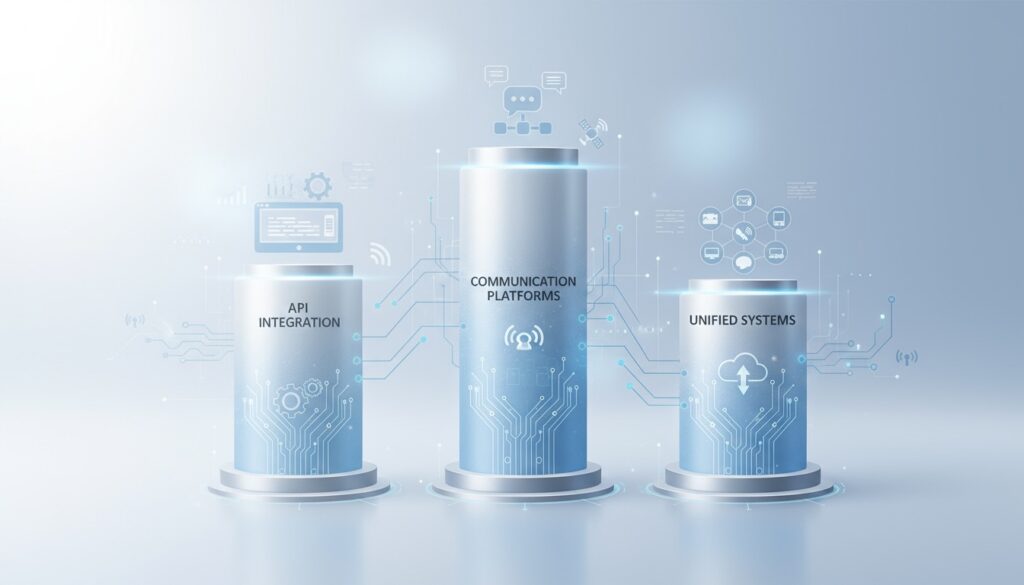
Voice API provides programmable calling building blocks for custom development, CPaaS offers comprehensive communication APIs for multi-channel solutions, and UCaaS delivers complete unified platforms for full-service providers.
- Voice API excels for custom development projects requiring precise call control and unique integrations but demands significant technical expertise and development time.
- CPaaS platforms balance flexibility with convenience by providing multiple communication channels through unified APIs, ideal for moderate technical capabilities.
- UCaaS solutions offer immediate deployment with complete communication systems but limit customization potential compared to programmable alternatives.
- Implementation timelines vary from hours for UCaaS to months for custom voice API development, directly impacting time-to-market strategies.
Choosing between voice API vs CPaaS depends on your customers’ technical requirements, development resources, and desired level of customization control.
Programmable communication technologies are driving unprecedented growth in the API market. For telco resellers, understanding the differences between voice API, CPaaS, and UCaaS sets the foundation for building successful communication solutions that meet diverse customer demands.
Whether you’re evaluating comprehensive platforms or exploring the broader market, the choice between voice API vs CPaaS can determine your development timeline, customization capabilities, and competitive advantage. Each technology serves distinct purposes in the telecom ecosystem, and the right choice depends on your target customers, technical expertise, and business model.
Modern resellers face increasing pressure to deliver sophisticated communication solutions quickly and cost-effectively. The decision between these technologies affects everything from development resources to ongoing support requirements, making it vital to understand their differences and applications.
What Makes Voice API, CPaaS, and UCaaS Different?
Understanding the core distinctions between these technologies helps you make informed decisions about which approach best serves your customers and business objectives. Each sits at a different layer of the communications stack, offering varying levels of control and functionality.
Voice API: Programmable Voice Building Blocks
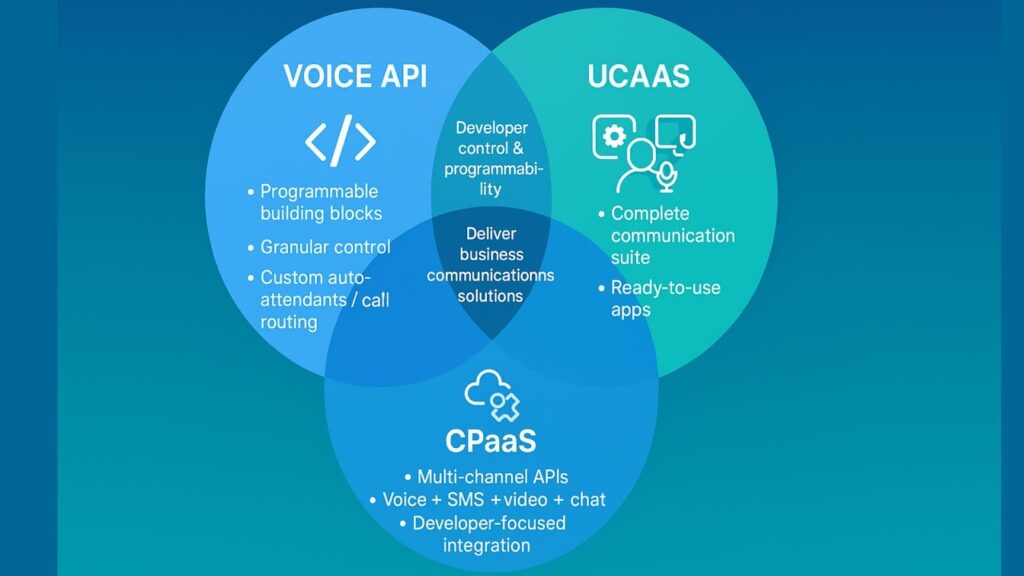
Voice API offers the most granular approach to building communication solutions. These application programming interfaces provide direct access to voice calling functionality, allowing developers to programmatically make, receive, and control phone calls through simple API calls.
Think of voice API as the fundamental building blocks for voice communication. Developers use these APIs to embed calling capabilities directly into applications, websites, or custom software solutions. The level of control is extensive. You can manage call flows, implement custom routing logic, integrate with existing systems, and create entirely unique voice experiences.
Voice API solutions excel when you need precise control over the calling experience. They’re particularly valuable for creating custom auto-attendant systems, building click-to-call functionality, or developing specialized communication workflows that don’t exist in off-the-shelf solutions. The trade-off is complexity. Implementing voice APIs requires development expertise and ongoing maintenance.
CPaaS: Communications Platform Ecosystem
Communications Platform as a Service takes a broader approach by providing multiple communication channels through a unified API platform. CPaaS platforms combine voice, SMS, video, chat, and other communication modalities into a single, cohesive development environment.
When comparing voice API vs CPaaS, the key difference lies in scope and integration. While voice API focuses specifically on calling functionality, CPaaS provides the infrastructure for building comprehensive communication experiences. This includes real-time messaging, video conferencing, push notifications, and advanced features like sentiment analysis and conversation intelligence.
CPaaS platforms are designed for developers who want to build rich, multi-channel communication experiences without managing multiple vendor relationships or complex integrations. They provide the flexibility of APIs while offering broader functionality than single-channel solutions. Popular telecom API providers in this space focus on developer experience, global reach, and feature depth.
UCaaS: Complete Unified Communications Suite
Unified Communications as a Service is the most comprehensive approach, delivering complete, ready-to-use communication platforms rather than development tools. UCaaS solutions provide finished applications with user interfaces, management consoles, and integrated feature sets.
The voice API vs UCaaS comparison reveals fundamental philosophical differences. While voice API requires building solutions from the ground up, UCaaS provides complete systems that customers can implement immediately. UCaaS platforms include everything from desktop and mobile applications to administrative dashboards, call reporting, and user management.
UCaaS solutions are ideal for resellers who want to offer complete communication systems without extensive development work. They’re particularly valuable when serving small to medium businesses that need full-featured platforms but lack the technical resources to implement custom solutions.
Voice API vs CPaaS vs UCaaS: Feature Breakdown
Understanding the capabilities and limitations of each approach helps you align technology choices with customer needs and business objectives. Here’s how these technologies compare across key dimensions:
| Feature Category | Voice API | CPaaS | UCaaS |
| Customization Level | Extensive | Moderate-High | Limited |
| Development Complexity | High | Moderate | Low |
| Communication Channels | Voice only | Multi-channel | Multi-channel |
| Implementation Timeline | Weeks-Months | Days-Weeks | Hours-Days |
| Target Users | Developers | Developers/Integrators | End Users |
| Pricing Model | Per-minute/API call | Per-feature/usage | Per-user/subscription |
| Maintenance Requirements | High | Moderate | Low |
| Global Reach | Provider-dependent | Extensive | Extensive |
| Integration Flexibility | Maximum | High | Moderate |
| Support Requirements | Technical expertise needed | Moderate support | Vendor-managed |
This comparison highlights why the choice between programmable voice solutions depends heavily on your technical capabilities and customer requirements. Voice API offers maximum flexibility but requires significant development investment, while UCaaS provides immediate functionality with less customization potential.
The middle ground of CPaaS often appeals to resellers who want more than basic voice calling but don’t need complete unified communications platforms. Many telecom API providers in this space focus on developer-friendly tools that reduce implementation complexity while maintaining flexibility.
When Should Telco Resellers Choose Each Option?
Different customer scenarios and business models favor different technological approaches. Understanding these use cases helps you position the right solution for each opportunity.
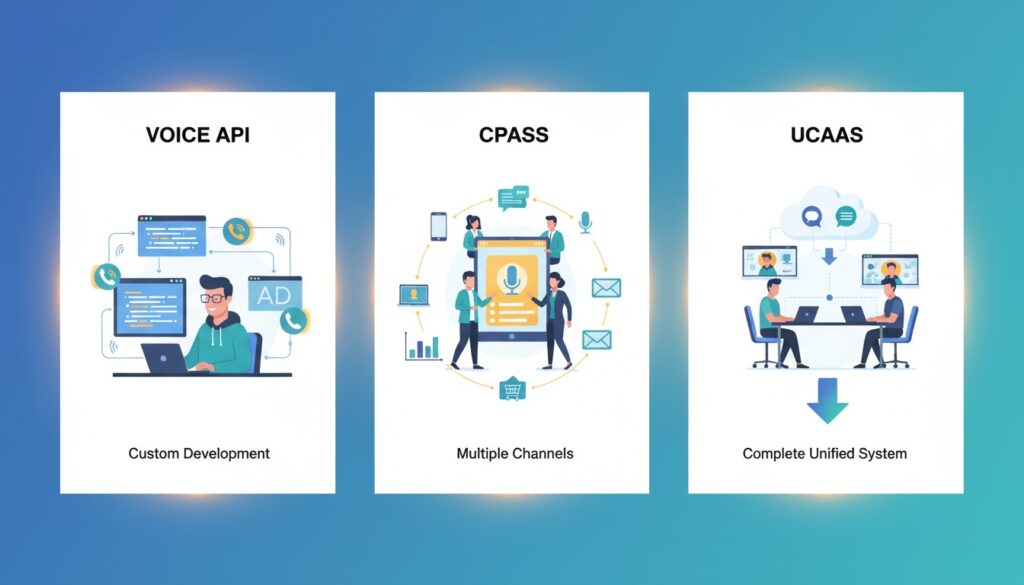
Voice API: Best for Custom Development Projects
Voice API shines when customers need unique calling experiences that don’t exist in standard platforms. Software companies building customer engagement platforms, healthcare organizations implementing HIPAA-compliant communication systems, and financial services firms creating custom client interaction tools all benefit from programmable voice capabilities.
Consider voice API when your customers have existing applications that need voice functionality, require custom call routing logic, or want to integrate calling with proprietary business systems. The flexibility to implement exactly what’s needed, without paying for unused features, makes voice API cost-effective for specific use cases.
Development teams with strong programming skills can leverage a voice API to create competitive advantages through custom features and integrations. The investment in development time pays dividends when the resulting solution perfectly fits customer workflows and requirements.
CPaaS: Ideal for Multi-Channel Communication Builders
CPaaS platforms work best for customers who need comprehensive communication capabilities but want to maintain control over user experience and branding. Marketing agencies building customer engagement platforms, e-commerce companies implementing omnichannel support, and software vendors adding communication features to existing products all benefit from CPaaS flexibility.
The voice API vs CPaaS decision often comes down to channel requirements. If customers need voice calling plus SMS, video, chat, and push notifications, CPaaS provides integrated solutions that are much more efficient than managing multiple single-channel APIs.
CPaaS particularly appeals to customers with moderate technical capabilities who want more than off-the-shelf solutions but don’t have the resources for completely custom development. The balance of flexibility and convenience makes CPaaS attractive for growing businesses with evolving communication needs.
UCaaS: Perfect for Complete Solution Providers
UCaaS excels when customers need complete communication systems with minimal technical implementation. Small businesses replacing traditional phone systems, remote teams requiring collaboration tools, and organizations seeking unified communication management all benefit from UCaaS completeness.
When considering voice API vs UCaaS, implementation timelines and ongoing maintenance are at the top of the list. UCaaS solutions can be deployed in hours or days, while custom voice API implementations require weeks or months. For customers who need communication systems quickly, UCaaS provides immediate value.
UCaaS suits resellers serving small to medium businesses that lack dedicated IT resources. The vendor-managed approach reduces support requirements while providing enterprise-grade functionality that would be difficult and expensive to build custom.
Key Factors for Successful Implementation
Regardless of which technology you choose, several factors determine success and long-term satisfaction. These considerations apply whether you’re implementing voice API, CPaaS, or UCaaS solutions.
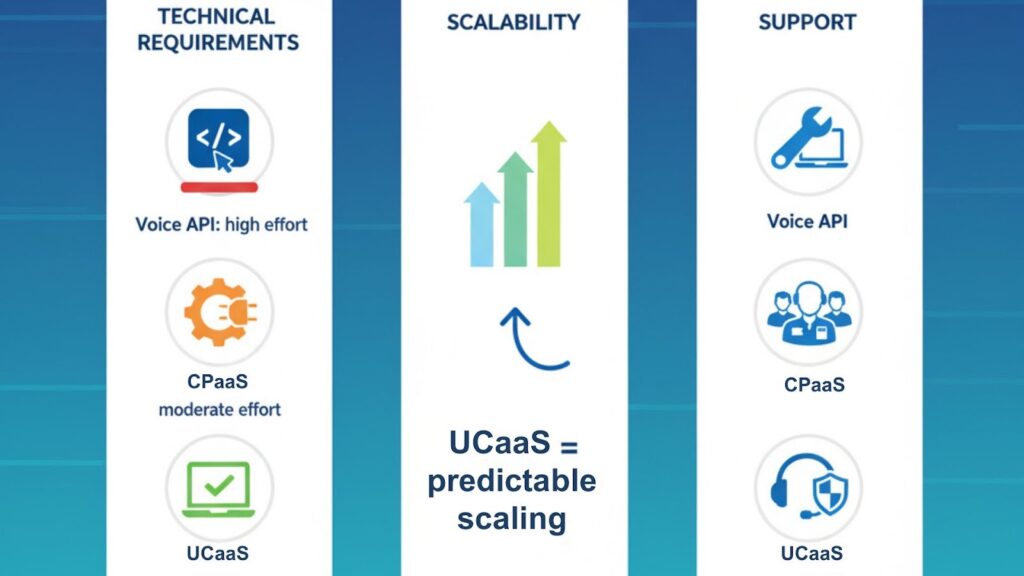
Technical requirements vary between approaches. Voice API implementations require strong development capabilities and ongoing maintenance resources. CPaaS solutions need moderate technical expertise but benefit from integration planning and testing. UCaaS platforms require minimal technical resources but need careful configuration and user training.
Scalability considerations affect long-term success and cost management. Voice API solutions can scale efficiently but require architectural planning for growth. CPaaS platforms typically handle scaling automatically but may require feature optimization as usage grows. UCaaS solutions scale predictably but may require platform upgrades as organizations expand.
Support requirements differ between technologies. Voice API implementations typically require internal technical expertise for troubleshooting and optimization. CPaaS solutions benefit from vendor technical support but still need internal integration knowledge. UCaaS platforms rely primarily on vendor support with minimal internal technical requirements.
Frequently Asked Questions
What’s the main difference between voice API vs CPaaS for small resellers? Voice API focuses specifically on programmable calling functionality, while CPaaS provides multiple communication channels (voice, SMS, video, chat) through integrated APIs. Small resellers often benefit from CPaaS because it offers more comprehensive solutions without managing multiple vendors.
Can UCaaS solutions integrate with existing business applications? Yes, most modern UCaaS platforms offer integration capabilities with CRM systems, help desk software, and other business applications. However, the level of customization is typically less than what’s possible with voice API or CPaaS solutions.
How do pricing models differ between these technologies? Voice API typically uses per-minute or per-API-call pricing, CPaaS often combines usage-based pricing with feature tiers, and UCaaS generally follows per-user subscription models. The most cost-effective choice depends on usage patterns and feature requirements.
Which option provides the fastest time-to-market for new communication solutions? UCaaS offers the fastest deployment since it provides complete, ready-to-use solutions. CPaaS typically requires days to weeks for custom development, while voice API implementations can take weeks to months, depending on complexity.
Making the Right Choice for Your Reseller Business
The decision between voice API, CPaaS, and UCaaS ultimately depends on your customers’ technical requirements, implementation timelines, and ongoing support capabilities. Each technology serves distinct market needs and offers different advantages for telco resellers.
Successful resellers often support multiple approaches, positioning voice API for custom development projects, CPaaS for comprehensive communication builders, and UCaaS for complete solution seekers. This diversified approach maximizes market coverage while playing to each technology’s strengths.
SkySwitch’s platform provides telco resellers with the programmable voice capabilities needed to build custom solutions while maintaining the reliability and support that successful implementations require. Get started today and discover the possibilities of programmable communications.

Jessica is a marketing and sales strategist with deep expertise in VoIP telecommunications. As a Marketing Director, she specializes in channel marketing, account management, and product marketing within the communications industry. Jessica is passionate about helping partners grow through compelling messaging and hands-on support.