
How to Succeed as a White-Label VoIP Reseller

The VoIP reseller market is exploding, and MSPs who master pricing, marketing, and customer support can capture significant recurring revenue under their own brand.
- The global VoIP market is valued at $161.79 billion in 2025 and projected to reach $415 billion by 2034.
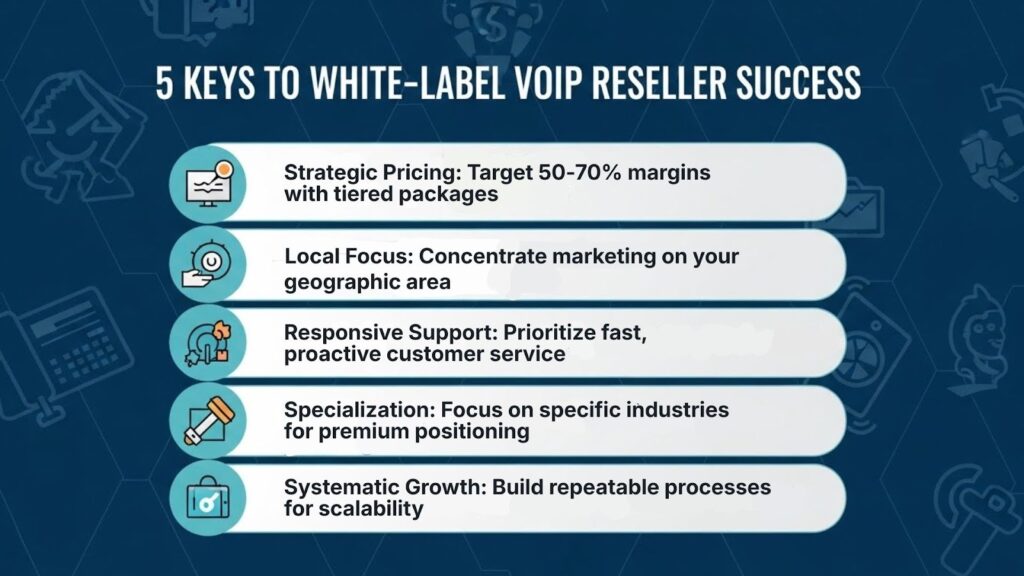
- Successful resellers typically earn 50–70% margins by controlling their pricing and packages.
- Differentiation comes from customer experience, not just technology features.
- The winners focus on relationship-building and consultative selling over aggressive sales tactics.
If you’re serious about building a profitable communications practice, stop competing on price alone and start competing on value.
The demand for cloud-based communications has never been higher. The global VoIP market reached $161.79 billion in 2025 and is growing at an 11% CAGR. For MSPs, system integrators, and IT service providers, this growth presents a massive opportunity to capture recurring revenue by becoming a white-label VoIP reseller.
But opportunity alone doesn’t guarantee success. The resellers who thrive aren’t the ones who simply sign up with a platform and hope for the best. They’re the ones who understand their market, price strategically, market effectively, and deliver support that keeps customers coming back year after year.
Whether you’re just getting started or looking to take your existing voice practice to the next level, this guide breaks down the strategies that actually work for building a sustainable, profitable VoIP reselling business.
What Does Success Look Like for a White-Label VoIP Reseller?
Before diving into tactics, it’s worth defining what success actually means in this space. A white-label VoIP reseller operates differently from a traditional agent or referral partner.
You’re building your own brand. Your customers see your logo, your portal, and your support team. They pay you directly, and you own that relationship for as long as you deliver value. This ownership is both the opportunity and the responsibility that defines the white-label model.
The Financial Reality
The most successful resellers aren’t chasing volume at all costs. They’re building sustainable businesses with healthy VoIP margins that allow them to invest in customer success. With typical margins ranging from 50% to 70% depending on your pricing and service mix, there’s real money to be made when you approach this strategically.
Consider a reseller with 500 seats generating $30 per seat in monthly recurring revenue (MRR) with a 60% margin, earning $9,000 per month in gross profit. That same reseller at 2,000 seats is looking at $36,000 monthly. The math works when you focus on sustainable growth rather than racing to the bottom on price.
What Sets Top Performers Apart?
The resellers who consistently grow understand that VoIP is a relationship business. They know their customers’ operations, anticipate their needs, and position themselves as trusted advisors rather than commodity vendors.
Enhanced collaboration and communication tools rank among the top IT priorities for small and medium businesses. Your customers are actively looking for solutions. The question is whether they’ll find them through you or someone else.
How Should You Price Your VoIP Services for Maximum Margins?
Pricing is where many new resellers make their first critical mistake. They look at competitor pricing, panic, and race to undercut everyone in their market. This losing strategy leaves you with thin margins and customers who will leave the moment someone cheaper comes along.
Building a Tiered Pricing Structure
The most effective approach for resellers is creating tiered service packages that align with different customer needs and budgets. Think of it as a “good, better, best” framework that gives customers options while protecting your margins.
Your entry-level tier might include basic calling features, voicemail, and a mobile app. Your mid-tier adds features like call recording, advanced call routing, and CRM integrations. Your premium tier includes everything plus contact center capabilities, detailed analytics, and priority support. This structure allows customers to self-select based on their needs while giving you natural upsell opportunities as their businesses grow.

When developing these packages, focus on the value each tier delivers rather than just listing features. A law firm doesn’t care about “call recording” as much as they care about “compliance documentation and liability protection.” Speak to outcomes, not specifications.
Pricing Based on Value, Not Competition
The businesses paying for your services are investing in productivity, professionalism, and peace of mind. Price accordingly. If your solution helps a 50-person company communicate more effectively, reduce missed calls, and project a more professional image, that’s worth real money.
Successful resellers often find that building recurring revenue streams through value-based pricing creates more sustainable businesses than competing purely on cost. You’re selling business communication infrastructure that impacts every customer interaction your clients have.
Managing the Pricing Conversation
When prospects push back on price, resist the urge to immediately discount. Instead, ask questions about what’s driving their concern. Often, it’s not really about the money. They may not fully understand the value, or they may be comparing your comprehensive solution to a bare-bones alternative that won’t meet their actual needs.
Be prepared to walk away from price-focused buyers who aren’t a good fit. Customers who choose you solely based on price will leave for the same reason. Your time is better spent on prospects who value what you bring to the table.
What Marketing Strategies Actually Work to Resell VoIP?
Marketing a white-label VoIP service requires a different approach than selling other IT services. You’re competing against established brands with high marketing budgets, so you need to play to your strengths as a local, relationship-focused provider.
Focus on Your Local Market First
National providers can outspend you on advertising, but they can’t outwork you in your own backyard. Your competitive advantage is being local, accessible, and personally invested in your customers’ success.
Concentrate your marketing efforts on the geographic areas where you can provide genuine on-site support when needed. Understanding the specific needs of small businesses in your region gives you an edge that no national marketing campaign can replicate.
Content That Demonstrates Expertise
When you resell VoIP services, your website should do more than list services and prices. It should demonstrate that you understand the communication challenges businesses face and have solutions that address them.
Create content that answers the questions your prospects are actually asking. Blog posts, case studies, and educational resources that address real pain points build credibility and generate organic search traffic. Topics like “how to choose a phone system for a growing business” or “what to consider when upgrading from landlines” attract prospects who are actively in the market.

The Referral Engine
Your existing customers are your best marketing asset. Happy customers refer other businesses, and those referrals close at much higher rates than cold leads.
Here’s a practical approach to generating referrals:
- Ask at the right time: Request referrals after you’ve delivered a successful implementation or resolved an issue particularly well.
- Make it easy: Provide customers with a simple way to introduce you, whether that’s an email template or a brief description they can share.
- Show appreciation: Acknowledge referrals promptly and meaningfully, even if they don’t convert immediately.
Networking and Strategic Partnerships
Other IT providers, accountants, business consultants, and commercial real estate agents all work with businesses that need communication solutions. Building relationships with these professionals creates a steady stream of warm introductions.
Attend local business events, join industry associations, and look for opportunities to collaborate with complementary service providers. A managed IT services company that doesn’t offer voice solutions is a perfect referral partner if you’re not competing with their core business.
How Do You Deliver Support That Builds Long-Term Loyalty?
Technical support is a differentiator. The way you handle support interactions shapes how customers perceive your entire business and directly impacts retention and referrals.
Setting Clear Expectations
Before a customer ever needs support, they should understand exactly what to expect. During onboarding, explain your support process, typical response times, and how to reach you for different types of issues. This transparency builds trust and prevents frustration when problems arise.
Create simple documentation that helps customers resolve common issues independently. Self-service options for basic tasks like adding users or changing voicemail settings reduce support burden while empowering customers.
Response Time Matters More Than You Think
When a phone system goes down, every minute feels like an hour. Your response time to critical issues defines your relationship with customers more than almost anything else you do.
Establish clear internal processes for categorizing and responding to issues based on urgency. A complete system outage requires a different response than a question about a feature. Make sure your team understands these priorities and has the tools to respond appropriately.

Improving customer engagement means being responsive, proactive, and genuinely invested in resolving issues quickly and thoroughly.
Proactive Communication
Don’t wait for customers to notice problems. If you identify an issue that might affect service, communicate proactively. A brief email explaining that you’ve detected an issue and are working on it builds far more trust than waiting for angry calls.
Similarly, regular check-ins to ensure customers are getting value from their investment keep you top-of-mind and create opportunities to identify additional needs before they become urgent.
What Separates Average Resellers from Top Performers?
After years of watching resellers succeed and struggle, certain patterns emerge. The most successful ones share characteristics that go beyond technical knowledge or sales ability.
They Specialize Instead of Generalizing
Top performers often focus on specific industries or use cases rather than trying to serve everyone. A reseller who specializes in dental practices understands the unique communication needs of that environment and can speak directly to those challenges. This specialization commands premium pricing and generates word-of-mouth within concentrated professional networks.
Consider where you have existing expertise or connections. If you’ve worked extensively with law firms, healthcare providers, or real estate offices, leverage that knowledge to become the go-to provider for that vertical.
They Invest in Their Own Education
The technology and competitive landscape evolve constantly. Successful resellers commit to ongoing learning through provider training programs, industry conferences, and peer networking. Staying current on UCaaS trends positions you to anticipate customer needs and proactively recommend appropriate solutions.
Understanding sales methodologies, customer success practices, and business development strategies all contribute to building a more successful reselling business.
They Build Systems, Not Just Relationships
While relationships drive this business, the most successful resellers also build repeatable systems. They have documented processes for:
- Qualifying prospects and identifying decision-makers
- Conducting needs assessments and designing solutions
- Managing implementations and migrations
- Onboarding new customers and training users
- Handling support requests efficiently
- Gathering feedback and identifying upsell opportunities
These systems allow them to deliver consistent experiences regardless of which team member is involved and to scale their operations without sacrificing quality.
They Measure What Matters
Top performers track key metrics and make data-driven decisions. They know their customer acquisition cost, average revenue per customer, churn rate, and lifetime value. This visibility allows them to identify problems early and double down on what’s working.
If you’re not currently tracking these metrics, start simple. Even basic visibility into monthly recurring revenue, new customer additions, and churn gives you actionable insights for improvement.
Frequently Asked Questions About VoIP Reselling
How long does it typically take to become profitable as a VoIP reseller?
Profitability timelines vary based on your existing customer base and sales capacity. Resellers migrating existing customers to a new platform often see positive cash flow within months. Those building from scratch typically reach sustainable profitability within 6–12 months of focused effort. The key is setting realistic expectations and maintaining consistent sales activity during the ramp-up period.
Do I need deep technical expertise to resell VoIP?
While some technical understanding helps, you don’t need to be an engineer. The best white-label platforms handle the complex infrastructure while providing training and support to help you become proficient. What matters more is your ability to understand customer needs, communicate value, and build relationships. Technical expertise can be developed over time or supplemented through partnership resources.
How do I compete with larger providers who have bigger marketing budgets?
Compete on what large providers can’t replicate: personal service, local presence, and genuine relationships. Big companies may have brand recognition, but they can’t provide the individualized attention that small and medium businesses often prefer. Focus your marketing on your accessibility, responsiveness, and understanding of local business needs rather than trying to out-advertise national competitors.
What’s the biggest mistake new resellers make?
Underpricing services and competing on cost alone. This approach attracts price-sensitive customers who churn quickly, erodes margins that could fund better service, and positions you as a commodity rather than a valued partner. Focus on delivering and communicating value, and price accordingly.
Start Building Your VoIP Practice Today
The opportunity to build a profitable communications practice has never been better. Businesses of all sizes are actively seeking modern voice solutions, and they prefer buying from partners they trust over faceless national providers.
Success as a white-label VoIP reseller comes down to treating it like a real business: pricing strategically, marketing consistently, delivering exceptional support, and continuously improving your operations. The technology platform you choose matters, but your execution matters more.
SkySwitch provides the white-label UCaaS platform, training, and ongoing support that MSPs need to launch and grow profitable voice practices under their own brand. With competitive wholesale pricing, comprehensive features, and a partner-focused approach, the SkySwitch partner program gives you everything you need to succeed in this growing market. Get started today to learn how you can build recurring revenue while helping your customers communicate better.

Jessica is a marketing and sales strategist with deep expertise in VoIP telecommunications. As a Marketing Director, she specializes in channel marketing, account management, and product marketing within the communications industry. Jessica is passionate about helping partners grow through compelling messaging and hands-on support.