
Building Revenue with Cloud-Based Voice Solutions

Cloud-based voice solutions offer resellers an exceptional path to recurring revenue in a rapidly growing market.
- Businesses are increasingly adopting cloud communications for remote work and cost savings.
- Recurring revenue model delivers predictable income streams while enabling rapid scaling without infrastructure investment.
- White-label opportunities allow complete brand control with minimal technical overhead.
Start positioning your business to capture opportunities in the fastest-growing segment of business communications
The shift toward cloud-based telecom creates unprecedented opportunities for forward-thinking resellers. Multiple market research firms project significant growth in the VoIP services sector. For resellers positioned to capitalize on this growth, cloud-based voice solutions offer a pathway to sustainable, scalable revenue generation.
Modern businesses are abandoning traditional phone systems, driven by remote work requirements, cost pressures, and demand for integrated communication features. This massive market opportunity belongs to MSPs, system integrators, VARs, and telecom providers who can deliver comprehensive UCaaS solutions under their own brand.
Why Cloud-Based Voice Solutions Drive Superior Revenue Models
Traditional telecom reselling typically involves one-time hardware sales with limited ongoing value. Cloud-based voice solutions transform this dynamic by establishing recurring revenue relationships that strengthen over time. The subscription model inherent in hosted PBX reseller programs creates predictable monthly income while positioning you as an ongoing technology partner rather than a transactional vendor.
White-label VoIP resellers typically achieve gross margins much higher than traditional hardware sales. This strengthened profitability reflects the value proposition you’re delivering: enterprise-grade communications without the complexity, cost, or maintenance burden of traditional PBX systems.
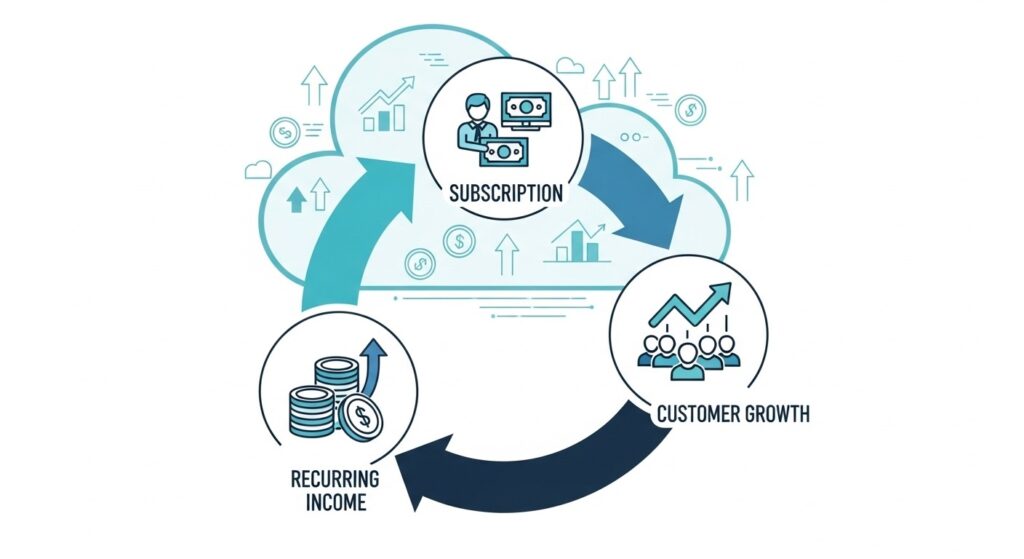
White-label platforms eliminate the substantial upfront investment typically required to enter the market. Instead of building infrastructure, hiring specialized technical staff, and navigating regulatory requirements, you can leverage proven platforms that handle the technical complexity while you focus on customer relationships and business growth. This approach reduces time-to-market from years to weeks while providing access to enterprise-grade features that would otherwise require massive development investments.
The recurring nature of these relationships also creates compounding value over time. As customers grow and add users, your revenue from each account naturally increases. Additional services like business SMS, contact center capabilities, and advanced analytics create multiple expansion opportunities within your existing customer base, driving account value growth.
How to Accelerate Growth with Scalable Telecom
Cloud-based voice solutions offer unprecedented scalability advantages for both resellers and their customers. Unlike traditional phone systems that require physical hardware additions and complex installations, managed VoIP services enable immediate capacity adjustments through software configuration. This flexibility allows you to serve customers of vastly different sizes without maintaining separate service models or inventory.
For your customers, scalability translates to immediate business value. Growing businesses can add users in minutes rather than waiting weeks for hardware installation and configuration. Seasonal businesses can scale capacity up and down based on demand, paying only for resources they actually use. Remote and hybrid workforces can access full business phone functionality from any location with internet connectivity.
The scalable telecom model also supports your business growth in ways traditional reselling can’t. Adding new customers doesn’t require additional infrastructure investment or technical staff expansion. Your platform provider handles capacity management, security updates, and feature enhancements, allowing you to focus on customer acquisition and relationship management. This operational efficiency enables rapid business scaling without proportional increases in overhead costs.

Geographic expansion becomes simpler with cloud-based platforms. Traditional phone systems require local presence and technical support in each market. Cloud-based solutions allow you to serve customers anywhere with reliable internet connectivity, expanding your addressable market without corresponding increases in operational complexity.
What Technology Infrastructure Do Cloud Voice Resellers Need?
Successful hosted PBX resellers understand the underlying technology infrastructure that ensures reliable service delivery. Quality of service becomes paramount when voice communications depend on internet connectivity rather than dedicated phone lines. Your platform provider should offer geo-redundant networks with multiple carrier connections to ensure consistent call quality and system availability.
Security is another critical infrastructure component. Business communications contain sensitive information that requires enterprise-grade protection. Look for platforms that provide end-to-end encryption, secure SIP trunking, and compliance with industry standards like HIPAA for healthcare clients. These security features become selling points that differentiate your offering from consumer-grade alternatives.
Integration capabilities determine how seamlessly your solution fits into existing business workflows. Modern businesses expect their phone system to connect with CRM platforms, help desk software, and collaboration tools. Advanced platforms offer pre-built integrations with popular business applications, while APIs enable custom connections for specialized requirements.
Network redundancy and failover capabilities ensure business continuity. Multiple data center locations with automatic failover protect against regional network problems. Backup connectivity options, including cellular backup for critical locations, maintain communications during internet service disruptions. These reliability features justify premium pricing while reducing support burden.
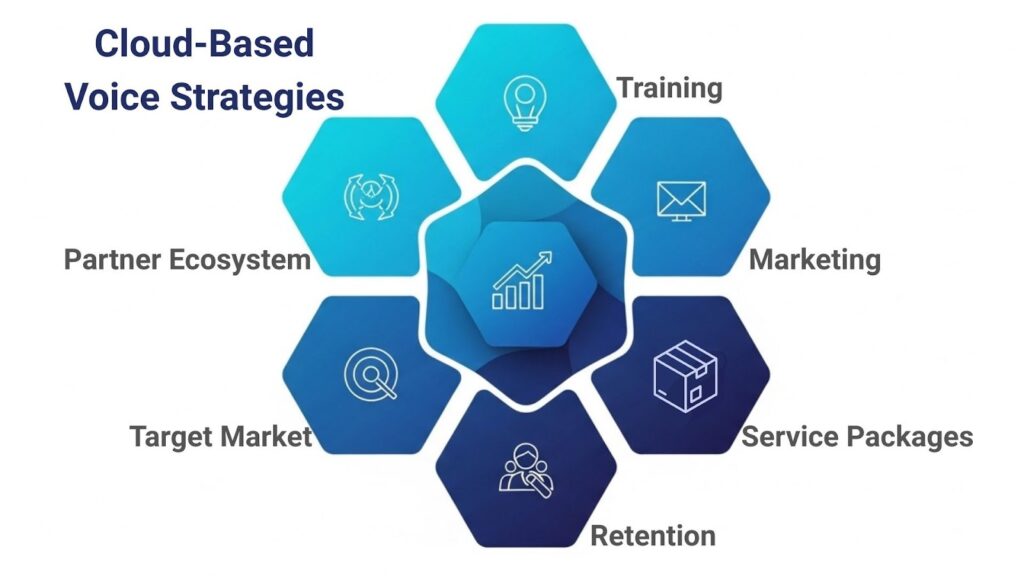
Top 6 Strategies to Maximize Reseller Revenue
Building a successful cloud-based voice solutions practice requires strategic planning across multiple dimensions. Here are the essential components for sustainable revenue growth:
1. Target Market Selection and Positioning
Focus your initial efforts on specific industry verticals where you can develop deep expertise and referral networks. Professional services firms, healthcare practices, and growing technology companies are high-value segments with clear communication pain points. Understanding industry-specific requirements allows you to position solutions more effectively while commanding premium pricing.
2. Service Package Development
Create tiered service offerings that address different customer segments and price points. Basic packages might include essential voice features and business numbers, while premium tiers add contact center capabilities, advanced analytics, and priority support. This approach maximizes revenue per customer while providing clear upgrade paths as businesses grow.
3. Partner Ecosystem Development
Build relationships with complementary service providers who can refer customers and collaborate on larger opportunities. IT consultants, managed service providers, and cybersecurity firms often encounter customers with communication needs. Referral partnerships create additional lead sources while providing value to your partners’ customers.
4. Marketing and Sales Enablement
Develop marketing materials that clearly communicate the business value of cloud-based communications rather than focusing purely on technical features. Cost comparison calculators, ROI worksheets, and industry-specific case studies help prospects understand the financial benefits of switching from traditional systems.
5. Training and Certification Programs
Invest in comprehensive training for your sales and support teams. Understanding both technical capabilities and business applications enables more consultative selling approaches. Many platform providers offer certification programs that enhance your team’s credibility while ensuring they can effectively position advanced features.
6. Customer Success and Retention
Implement proactive customer success programs that ensure clients maximize value from their investment. Regular business reviews, feature adoption tracking, and proactive support reduce churn while identifying expansion opportunities. Satisfied customers become your most effective sales channel through referrals and case studies.
How Do You Build Long-Term Cloud Voice Customer Relationships?
After the initial sale, success in cloud-based voice solutions requires relationship building. To get the most from recurring revenue, focus on ongoing customer satisfaction and demonstrating your value.
Industry data reinforces how critical retention is to long-term profitability. A benchmark study found that subscription-based businesses experience an average annual churn rate of just 5 to 7% when customer engagement programs are in place, showing the value of consistent relationship management and proactive customer success strategies. Regular communication about platform enhancements, new feature availability, and optimization opportunities keeps your brand top-of-mind while providing upselling opportunities.

Customer onboarding processes impact long-term satisfaction and retention. Comprehensive implementation support, which includes training, configuration assistance, and initial troubleshooting, creates a positive first impression while reducing the burden of early-stage support. Many customers judge their entire relationship based on implementation experiences, making this phase critical for long-term success.
Proactive monitoring and support differentiate professional services from basic connectivity providers. Automated alerts about system performance issues, usage pattern analysis, and capacity planning recommendations demonstrate ongoing value while preventing problems before they impact business operations.
Regular business reviews provide opportunities to assess changing requirements and introduce additional capabilities. Growing companies often develop new communication needs as they scale. Scheduled reviews ensure you stay aware of these evolving needs while suggesting appropriate solutions. These conversations also provide early warning about potential churn risks, allowing proactive retention efforts.
How Should You Measure Success and Optimize Performance?
Effective performance measurement ensures your cloud-based voice solutions deliver sustainable revenue growth. Customer acquisition metrics should track both volume and quality, measuring not just new customer counts but also average contract value and time-to-implementation. Understanding which marketing channels and sales approaches drive the highest-value customers helps you optimize your resource allocation.
Customer lifetime value analysis highlights the true profitability of different customer segments and acquisition strategies. Expansion revenue tracking shows how effectively you’re growing existing accounts through additional services and user additions. These metrics guide pricing strategies and service development priorities.
Customer satisfaction and retention metrics directly impact long-term profitability. Monthly churn rates, support ticket volumes, and customer satisfaction scores indicate how well your service delivery meets customer expectations.
Operational efficiency metrics ensure your business scales profitably. Customer acquisition costs, implementation timeframes, and support ticket resolution times indicate the efficiency of your processes. Improving these metrics impacts profitability while enabling faster growth through enhanced customer experiences.
Frequently Asked Questions
How quickly can I get started with cloud-based voice reselling? Most white-label platforms can get resellers operational within 30 to 90 days, depending on the training requirements and initial customer targets. This timeframe includes platform setup, team training, and initial marketing material development. The streamlined approach contrasts sharply with building internal infrastructure, which typically takes 12 to 18 months.
What technical expertise do I need to resell managed VoIP services? White-label platforms handle most technical complexity, requiring minimal specialized VoIP expertise from resellers. Basic networking knowledge and customer service skills are the primary requirements. Platform providers typically offer comprehensive training programs that cover both technical concepts and sales methodologies.
How do I compete with large telecommunications providers? Focus on personalized service, local market knowledge, and integrated solutions that large providers can’t match. Your ability to provide consultative selling, rapid implementation, and ongoing relationship management creates competitive advantages that transcend pure feature comparisons.
Build a Sustainable Revenue Stream With Cloud Voice Solutions
Cloud-based voice solutions present compelling revenue opportunities. The combination of massive market growth, attractive recurring revenue models, and scalable telecom platforms creates ideal conditions for reseller success. By focusing on customer value rather than simple product sales, you can build sustainable advantages while capturing significant market share.
The key to success lies in choosing the right technology platform and implementing comprehensive customer success strategies. SkySwitch provides a white-label UCaaS platform that enables resellers to deliver enterprise-grade communications under their own brand while maintaining complete customer control. With automated billing, comprehensive training, and dedicated partner support, SkySwitch eliminates the complexity traditionally associated with entering the telecom market. Get started today and begin building your cloud communications revenue stream.

Jessica is a marketing and sales strategist with deep expertise in VoIP telecommunications. As a Marketing Director, she specializes in channel marketing, account management, and product marketing within the communications industry. Jessica is passionate about helping partners grow through compelling messaging and hands-on support.