
Telecom Tax Compliance: What Resellers Need to Know

Telecom tax compliance is one of the most complex regulatory challenges facing resellers today.
- MSPs and resellers must navigate intricate filing requirements across multiple jurisdictions while managing quarterly rate changes, specialized exemption certificates, and automated billing integration.
- VoIP tax automation has become essential for maintaining compliance without overwhelming administrative overhead.
Smart resellers partner with white-label providers offering comprehensive tax management so they can focus on growth rather than complex regulatory burdens.
The telecom industry faces some of the most complex tax obligations in the business world. For managed service providers, system integrators, and resellers, understanding telecom tax compliance requirements is a big part of building a sustainable, profitable business that can scale across multiple markets.
Telecom companies face combined tax rates exceeding 30% in many jurisdictions, with some providers filing more than 500 returns monthly across different tax authorities. This regulatory complexity creates both challenges and opportunities for resellers who understand how to effectively navigate taxes.
What Should Resellers Know About Telecom Tax Compliance?
The telecommunications sector operates under a unique regulatory framework that treats VoIP and communication service providers similar to traditional utilities. This classification means that telecom tax compliance extends far beyond typical sales tax obligations, encompassing federal regulatory fees, state-specific communication taxes, and local utility charges.
Unlike most industries where businesses only collect taxes where they have physical presence, telecom providers face “attributional nexus” rules. Resellers are generally required to collect and remit taxes in every jurisdiction where they have customers, regardless of physical location. The rationale is that delivering telecom services requires using infrastructure within each state, creating tax obligations across service territories.
This environment creates three distinct tax layers that resellers must manage. Federal requirements include Universal Service Fund contributions, which currently require providers to contribute 35.8% of interstate revenue. State-level obligations vary, with Florida imposing communications service taxes that can exceed 13% and California authorizing local utility user taxes up to 11%. Local jurisdictions add another layer, with municipalities implementing their own telecom-specific fees and surcharges.
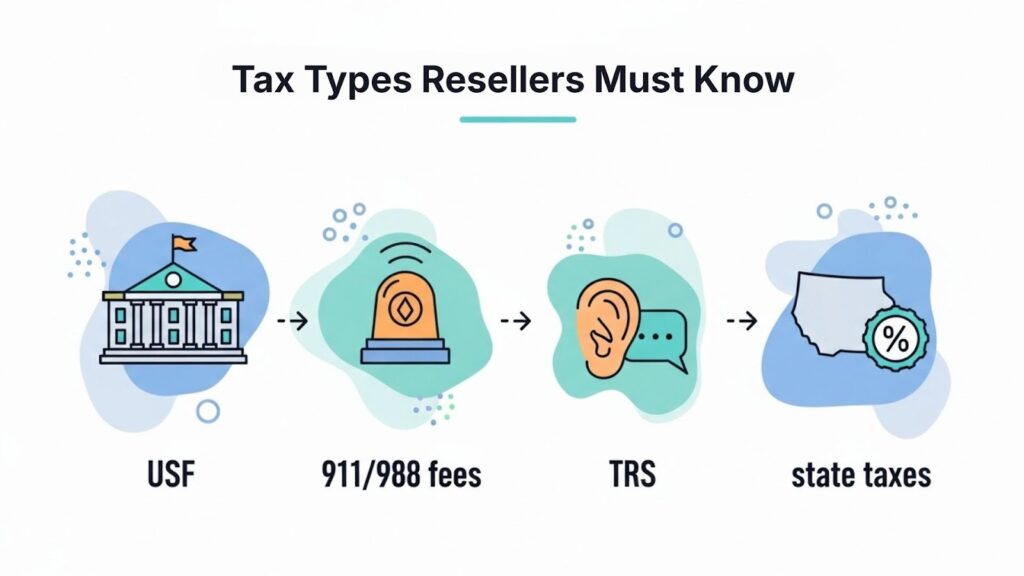
Which Tax Types Must Resellers Navigate?
Understanding the specific tax categories helps resellers build comprehensive compliance strategies. The Universal Service Fund is the largest federal obligation, with rates adjusted quarterly based on program funding needs. For 2024, the USF contribution factor increased from 32.8% in Q2 to 34.4% in Q3, then 35.8% for Q4, demonstrating the volatility resellers must accommodate.
Emergency services fees fund 911 and 988 crisis hotline infrastructure, with rates varying by jurisdiction. These fees apply to virtually all voice services, including VoIP connections that provide emergency calling capabilities. Telecommunications Relay Service fees support communication services for individuals with hearing or speech disabilities, generally assessed as a small percentage of interstate revenue.
State sales tax applications vary across jurisdictions. Some states apply standard sales tax rates to telecom services, while others impose specialized communication service taxes with different calculation methods and exemption rules. States like Pennsylvania impose 5% gross receipts taxes specifically targeting telecom services, while Maryland applies 2% rates that can exceed 3% depending on customer location.
What Are Compliance Challenges for MSPs and Resellers?
Successfully managing telecom tax compliance requires addressing multiple challenges that can overwhelm unprepared resellers. Here are the five most critical compliance obstacles:
- Complex Registration Requirements: Resellers must register with numerous authorities, including the FCC, Universal Service Administrative Company, state departments of revenue, and local tax authorities. Each registration involves different forms, documentation requirements, and ongoing reporting obligations.
- Multi-Jurisdiction Filing Management: Many telecom companies file hundreds of returns monthly across different jurisdictions. Each authority maintains different filing deadlines, payment requirements, and penalty structures, making manual management virtually impossible.
- Rate Change Monitoring: Tax rates change frequently, with federal USF rates adjusted quarterly and local rates modified based on municipal budget cycles. Staying current requires constant monitoring of multiple regulatory sources and rapid system updates.
- Service Classification Complexity: Different telecom services face varying tax obligations. Voice services, data connections, and bundled offerings may trigger different tax calculations even within the same customer relationship. Misclassification can result in penalties and audit exposure.
- Exemption Certificate Management: Business customers may qualify for various exemptions, but validating and maintaining proper documentation requires specialized knowledge. Reseller exemptions prove particularly complex because different certificate types apply to sales tax versus regulatory fees.

Understanding these challenges helps resellers make informed decisions about internal management versus outsourced solutions. Many successful resellers find that comprehensive white-label UCaaS platforms simplify compliance by handling tax calculations and filings as part of their service offering.
What to Look for with VoIP Tax Automation Solutions
VoIP tax automation tools make it far easier for resellers to manage telecom tax requirements without building deep in-house expertise. Tax engines integrate directly with telecom billing platforms to calculate accurate taxes in real time, apply the correct jurisdictional rules, and reduce the risk of human error, especially as your customer base expands into multiple locations.
Advanced calculation systems maintain continuously updated rate databases for federal, state, and local requirements. They also support more complex scenarios like bundled services, multi-site customers, and location-based charges. Automation becomes essential as providers scale, since manual tax calculations quickly become time-consuming, inconsistent, and increasingly difficult to manage across diverse product sets.
A critical piece of this process is billing integration. Modern billing platforms synchronize with VoIP tax automation engines so every invoice displays accurate calculations and generates the proper records for compliance reporting. You can eliminate double entry, keep customer statements consistent, and reduce administrative overhead.
Service providers that use PSA or accounting platforms gain additional efficiency when those systems are connected to their telecom billing and taxation workflows. Automated data flow between these tools ensures consistent financial reporting, streamlined month-end processes, and better visibility into revenue and MSP tax liabilities, all without requiring staff to reconcile multiple systems manually.
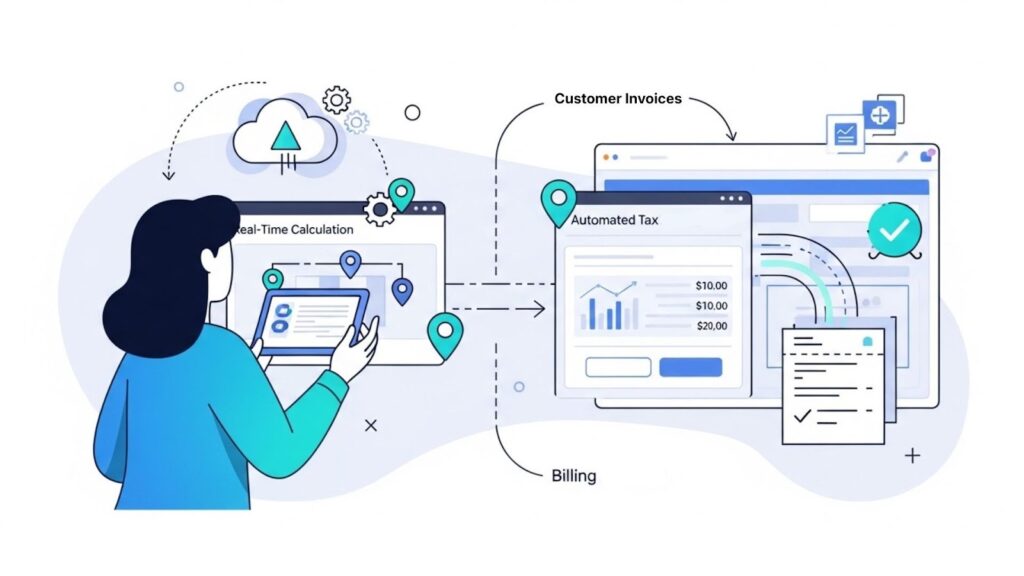
For resellers who prefer a more hands-off approach, managed compliance services can take automation even further. These services oversee ongoing tax management tasks, such as maintaining registrations, preparing filings, monitoring regulatory changes, and managing correspondence with tax authorities. This solution gives MSPs and telecom providers a fully supported compliance path, enabling them to stay audit-ready while keeping internal resources focused on customer service rather than regulatory administration.
How to Build a Compliance Strategy
A solid telecom tax strategy creates a smooth, predictable rhythm as your voice business grows. The right approach blends smart technology choices, accurate setup, and ongoing oversight so you can stay compliant without drowning in administrative work.

The first step is choosing partners and platforms built specifically for communications, not generic tax tools. Telecom taxes are uniquely complex, and you’ll want systems that understand things like jurisdictional rules, bundled services, multi-location customers, and usage-based charges. Platforms that combine automated billing, real-time MSP tax calculation, compliance reporting, and built-in integrations offer the best long-term foundation. Even better is an ecosystem that includes training and ongoing support, so you always understand what changing regulations mean for your business.
From there, implementation plays a major role in your future success. Start by accurately classifying every service you sell, such as voice features, add-ons, bundles, and anything that may carry different tax treatments. Proper catalog setup reduces the risk of misapplied taxes and keeps revenue allocation clean.
Your billing platform, tax engine, customer management tools, and accounting systems should all share data automatically. When these systems talk to each other, you eliminate manual re-entry, improve accuracy, and create a clearer audit trail. As you plan your setup, ensure the solutions you choose can scale with new customers, new markets, and a growing service catalog without forcing a costly system change down the road.
Finally, build a simple rhythm for ongoing oversight. Stay aware of regulatory updates, tax rate changes, and filing deadlines across the regions you serve. Many resellers lean on industry associations, regulatory newsletters, or compliance specialists for alerts and guidance. Regular internal check-ins (quarterly or even monthly) help catch small inconsistencies before they become issues and keep your team confident that everything is on track.
Frequently Asked Questions
Do resellers need separate registrations for sales tax and regulatory fees?
Yes, resellers typically need multiple registrations because sales tax and regulatory fees involve different authorities and compliance requirements. Federal registrations include FCC and USAC filings, while state requirements vary by jurisdiction and may include separate public utility commission registrations.
Can resellers avoid compliance obligations by having their wholesale provider handle taxes?
No, resellers cannot contract away their independent compliance obligations. While wholesale providers may offer tax-included pricing, resellers selling directly to end customers remain responsible for proper tax collection, remittance, and reporting regardless of their supplier arrangements.
How do automated tax systems handle bundled services with different tax requirements?
Modern tax automation uses sophisticated algorithms to allocate bundled service revenue among different tax categories based on regulatory guidelines and provider configuration. Each service component receives appropriate tax treatment while maintaining audit-ready documentation.
Simplify Your Tax Compliance
Telecom tax compliance complexity continues growing as regulations evolve and markets expand. However, resellers who implement appropriate automation solutions can build profitable, scalable businesses without being overwhelmed by administrative burdens.
The key to success lies in partnering with providers who specialize in telecom industry requirements rather than attempting to manage compliance with generic tools or manual processes. Smart resellers recognize that effective tax management creates competitive advantages by enabling rapid market expansion and accurate pricing strategies.
SkySwitch provides a comprehensive white-label UCaaS platform with integrated tax management solutions that handle the complexity so you can focus on growing your business. Get started today and see how easy it is to build a scalable, tax-ready communications practice.

Jessica is a marketing and sales strategist with deep expertise in VoIP telecommunications. As a Marketing Director, she specializes in channel marketing, account management, and product marketing within the communications industry. Jessica is passionate about helping partners grow through compelling messaging and hands-on support.