
The Rise of AI in Business Phone Systems

AI is revolutionizing how businesses handle voice communications, with intelligent automation transforming everything from call routing to customer analytics.
- Smart call routing analyzes caller intent and agent skills in real time, reducing wait times and improving first-call resolution rates.
- AI-powered analytics extract actionable insights from every conversation, including sentiment tracking and quality monitoring.
- The conversational AI market is projected to grow from $14 billion in 2025 to over $82 billion by 2034, signaling a massive opportunity for resellers.
Resellers who embrace AI UCaaS solutions can differentiate their offerings and capture higher margins.
Artificial intelligence has moved from experimental technology to essential infrastructure for modern business communications. The transformation is happening fast. The global conversational AI market reached $14.79 billion in 2025 and is projected to surge to $82.46 billion by 2034, growing at a CAGR of 21%.
Clients increasingly expect intelligent features that automate routine tasks, improve customer interactions, and deliver data-driven insights. Understanding how AI in business phone systems works allows you to position your offerings ahead of the competition and meet the demands of SMBs seeking smarter communication solutions.
What Is AI in Business Phone Systems?
AI in business phone systems is the integration of artificial intelligence technologies into voice communication platforms to automate tasks, enhance call quality, and extract meaningful insights from conversations. Unlike traditional phone systems that simply connect calls based on predefined rules, AI-enhanced systems learn from interactions, adapt to patterns, and make intelligent decisions in real time.
The technology encompasses several core capabilities that work together. Natural language processing enables systems to understand spoken commands and queries, allowing callers to interact conversationally rather than navigating rigid menu options. Machine learning algorithms analyze call patterns, customer behavior, and agent performance to continuously optimize routing decisions and workflows. Speech recognition converts voice to text for transcription, search, and analysis purposes.
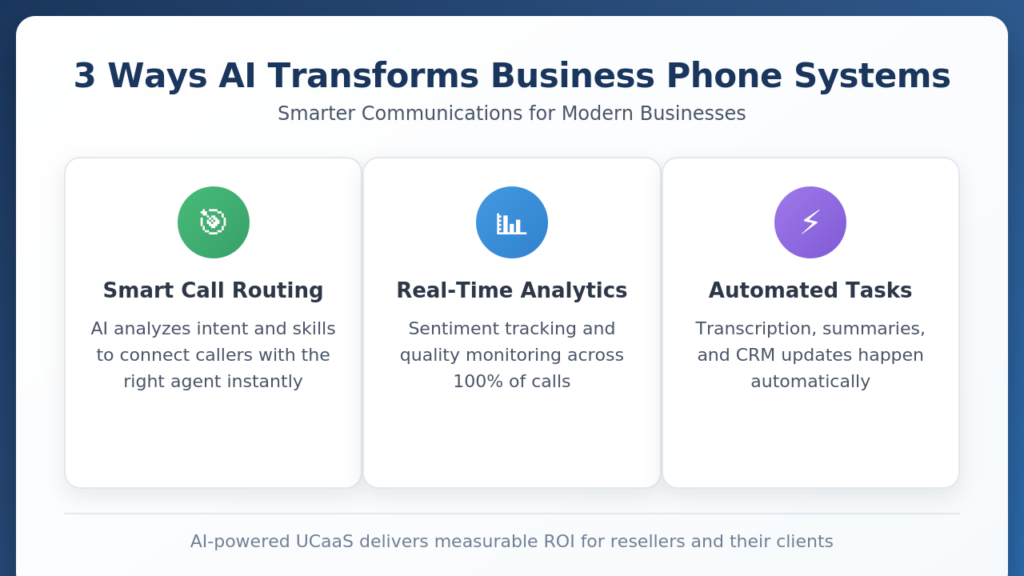
These technologies create phone systems that actively improve business operations rather than passively facilitating communication. For resellers offering white-label UCaaS solutions, AI capabilities have become a differentiator in competitive sales situations. Clients want more than basic calling features. They want systems that help them work smarter, serve customers better, and make informed decisions based on communication data.
The practical applications extend across the entire communication lifecycle. Before calls connect, AI can identify callers and surface relevant information. During conversations, it can transcribe speech, detect sentiment, and coach agents. After calls end, it can automatically log details, trigger follow-up workflows, and feed insights into broader analytics. This comprehensive approach transforms the phone system from a cost center into a strategic asset.
How Does Smart Call Routing Transform the Customer Experience?
Smart call routing is one of the most impactful applications of AI in business phone systems. Traditional routing relied on simple rules: press one for sales, press two for support. Modern AI-powered routing simultaneously analyzes multiple factors to connect callers with the best available resource, improving both efficiency and satisfaction.
Customers have limited patience for being transferred or repeating information. First-call resolution drives customer satisfaction more than almost any other factor. When callers immediately reach the right person, they’re more likely to have positive experiences and remain loyal customers.

Intent-Based Call Distribution
AI systems can now analyze caller intent before the call even connects to an agent. By examining factors like the phone number dialed, the caller’s history, time of day, and voice analysis during initial interactions, the system predicts why the person is calling and routes accordingly.
For example, a caller who recently received an invoice and typically calls about billing questions might be automatically directed to the accounting team. Someone calling for the third time in a week about the same issue might be prioritized and sent to a senior representative. These intelligent decisions happen in milliseconds, creating seamless experiences that feel almost anticipatory.
The technology also handles overflow situations more gracefully than traditional systems. Rather than simply placing callers in queues, AI can evaluate which agents have capacity, which have relevant expertise, and which might have the best rapport with specific customer types. This matching process happens continuously as conditions change throughout the day.
Skills-Based Matching and Real-Time Optimization
AI enables sophisticated skills-based routing that considers agent capabilities, performance history, and current workload. The system learns which agents excel at handling specific inquiry types and adjusts routing decisions accordingly.
This optimization extends to language matching, technical expertise, and personality alignment. A caller with a complex technical question gets routed to agents with relevant certifications and strong resolution rates for similar issues. Someone who seems frustrated based on voice analysis might be connected with an agent known for de-escalation skills.
Real-time optimization means the system constantly recalibrates based on changing conditions. If one specialist suddenly becomes unavailable, the AI immediately adjusts routing to maintain service levels. If call volumes spike unexpectedly, it can activate overflow protocols or dynamically adjust queue priorities. This responsiveness ensures consistent customer experiences even during unpredictable periods.
What Do AI-Powered Call Analytics and Insights Provide Businesses?
Raw call data has always existed in phone systems. What AI adds is the ability to transform that data into actionable intelligence at scale. Manual call review processes can only sample a tiny fraction of conversations, but AI can analyze every single interaction to identify patterns, opportunities, and problems.
Quality metrics reveal how well agents handle different situations. Customer experience indicators show where friction exists in the caller journey. Operational data highlights staffing gaps, training needs, and process inefficiencies. Together, these insights enable continuous improvement that compounds over time.
Sentiment Analysis and Quality Monitoring
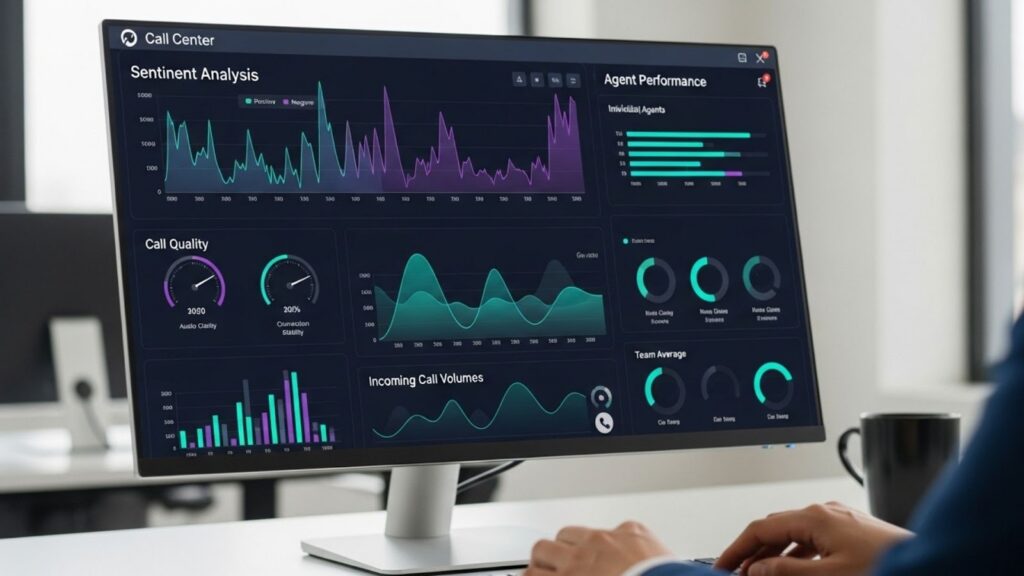
Sentiment analysis applies natural language processing to detect emotional cues in conversations. The technology can identify when callers become frustrated, confused, or satisfied based on word choice, tone, and speech patterns. This real-time awareness enables immediate intervention when calls go sideways.
For managers, sentiment analysis provides unprecedented visibility into customer experience across all interactions. Rather than relying on post-call surveys that capture only a small percentage of customer feedback, sentiment tracking offers continuous measurement. Trends become visible. Problem areas surface quickly. The impact of training initiatives or process changes can be measured objectively.
Quality monitoring traditionally required supervisors to listen to recorded calls, a time-intensive process that could only cover a fraction of the volume. AI-powered quality analysis can evaluate 100% of calls against defined criteria, flagging conversations that need human review and automatically scoring performance. This comprehensive coverage ensures that quality issues don’t slip through the cracks while freeing supervisors to focus on coaching and development.
Predictive Analytics for Staffing Decisions
Predictive analytics applies machine learning to historical data to forecast future patterns. In the context of business phone systems, this means anticipating call volumes, average handle times, and staffing requirements with increasing accuracy.
The practical benefits for businesses include better resource allocation and cost control. Overstaffing wastes money on idle agents. Understaffing creates long queues and abandoned calls. AI-driven forecasting helps organizations right-size their teams for expected demand, adjusting schedules proactively rather than reacting to problems after they occur.
For resellers helping clients implement contact center solutions, predictive capabilities add significant value. SMBs often lack the historical data analysis expertise to optimize their operations. AI tools facilitate these capabilities, giving smaller organizations access to insights previously available only to enterprises with dedicated analytics teams.
What VoIP AI Tools Boost Productivity?
The practical value of AI in business phone systems becomes clearest when examining specific tools that automate routine tasks and enhance agent capabilities. These features directly impact daily operations, saving time and reducing friction for both employees and customers.
Here are the VoIP AI tools driving the most productivity gains:
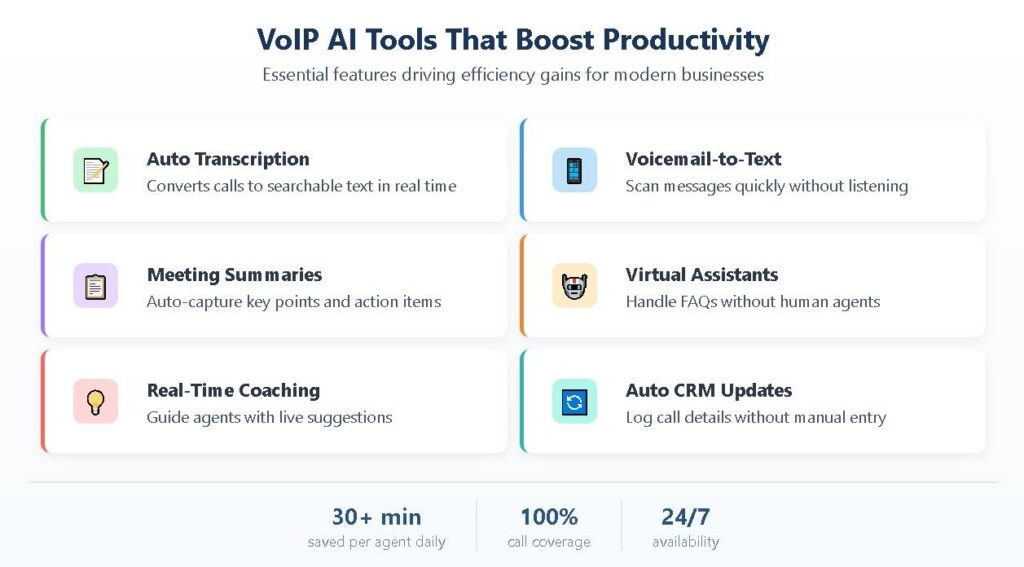
- Automated call transcription converts conversations to searchable text in real time, eliminating manual note-taking and creating accurate records for compliance and training purposes.
- Voicemail-to-text conversion lets users quickly scan message content without listening to full recordings, prioritizing callbacks and accelerating response times.
- AI meeting summaries automatically capture key points, action items, and decisions from calls and video conferences, ensuring nothing falls through the cracks.
- Virtual assistants handle routine inquiries like business hours, directions, and basic FAQs without involving human agents, freeing staff for complex interactions.
- Real-time coaching prompts provide agents with suggested responses, relevant information, and guidance during calls based on conversation context.
- Automated CRM updates log call details, notes, and outcomes directly into business systems without manual data entry.
These tools address common pain points that frustrate both businesses and their customers. Agents spend less time on administrative tasks and more time actually helping people. Managers get better visibility into operations without adding oversight burden. Customers experience faster, more consistent service across all touchpoints.
When every agent saves 30 minutes per day on administrative tasks, that adds up to capacity gains. When supervisors can automatically monitor quality, they have more time for coaching. When customers get faster answers, they’re more likely to remain loyal and refer others. These cumulative benefits make AI tools essential components of competitive UCaaS offerings.
Why Does AI UCaaS Matter for Resellers?
The growing demand for AI-powered communication tools creates a substantial opportunity for UCaaS resellers. The AI in telecommunication market is expected to reach $50.21 billion by 2034, growing at a 38.81% CAGR. Organizations across every industry are seeking partners who can effectively help them leverage these technologies.
For resellers, AI UCaaS presents a chance to differentiate in an increasingly commoditized market. The ability to offer intelligent features that deliver measurable business value creates meaningful separation from competitors who only provide fundamental connectivity.
The margin opportunity is also significant. AI-enhanced services command premium pricing because they deliver premium value. Clients willingly pay more for systems that reduce their operational costs, improve their customer satisfaction scores, and provide actionable business intelligence. This value-based pricing creates healthier profit margins than volume-based competition on commodity services.
Building expertise in AI UCaaS strengthens client relationships. When you help organizations implement intelligent communication systems, you become a strategic partner rather than a vendor. The depth of integration required creates switching costs that reduce churn. The ongoing optimization opportunities create natural touchpoints for continued engagement and upselling.
How Can Resellers Take Advantage of AI-Powered UCaaS Solutions?
Partnering with the right white-label UCaaS platform accelerates your ability to capture this opportunity. Rather than building AI capabilities from scratch, you can leverage established technologies and focus your energy on client relationships and go-to-market execution. The best platforms provide the tools, training, and support you need to confidently sell and implement AI-enhanced solutions.
Implementing voice API strategies also enables customization that generic solutions can’t match. APIs let you build tailored integrations with client systems, creating unique value propositions for specific verticals or use cases. This flexibility is vital as clients seek solutions optimized for their particular workflows rather than one-size-fits-all packages.
Frequently Asked Questions About AI in Business Phone Systems
How does smart call routing differ from traditional call routing? Traditional call routing follows fixed rules like menu selections or round-robin distribution. Smart call routing uses AI to simultaneously analyze multiple factors, including caller history, intent signals, agent skills, and real-time availability. The system makes dynamic decisions that optimize each interaction rather than following predetermined paths. This intelligence reduces transfers, shortens handle times, and improves first-call resolution rates.
What VoIP AI tools provide the fastest ROI for small businesses? Automated transcription and voicemail-to-text typically deliver the fastest return for small businesses. These features save immediate time on administrative tasks without requiring major workflow changes. Virtual assistants that handle after-hours calls and routine inquiries also provide quick wins by extending service availability without adding staff. As businesses mature, more sophisticated features like sentiment analysis and predictive analytics deliver compounding returns.
Do AI-powered phone systems require technical expertise to manage? Modern AI UCaaS platforms are designed for business users, not engineers. Most features work automatically once configured, requiring minimal ongoing management. Dashboards present insights in accessible formats. Routing rules can be adjusted through intuitive interfaces. However, maximizing value from advanced capabilities like custom integrations or specialized analytics may benefit from technical resources or partner support.
How does AI in business phone systems improve customer experience? AI improves customer experience through multiple mechanisms. Intelligent routing connects callers to appropriate resources faster, reducing frustration. Virtual assistants provide immediate answers to common questions around the clock. Sentiment detection enables intervention before minor issues escalate. Transcription and CRM integration ensure agents have context for every interaction, eliminating the need for customers to repeat information. Together, these capabilities create smoother, more personalized experiences.
Building Your AI-Powered Communications Practice
AI in business phone systems has evolved from a futuristic concept to a practical necessity. Organizations that embrace intelligent communication tools gain advantages through better customer experiences, more efficient operations, and deeper business insights. The market data confirms accelerating adoption, with conversational AI investments projected to grow at over 23% annually through 2030.
For UCaaS resellers, the message is clear. Clients expect AI capabilities as standard features, not premium add-ons. Building expertise in smart call routing, VoIP AI tools, and AI-powered analytics positions your business for sustained growth as demand intensifies. The resellers who move decisively will capture market share while competitors scramble to catch up.
SkySwitch provides the white-label UCaaS platform resellers need to deliver AI-enhanced communication solutions under their own brand. With comprehensive features, reseller-focused support, and the flexibility to meet diverse client needs, you can build a profitable practice around the technologies driving communication’s future. Get started with SkySwitch to explore how AI-powered voice solutions can accelerate your business growth.

Jessica is a marketing and sales strategist with deep expertise in VoIP telecommunications. As a Marketing Director, she specializes in channel marketing, account management, and product marketing within the communications industry. Jessica is passionate about helping partners grow through compelling messaging and hands-on support.