
How AI Tools Help MSPs Streamline Communication

AI tools for MSPs are revolutionizing service delivery by automating communication workflows and enabling proactive support that improves both operational efficiency and customer satisfaction.
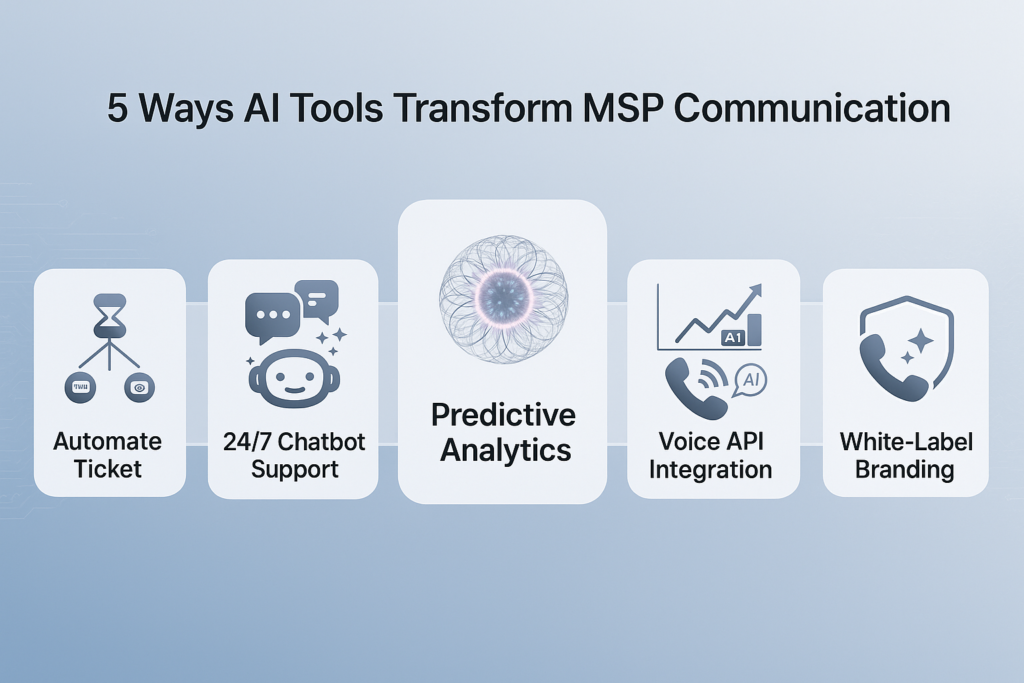
- Automated ticket triage and intelligent routing reduce manual workload while ensuring customers reach qualified technicians faster.
- 24/7 AI-powered chatbots and virtual assistants handle routine inquiries like password resets and basic troubleshooting.
- Predictive analytics and proactive monitoring identify potential system failures before they impact business operations, enabling MSPs to schedule maintenance during low-impact periods rather than responding to emergencies.
- White-label AI integration allows MSPs to offer enterprise-grade intelligent communication features under their own brand without significant infrastructure investment or technical expertise.
MSPs that embrace AI-powered communication stand out as trusted technology partners and unlock lasting efficiency gains.
Client expectations for instant, intelligent support continue rising while technical complexity grows exponentially. Managed service providers report handling an average of 11,000 security alerts per day, creating operational bottlenecks that strain resources and frustrate customers.
A comprehensive UCaaS platform with AI tools for MSPs can transform these challenges into competitive advantages. The integration of artificial intelligence into MSP operations creates intelligent systems that anticipate client needs, resolve issues proactively, and deliver seamless experiences.
Where Do AI Tools for MSPs Fit in Modern Communication?
AI tools for MSPs encompass a broad spectrum of intelligent technologies designed to optimize service delivery and enhance customer communication. These solutions leverage machine learning algorithms, natural language processing, and predictive analytics to automate routine tasks while providing deeper insights into client operations.
The foundation of effective MSP AI solutions begins with understanding the communication workflow. Modern service providers manage multiple touchpoints simultaneously: help desk tickets, phone calls, chat messages, email correspondence, and real-time monitoring alerts. Traditional approaches require significant human intervention at each stage, creating delays and potential for error.
AI-driven tools are instrumental in automating routine tasks, such as onboarding and offboarding users, resetting passwords, and managing software licenses. Automation reduces errors and allows technical staff to focus on complex problem-solving that requires human expertise.
Communication automation within MSP environments typically involves several key components working together. Intelligent ticket routing analyzes incoming requests and automatically assigns them to appropriate technicians based on skill sets, workload, and priority levels. Real-time sentiment analysis monitors customer communications to identify frustration early and escalate accordingly.
The most successful AI implementations integrate with existing business systems. MSPs utilizing platforms with robust API capabilities can connect their AI tools to professional services automation (PSA) software, remote monitoring and management (RMM) systems, and billing platforms. This integration creates a unified operational environment where information flows automatically between systems.
Top AI-Powered Communication Solutions for Service Providers
MSPs have access to several categories of AI-powered communication tools, each addressing specific operational challenges:
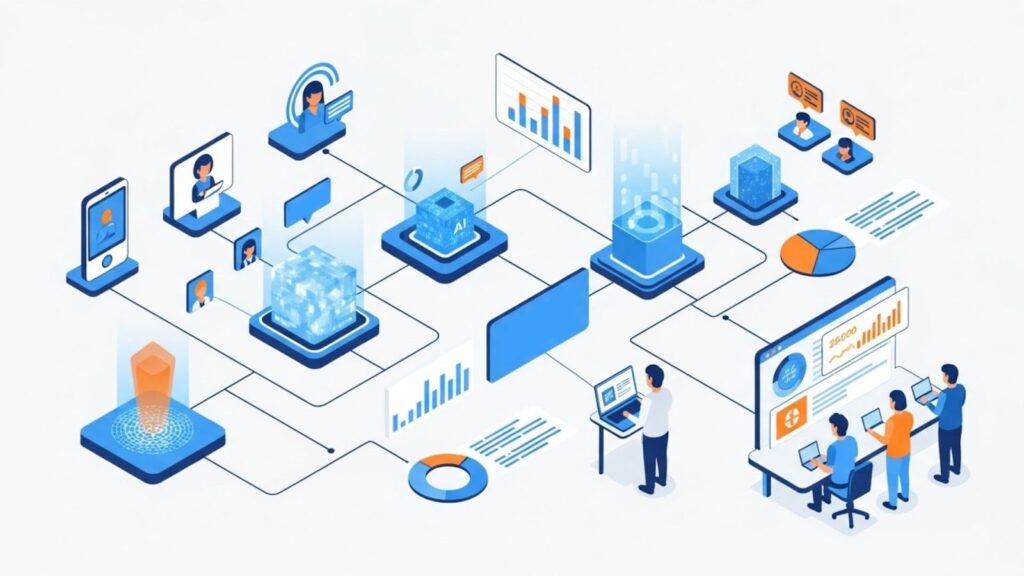
Intelligent Chatbots and Virtual Assistants: AI-enhanced service delivery can offload routine inquiries and most tier-one resolutions, enabling technicians to focus on complex issues. These systems handle common password resets, software installations, and basic troubleshooting while capturing comprehensive information for more complex cases.
Predictive Analytics Platforms: Advanced AI systems analyze historical data patterns to predict potential system failures before they impact operations. Predictive analytics and machine learning algorithms analyze usage patterns and operational data to forecast equipment failures, enabling MSPs to schedule proactive maintenance and avert potential outages.
Automated Ticket Management Systems: Machine learning-based systems can route incoming tickets to appropriate technician groups, helping MSPs save time and boost efficiency. These platforms analyze ticket content, automatically categorize issues, and maintain comprehensive knowledge bases of previous resolutions.
Communication Orchestration Tools: Unified communication platforms integrate voice, video, messaging, and collaboration tools while applying AI to optimize routing and response times. These systems ensure customers reach the right technician through their preferred communication channel without delays or unnecessary transfers.
Voice API Integration Platforms: Advanced voice APIs enable click-to-call functionality, automated appointment reminders, and intelligent call routing based on customer history and technician availability. Leading companies report dramatic efficiency improvements, with response time reductions of 70% and resolution time improvements from 11 minutes to 2 minutes.
How Communication Automation Transforms MSP Operations
Communication automation changes how MSPs interact with clients and manage internal operations. The transformation occurs across multiple dimensions, creating cumulative benefits that compound over time.
Workflow optimization has the most immediate impact. Instead of manually triaging every incoming request, AI systems analyze content and automatically categorize, prioritize, and route issues. This optimization eliminates the traditional bottleneck where human operators must manually review and distribute tickets.
Resource allocation becomes more efficient with AI-driven insights. AI empowers businesses with analysis tools that pave the way for optimized distribution of workload to different departments. Smart scheduling systems consider technician expertise, current workload, client priority levels, and historical resolution times to optimize assignments.
Customer experience improvements emerge from faster response times and more accurate first-contact resolutions. AI systems provide technicians with comprehensive client history, relevant documentation, and suggested solutions before they engage with customers. This preparation enables more productive conversations and higher resolution rates.
The knowledge management revolution occurs as AI systems automatically document successful resolutions and build searchable knowledge bases. With an automated system that converts resolution emails to articles or templates, these solutions can be documented, creating an extensive repository of incident solutions. Future similar issues benefit from this accumulated expertise.
Proactive service delivery becomes possible when AI monitoring systems identify potential issues before they impact business operations. Rather than responding to problems reactively, MSPs can address concerns during maintenance windows or low-impact periods, improving customer satisfaction while reducing emergency response costs.
How to Implement White-Label AI Solutions in Your Practice
White-label AI implementations allow MSPs to offer advanced communication capabilities under their own brand while leveraging enterprise-grade infrastructure from established providers. This approach provides several advantages for service providers looking to enhance their offerings without significant capital investment.
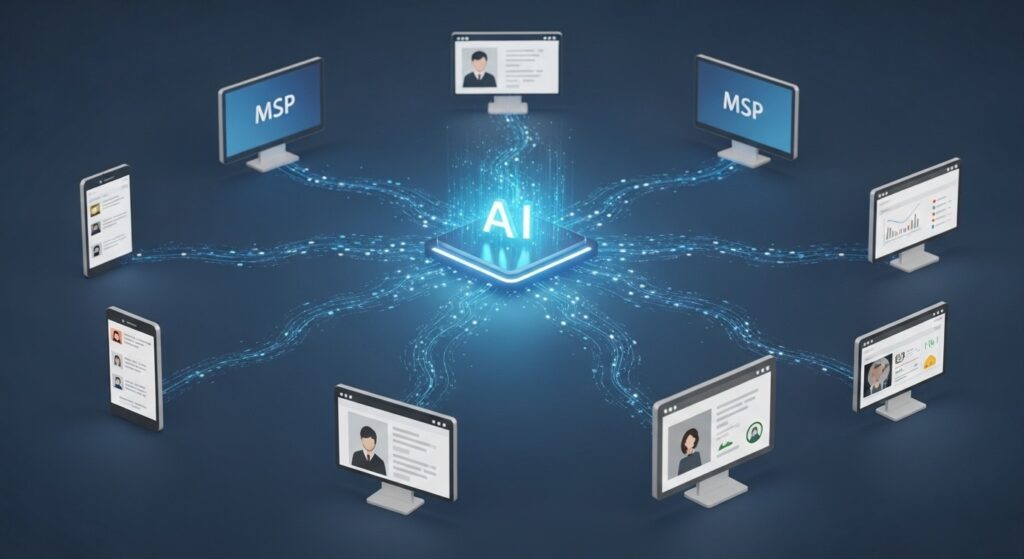
Implementation begins with evaluating your current communication infrastructure and identifying integration points. Successful MSP AI solutions must work seamlessly with existing PSA systems, RMM platforms, and billing applications. Choose providers offering comprehensive APIs and pre-built integrations with popular business tools.
Training and onboarding require careful planning to ensure team adoption and customer satisfaction. Top-tier service providers provide a comprehensive onboarding program to help you launch your voice practice, including technical, sales, marketing and back-office education. Staff must understand not only how to operate AI tools but also how to explain their benefits to customers.
Customer education is vital in AI deployment. Many business owners remain skeptical of automated systems, particularly for critical communication needs. Demonstrate AI capabilities through gradual implementation, starting with low-risk applications like appointment scheduling or basic information requests before expanding to more complex customer service scenarios.
Performance monitoring ensures AI systems deliver expected results while identifying opportunities for optimization. Track metrics like first-call resolution rates, average response times, customer satisfaction scores, and technician productivity. By providing a unified platform for communication and collaboration, UCaaS enables faster decision-making, streamlines workflows, and reduces communication silos.
Security and compliance considerations become increasingly important as AI systems handle sensitive business communications. Ensure your chosen platform provides end-to-end encryption, secure user authentication, and compliance with relevant industry standards, such as HIPAA or SOC 2.
What Are the Real-World Benefits of MSP AI Tools?
MSPs implementing comprehensive AI communication strategies report measurable improvements across multiple areas. With the average cost of a data breach reaching $4.88 million, the pressure on MSPs to maintain airtight security has never been greater, making automated security monitoring and incident response critical competitive advantages.
Productivity gains typically appear within the first months of implementation. The integration of AI and automation frees MSP teams from the burden of repetitive and mundane tasks, resulting in higher productivity. Teams can manage larger client bases or focus on strategic initiatives that drive business growth.
Customer satisfaction improvements stem from faster response times and more consistent service delivery. Automated systems ensure inquiries receive immediate acknowledgment and appropriate routing regardless of time or day. AI-powered chatbots provide instant responses to common questions, reducing wait times and improving customer perception.
Cost reduction occurs through multiple channels, including reduced staff overhead for routine tasks, decreased emergency response requirements through proactive monitoring, and improved resource utilization through intelligent scheduling. MSPs commonly experience operational cost reductions as AI systems mature and optimize workflows.
Revenue growth opportunities emerge as AI systems enable MSPs to take on additional clients without proportional increases in staff. The operational efficiency gains create capacity for business expansion while maintaining service quality. AI-enhanced services often support premium positioning due to their proactive capabilities and advanced automation features.
Frequently Asked Questions
How do AI tools for MSPs integrate with existing communication systems?
Modern AI platforms offer comprehensive API integrations with popular PSA, RMM, and communication tools. The integration process typically involves connecting your existing systems through secure APIs, enabling automatic data sharing and workflow coordination without disrupting current operations.
What security measures protect sensitive customer data in AI communication systems?
Enterprise-grade AI platforms implement end-to-end encryption, multi-factor authentication, and compliance with industry standards like SOC 2 and HIPAA. Regular security audits and penetration testing ensure ongoing protection against evolving threats while maintaining communication reliability.
How quickly can MSPs expect to see ROI from AI communication tools?
MSPs typically experience positive ROI relatively quickly after implementation, with benefits accelerating as AI systems learn and optimize over time. Early improvements typically include reduced response times, higher first-call resolution rates, and increased technician productivity, leading to both cost savings and revenue growth opportunities.
Streamline Communication With White-Label Tools
Adopting AI tools for MSPs positions your business as a forward-thinking technology partner capable of delivering intelligent, proactive service that exceeds customer expectations. Communication automation, predictive analytics, and white-label AI solutions create the foundation for scalable growth while improving both customer and technician experiences. The combination of reduced operational costs, improved service quality, and enhanced customer satisfaction creates a sustainable path to higher margins and business growth.
SkySwitch provides a comprehensive UCaaS platform and AI-powered communication tools that enable MSPs to implement these advanced capabilities under their own brand. Our geo-redundant infrastructure, extensive integration options, and dedicated partner support ensure your success in delivering next-generation communication solutions to your clients. Get started today and discover how AI-powered communications can transform your MSP practice.

Jessica is a marketing and sales strategist with deep expertise in VoIP telecommunications. As a Marketing Director, she specializes in channel marketing, account management, and product marketing within the communications industry. Jessica is passionate about helping partners grow through compelling messaging and hands-on support.