
Voice API for Telecoms: The Complete Guide for Resellers and MSPs
A voice API for telecoms is the foundation of a reseller-first path to programmable voice, advanced call routing, and white-label growth.
- Deliver enterprise features fast: use documented, language-agnostic voice APIs for provisioning, real-time call data, DID/E911 management, and click-to-call without building core telephony.
- Launch under your brand: pair white-label packaging, UC clients, and contact center add-ons to own customer relationships and margins.
- Build on reliability: a geo-redundant network and carrier-grade architecture protect call quality and continuity at scale.
- Integrate and scale: align with the market shift to integrated UCaaS platforms and flexible APIs to meet diverse use cases.
Partner with a white-label platform that combines robust voice APIs, geo-redundant delivery, and reseller enablement to accelerate time-to-market and maximize recurring revenue.
For resellers and managed service providers (MSPs), a voice API for telecoms is the gateway to delivering sophisticated communication capabilities without massive infrastructure investments. The global Voice Chat API market reached $1.2 billion in 2024 and is projected to grow to $3.5 billion by 2033, following a 12.5% compound annual growth rate, creating lucrative opportunities for telecom resellers.
Understanding voice APIs for telecoms is vital for reseller partners who need to deliver enterprise-grade communication solutions while maintaining competitive margins. This comprehensive guide explores everything resellers and MSPs need to know about leveraging voice APIs to build profitable, scalable telecommunications practices.
What is a Voice API for Telecoms?
Voice API for telecoms is a set of programming interfaces that enables software applications to integrate real-time voice communication directly into business systems, applications, and workflows. Unlike traditional telephony infrastructure that requires significant hardware investments and technical expertise, modern voice APIs provide ready-to-use building blocks for creating communication solutions through simple HTTP requests and standardized protocols.
For telecommunications resellers, voice APIs eliminate the complexity of managing carrier relationships, network infrastructure, and telephony protocols while providing complete control over the customer experience. These APIs handle the underlying Session Initiation Protocol (SIP) signaling, Public Switched Telephone Network (PSTN) connectivity, and media processing, allowing resellers to focus on delivering value-added services and building customer relationships. Mobile networks can now expose network capabilities through standardized APIs, making them a canvas for innovation.
Three primary components that work in seamless harmony make up the architecture:
- RESTful API endpoints provide stateless communication for initiating calls, managing numbers, and controlling call flows through simple HTTP requests.
- WebRTC capabilities enable browser-based voice applications without plugins or downloads, supporting everything from click-to-call functionality to full-featured softphones.
- Session management protocols handle the complex signaling required for establishing, maintaining, and terminating voice connections across global networks.
Modern voice API platforms simultaneously support multiple communication channels, including traditional PSTN calling, Voice over Internet Protocol (VoIP) services, mobile applications, and browser-based communications. This flexibility enables resellers to offer comprehensive solutions that meet diverse customer needs while leveraging a single technical platform for simplified operations and reduced complexity.
What Are the Types of Voice APIs for Telecom Providers?
Telecom resellers have access to several distinct categories of voice APIs, each designed for specific use cases and integration requirements. Understanding these different types helps MSPs and resellers select the appropriate solution for their customer needs and technical capabilities.
Outbound Calling APIs initiate phone calls programmatically, supporting everything from automated notifications and appointment reminders to sophisticated dialing campaigns. These APIs provide comprehensive control over call initiation, including caller ID management, call recording activation, and custom routing logic based on business rules or customer data.
Inbound Call Management APIs handle incoming calls with routing capabilities that surpass traditional phone systems. Features include intelligent call distribution based on agent availability, skills-based routing for specialized support scenarios, and integration with customer relationship management systems for automatic screen pops and call context delivery.
Programmable Voice APIs offer the highest degree of customization through flexible call control mechanisms. Developers can create dynamic call flows that respond to real-time conditions, implement custom interactive voice response systems, and build sophisticated call handling logic that adapts to specific business requirements or customer preferences.
WebRTC Voice APIs specialize in browser-based communication without requiring plugins or software downloads. These APIs enable embedded calling functionality within web applications, support for mobile browser communications, and seamless integration with existing customer portals or business applications.
Conference and Collaboration APIs power multi-party calling scenarios with features like participant management, recording controls, and integration with video conferencing platforms. These APIs support everything from simple three-way calling to large-scale webinars and virtual events with hundreds of participants.
Many successful resellers combine multiple API types to create comprehensive communication solutions that address various customer scenarios while maintaining a consistent user experience across all interaction channels.
Which Core Features Should You Offer with Programmable Voice?
Programmable voice platforms provide resellers with features that enable the creation of custom communication solutions. These differentiated reseller offerings provide substantial value to end customers.
Advanced Call Routing is one of the most powerful features available through modern voice APIs. Intelligent routing algorithms can direct calls based on geographic location, time of day, agent availability, customer priority levels, or custom business rules. This capability transforms simple phone systems into communication hubs that optimize customer experiences while maximizing operational efficiency.
Real-Time Call Control enables dynamic modification of active calls through simple API commands. Resellers can offer features like call transfer, call parking, conference bridge creation, and call recording activation without requiring specialized telephony knowledge. These capabilities support complex business workflows while maintaining simplicity for end users.
Speech Recognition and Text-to-Speech create intelligent voice interfaces that can understand natural language commands and provide spoken responses. These features enable the development of AI-powered virtual assistants, automated customer service systems, and accessibility features that enhance the overall communication experience.
Call Recording and Transcription provide automatic documentation of voice interactions with configurable retention policies and search capabilities. Advanced platforms offer real-time transcription, sentiment analysis, and keyword extraction that help businesses improve customer service quality and compliance monitoring.
Number Management and Provisioning APIs enable dynamic allocation of phone numbers, support for local and toll-free numbers in multiple countries, and automated number porting services. Resellers can provide global communication capabilities without maintaining relationships with multiple carriers or regulatory authorities.
Quality of Service Monitoring delivers real-time analytics on call quality, network performance, and system reliability. These insights help resellers proactively identify and resolve issues while providing customers with detailed reporting on communication system performance and utilization patterns.
Integration extends these core features through connections with popular business applications, customer relationship management systems, and workflow automation platforms. The combination of powerful voice capabilities with seamless integration creates comprehensive solutions that support modern businesses.
How Can Resellers and MSPs Implement Voice APIs?
Successfully implementing voice APIs requires understanding both the technical architecture and business workflows that drive telecom reseller operations. This section provides practical guidance for MSPs and resellers planning voice API integration projects.
Authentication and Security form the foundation of any voice API implementation. Most platforms use API keys or OAuth 2.0 tokens for secure access control, with additional security measures including IP whitelisting, request signing, and encrypted communication channels. Proper authentication setup protects both reseller and customer data while ensuring compliance with regulations.
SDK Selection and Development Environment setup involves choosing the right software development kit for your preferred programming language and framework. Leading voice API providers offer SDKs for JavaScript, Python, PHP, Java, C#, and other popular languages, each with comprehensive documentation and code examples that accelerate development timelines.
Webhook Configuration enables real-time event handling for call status updates, recording availability notifications, and billing events. Properly configured webhooks ensure that business applications stay synchronized with voice platform events while providing the foundation for automated workflows and customer notifications.
Call Flow Design is a critical aspect of voice API implementation. Successful resellers design call flows that balance functionality with simplicity, ensuring that end users can access advanced features without overwhelming complexity. MSPs and resellers plan for error handling, fallback scenarios, and graceful degradation when network conditions or system resources become constrained.
Number Management requires coordination between voice API provisioning and existing business systems. This process includes automated number assignment, inventory tracking, regulatory compliance monitoring, and integration with billing platforms for accurate customer invoicing and cost tracking.
Testing and Quality Assurance should include both functional testing of voice features and performance testing under realistic load conditions. Comprehensive testing validates call quality, system reliability, and user experience across different network conditions and device types.
Deployment and Monitoring ensure smooth launches with ongoing performance optimization. Considerations include setting up monitoring dashboards, establishing alerting thresholds, and creating procedures for rapid issue resolution that minimize customer impact during system updates or unexpected events.
The implementation timeline typically ranges from two to eight weeks, depending on complexity and integration requirements. Successful projects begin with careful assessment and progress through iterative development cycles that allow for testing and refinement before full deployment.
Call Routing API: Advanced Configuration
Call routing API capabilities enable resellers to create voice traffic management systems that optimize customer experiences while maximizing efficiency. Advanced routing configurations create intelligent communication workflows that adapt to real-time conditions and business requirements.
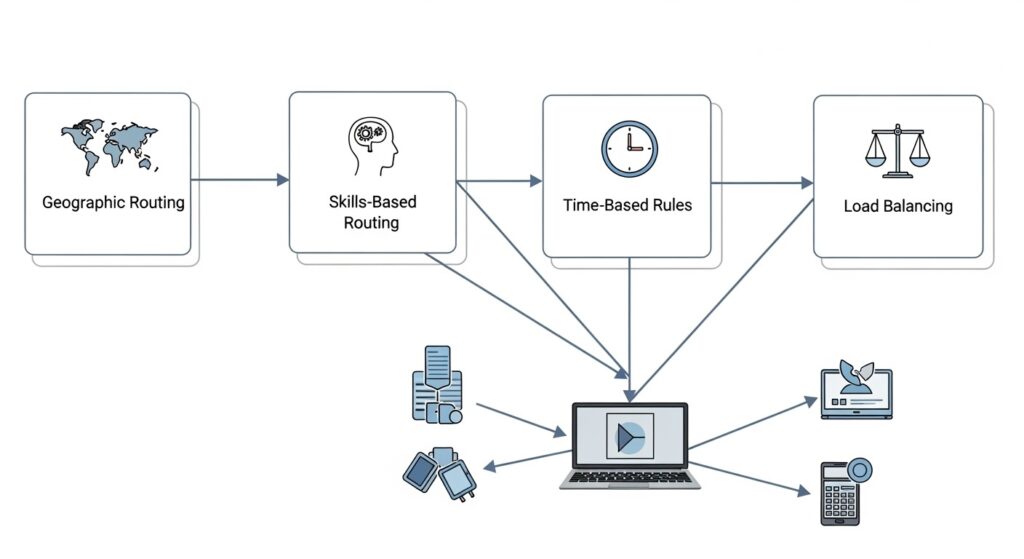
Geographic Routing directs calls based on caller location, time zones, and regional preferences. Businesses can provide localized customer service experiences while optimizing resources across multiple locations. Advanced implementations consider factors like language preferences, regulatory requirements, and local business hours for intelligent call distribution.
Skills-Based Routing matches callers with agents based on specific expertise, language capabilities, or customer relationship history. This approach improves first-call resolution rates while ensuring that complex inquiries reach qualified representatives. Integration with CRM systems provides additional context for routing decisions.
Load Balancing and Failover mechanisms distribute call volume across multiple endpoints while automatically handling system failures or capacity constraints. Advanced configurations include weighted distribution algorithms, health monitoring for endpoint availability, and automatic failover to backup systems during maintenance windows or unexpected outages.
Time-Based Routing creates dynamic call handling that changes based on business hours, holidays, seasonal patterns, or special events. These rules can trigger different call flows, activate emergency protocols, or redirect traffic to alternative resources when primary systems become unavailable.
Priority and Queue Management handles high-value customers, urgent inquiries, and time-sensitive communications. Advanced queue configurations include callback options, estimated wait time announcements, and intelligent overflow to alternative channels when wait times exceed acceptable thresholds.
Custom Business Logic Integration allows call routing decisions to incorporate real-time data from external systems, customer databases, or business applications. This capability enables dynamic routing based on account status, purchase history, support ticket priority, or other business-specific criteria that enhance customer interactions.
Analytics and Optimization provide detailed insights into routing performance, call patterns, and system utilization. These analytics help resellers continuously improve routing algorithms while identifying opportunities for enhancements and cost optimization.
The configuration process involves defining routing rules through either graphical interfaces or programmatic API calls, depending on complexity and integration requirements. Most successful implementations begin with basic routing scenarios and gradually add sophistication as user adoption increases and business requirements evolve.
What Are the Business Benefits for Resellers and MSPs?
Voice APIs for telecom create substantial business advantages for resellers and managed service providers, transforming traditional service delivery models while opening new revenue opportunities.
Revenue Generation and Margin Optimization are immediate benefits for resellers adopting voice API platforms. Typical profit margins vary but are higher when reselling voice services compared to traditional hardware. The recurring revenue model provides predictable income streams that support sustainable business growth and improved cash flow management.
Accelerated Time-to-Market means that resellers can launch new communication services in weeks rather than months or years required for traditional infrastructure deployment. This speed advantage allows rapid response to customer demands and competitive opportunities while reducing the investment risks associated with new service offerings.
Reduced Operational Complexity eliminates the need for specialized telecommunications expertise, carrier relationship management, and infrastructure maintenance. Voice API providers handle network operations, regulatory compliance, and system updates, allowing resellers to focus on customer relationships and business development rather than technical management.
Scalability Without Infrastructure Investment supports business growth without proportional increases in overhead costs or technical complexity. Cloud-based voice platforms automatically scale to handle increased call volumes, additional customers, and new service features without requiring hardware purchases or facility expansion.
Enhanced Customer Retention results from offering comprehensive communication solutions that integrate with existing business applications and workflows. Customers utilizing integrated voice APIs become more dependent on reseller services, creating natural barriers to switching providers and increasing lifetime customer value.
Competitive Differentiation comes from the ability to offer advanced features and custom integrations that distinguish reseller services from basic telecom providers. Voice APIs enable unique value propositions based on industry-specific requirements, integration capabilities, and innovative workflows.
Market Expansion Opportunities arise from the ability to serve new customer segments and geographic markets without establishing physical infrastructure or regulatory relationships. Voice APIs support international calling, local number provisioning, and compliance with global regulations through a single platform relationship.
Improved Customer Experience through advanced features like intelligent call routing, automated attendants, and integration with customer relationship management systems creates higher satisfaction rates and positive word-of-mouth referrals that drive organic business growth.
The combination of these benefits creates a compelling business case for voice API adoption, particularly for MSPs and resellers seeking to diversify revenue streams while enhancing their value proposition to existing customers.
What Are Common Strategies for Voice Platform Integration?
Successful voice platform integration balances technical capabilities with business objectives while ensuring seamless operation with existing systems and workflows. Resellers that integrate voice APIs successfully realize benefits while minimizing disruption to current operations.
Assessment and Planning encompass existing infrastructure, customer requirements, and business objectives. This analysis identifies integration points, potential challenges, and success metrics that guide decisions. Successful assessments also consider future growth plans and technology roadmaps to ensure long-term viability.
Phased Implementation Approach reduces risk while enabling continuous learning and optimization throughout the process. Initial phases typically focus on basic voice services for pilot customers, followed by gradual expansion of features and customer base as confidence and expertise develop. This approach allows for real-world testing and refinement before full-scale deployment.
API Gateway and Middleware Integration provides abstraction layers that simplify implementation while enabling future platform changes or multi-vendor strategies. These architectural patterns isolate business applications from specific voice platform implementations, reducing complexity and improving maintainability over time.
Customer Relationship Management Integration creates unified communication experiences that leverage existing customer data and business processes. Effective CRM integration includes screen pop functionality, call logging, automated activity tracking, and synchronization of communication history with customer records for improved service delivery.
Billing and Business Support Systems ensure accurate cost tracking, customer invoicing, and financial reporting for voice services. MSPs and resellers leverage real-time usage monitoring, automated billing cycles, and integration with existing accounting systems for streamlined financial management.
Training and Knowledge Transfer programs prepare technical staff and customer service teams for voice platform operations and customer support. Comprehensive training covers both technical aspects and business processes, ensuring smooth operations and effective customer assistance throughout the service lifecycle.
Documentation and Procedures establish standardized processes for voice service provisioning, troubleshooting, and customer support. Well-documented procedures reduce operational complexity while ensuring consistent service delivery across different team members and customer scenarios.
Performance Monitoring and Optimization provide ongoing visibility into voice platform performance, customer usage patterns, and business metrics. These monitoring capabilities enable proactive issue resolution and continuous improvement of service delivery while identifying opportunities for business growth.
The integration timeline varies based on complexity and scope but typically ranges from four to twelve weeks for comprehensive implementations. Success depends on careful planning, stakeholder alignment, and commitment to following established best practices throughout the integration process.
Top 7 Use Cases for Voice APIs in Telecoms
Voice APIs enable numerous applications across different industries and business scenarios. Understanding these use cases helps resellers identify opportunities and articulate value propositions for potential customers.
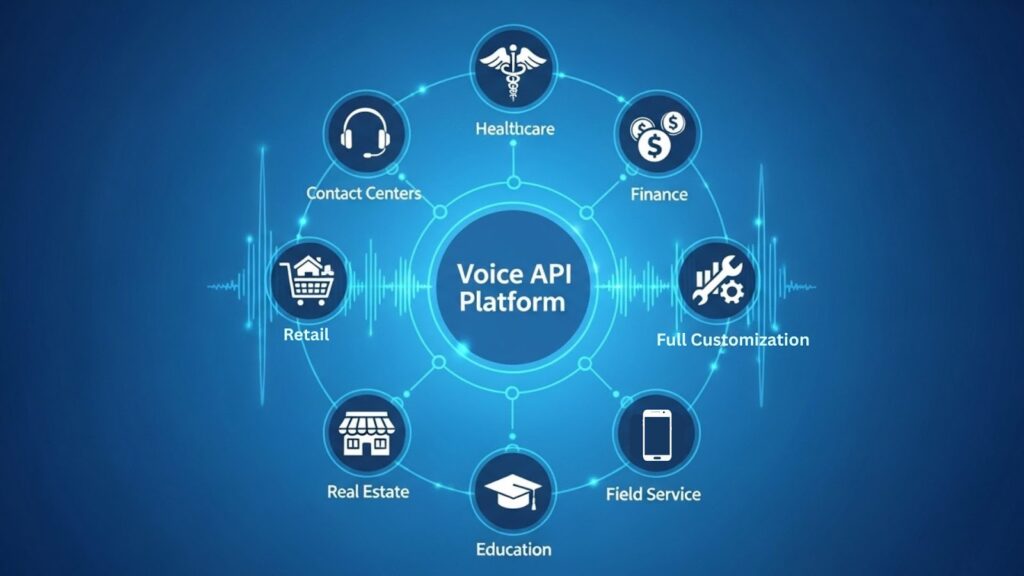
1. Advanced Contact Center Solutions
Modern contact centers use voice APIs to create sophisticated customer service experiences that improve efficiency while reducing operational costs. Features include intelligent call routing based on customer history, real-time sentiment analysis during calls, and automated quality monitoring that identifies training opportunities. Integration with customer relationship management systems provides agents with complete context before calls begin, while advanced reporting capabilities help managers optimize staffing and performance.
2. Healthcare Communication Systems
Healthcare organizations require specialized communication capabilities that address privacy regulations, emergency protocols, and workflow integration. Voice APIs enable HIPAA-compliant calling systems, automated appointment reminders with patient confirmation, and integration with electronic health records for complete documentation. Emergency notification systems can automatically contact on-call physicians, while secure messaging capabilities protect patient information during routine interactions.
3. Financial Services Integration
Financial institutions utilize voice APIs for secure customer communications, automated transaction notifications, and fraud prevention workflows. Features include two-factor authentication through voice calls, automated account alerts for unusual activity, and secure communication channels for sensitive financial discussions. Integration with customer databases enables personalized service experiences while maintaining strict security and compliance requirements.
4. E-commerce and Retail Support
Online retailers implement voice APIs to provide immediate customer support, order assistance, and post-purchase communication. Click-to-call functionality on product pages connects customers directly with sales representatives, while automated order confirmations and shipping notifications keep customers informed throughout the purchase process. Integration with inventory systems enables real-time product availability information during sales calls.
5. Real Estate and Property Management
Real estate professionals leverage voice APIs for prospect communication, appointment scheduling, and client relationship management. Automated follow-up systems nurture leads through voice messages, while property showing reminders reduce no-show rates. Integration with CRM systems provides a complete history for better client service and relationship building.
6. Education and Training Institutions
Educational organizations use voice APIs for student communication, emergency notifications, and administrative processes. Automated attendance confirmations, grade notifications, and upcoming deadline reminders help students stay engaged and informed. Emergency notification systems can rapidly contact students and staff during crisis situations, while appointment scheduling simplifies administrative processes.
7. Field Service and Logistics
Companies with mobile workforces implement voice APIs for dispatch communication, customer notifications, and service coordination. Real-time location-based routing connects customers with nearby technicians, while automated arrival notifications improve customer experience. Integration with scheduling systems enables dynamic resource allocation based on real-time conditions and service requirements.
Each use case demonstrates how voice APIs transform traditional communication into business advantages.
Where Do Security and Compliance Fit Into Voice APIs?
Voice API implementations require comprehensive security measures that protect customer data, ensure regulatory compliance, and maintain system integrity across all communication channels. As AI-powered IVR and voice applications expand, the attack surface for voice and API-driven systems is widening, introducing new privacy and model-level vulnerabilities.
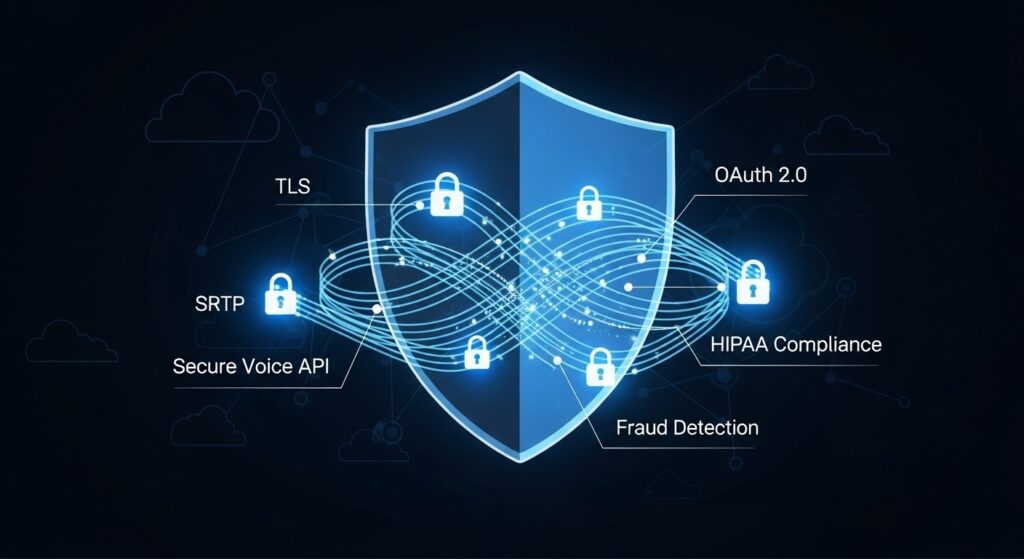
Data Encryption and Transmission Security form the foundation of secure voice communications. Modern voice APIs implement end-to-end encryption for both signaling and media streams, ensuring that conversation content remains protected during transmission across public networks. Transport Layer Security (TLS) protocols protect API communications, while Secure Real-time Transport Protocol (SRTP) encrypts voice data streams.
Authentication and Access Control mechanisms prevent unauthorized access to voice systems and customer data. Multi-factor authentication, role-based access controls, and API key management ensure that only authorized personnel can access system features and customer information. Regular access reviews and automated deprovisioning processes maintain security as organizations change and evolve.
Regulatory Compliance Requirements vary by industry and geographic location but commonly include call recording retention policies, data residency requirements, and privacy protection measures. Healthcare organizations must comply with HIPAA regulations, while financial services firms require adherence to various banking and securities regulations. International resellers must navigate complex compliance requirements across multiple jurisdictions.
Call Recording and Data Retention policies balance business requirements with privacy regulations and storage costs. Automated retention policies ensure compliance with legal requirements while minimizing storage expenses. Advanced platforms provide granular controls for recording activation, access permissions, and automatic deletion based on configurable business rules.
Fraud Prevention and Monitoring protects against toll fraud, unauthorized access, and system abuse. Real-time monitoring identifies unusual calling patterns, suspicious authentication attempts, and potential security breaches. Automated response systems can temporarily suspend accounts or require additional verification when suspicious activity is detected.
Network Security and DDoS Protection ensure system availability during cyber attacks or unexpected traffic spikes. Distributed denial-of-service (DDoS) protection maintains service availability, while network-level security controls prevent unauthorized access attempts and malicious traffic.
Audit Trails and Compliance Reporting provide detailed records of system access, configuration changes, and communication activities. These records support regulatory audits, security investigations, and operational troubleshooting while maintaining detailed documentation required for compliance purposes.
Incident Response and Recovery Procedures establish clear protocols for security breach response, system recovery, and customer notification. Well-defined procedures minimize impact during security incidents while ensuring appropriate stakeholder communication and regulatory reporting when required.
Regular security assessments, penetration testing, and compliance audits help maintain robust security while identifying potential vulnerabilities before they can be exploited.
How Do Resellers and MSPs Choose the Right Voice API Provider?
Selecting a voice API provider is one of the most critical decisions for telecommunications resellers, directly impacting customer satisfaction, operational efficiency, and business profitability. This evaluation requires careful consideration of technical capabilities, business model alignment, and long-term strategic compatibility.
Technical Infrastructure and Reliability should be the primary criteria for any voice API provider. Look for providers with geo-redundant data centers, carrier-grade uptime commitments, and proven track records of service reliability. Network quality indicators include global Points of Presence (PoPs), direct carrier relationships, and quality of service monitoring capabilities that ensure consistent call quality across different geographic regions and network conditions.
Feature Completeness and API Functionality must align with current customer requirements while supporting anticipated future needs. Comprehensive platforms offer programmable voice capabilities, WebRTC support, advanced call routing, recording and transcription services, and integration capabilities with popular business applications. Evaluate the breadth and depth of available features against customer use cases and competitive requirements.
Developer Experience and Documentation impact implementation timelines and ongoing operational efficiency. High-quality providers offer comprehensive API documentation, multiple programming language SDKs, detailed code examples, and responsive developer support. Interactive API explorers, webhook testing tools, and sandbox environments facilitate rapid development and testing cycles.
Pricing Model Transparency and Predictability affect profitability and customer pricing strategies. Evaluate both usage-based pricing and monthly recurring fees, considering factors like international rates, premium feature costs, and volume discounts. Transparent pricing models enable accurate customer quotes and margin calculations while avoiding unexpected costs that could impact profitability.
White-Label Capabilities and Branding Support enable resellers to maintain brand consistency and customer ownership. Look for providers that offer customizable portals, branded communication interfaces, and comprehensive white-labeling options that allow complete brand control throughout the customer experience.
Support Quality and Responsiveness directly impact customer satisfaction during critical situations. Evaluate support channels, response time commitments, escalation procedures, and the technical expertise of support personnel. 24/7 support availability becomes essential for business-critical communication systems.
Compliance and Security must meet industry requirements and customer expectations. Assess security certifications, compliance frameworks, data handling procedures, and geographic data residency options. Providers should demonstrate a clear understanding of regulatory requirements relevant to your target markets and customer industries.
Partnership Approach and Long-Term Vision influence the success of the business relationship beyond technical capabilities. Evaluate the provider’s commitment to partner success, roadmap alignment with market trends, and willingness to invest in mutual growth opportunities. Strong partnerships include comprehensive onboarding, ongoing training, and collaborative business development initiatives.
The evaluation process should include proof-of-concept testing, reference customer interviews, and detailed financial analysis to ensure alignment with business objectives and customer requirements.
Frequently Asked Questions
What programming languages are supported by voice APIs?
Most enterprise voice API platforms support multiple programming languages through comprehensive SDKs and libraries. Common options include JavaScript (for web and Node.js applications), Python, PHP, Java, C#, Ruby, and Go. Many providers also offer RESTful APIs that work with any language capable of making HTTP requests, providing maximum flexibility for development teams with diverse technical backgrounds.
How quickly can voice API integration be completed?
Integration timelines vary based on complexity and scope but typically range from two to eight weeks for most implementations. Simple integrations like click-to-call functionality can be completed in days, while comprehensive contact center solutions may require several months. Factors affecting the timeline include existing system integration requirements, custom feature development, and testing protocols.
Can voice APIs integrate with existing phone systems?
Yes, modern voice APIs are designed to complement and enhance existing telecom infrastructure. They can integrate with traditional PBX systems through SIP trunking, work alongside existing carrier services, and provide additional functionality without requiring complete system replacement. This approach protects existing investments while enabling gradual migration to cloud-based solutions.
What security measures protect voice API communications?
Voice API platforms implement multiple security layers, including TLS encryption for API communications, SRTP encryption for voice streams, and comprehensive authentication systems. Additional security features include fraud detection monitoring, access control management, and compliance with industry regulations like HIPAA and PCI DSS when required.
Explore Voice APIs with a Supportive Telecom Reseller Partner
Voice API for telecoms offers a transformative opportunity for resellers and MSPs to deliver sophisticated communication solutions while building profitable, scalable businesses. The combination of powerful programmable voice capabilities, comprehensive call routing APIs, and flexible voice platform integration enables resellers to compete against larger providers while maintaining control over customer relationships and profit margins.
The right partnership provides access to enterprise-grade technology, white-label branding opportunities, and the tools needed to build a thriving telecommunications practice. Get started with SkySwitch today and discover why resellers trust our white-label UCaaS platform to deliver exceptional voice solutions under their own brand.

Jessica is a marketing and sales strategist with deep expertise in VoIP telecommunications. As a Marketing Director, she specializes in channel marketing, account management, and product marketing within the communications industry. Jessica is passionate about helping partners grow through compelling messaging and hands-on support.