
The Guide to White-Label Cloud Solutions for MSPs & Resellers

White-label cloud solutions offer MSPs and IT resellers the fastest path to recurring revenue in the booming unified communications market.
- The global VoIP services market is projected to reach $308 billion by 2030, creating massive opportunities for resellers who move now.
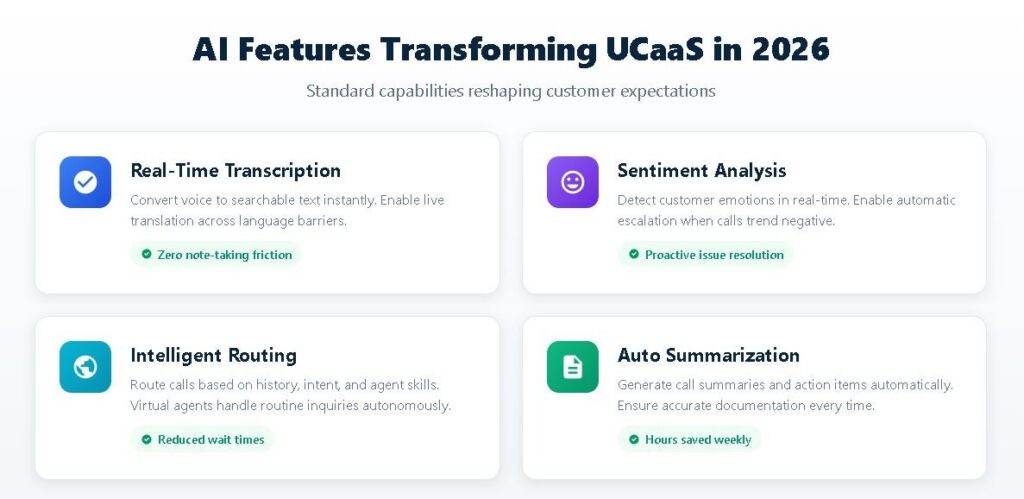
- AI-powered features like real-time transcription, sentiment analysis, and intelligent call routing have become standard expectations.
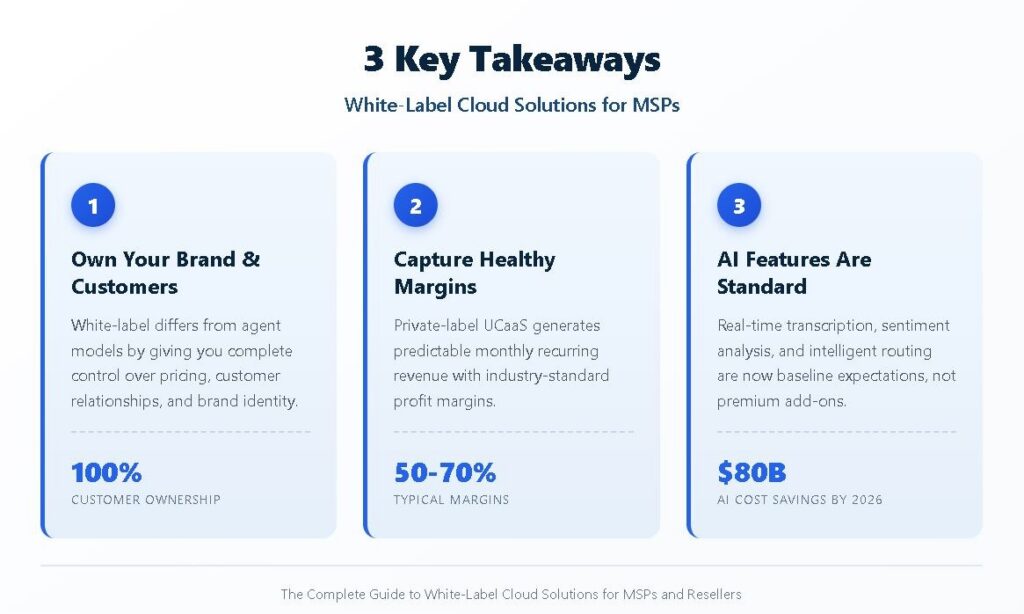
- Private-label UCaaS enables you to build brand equity while leveraging enterprise-grade infrastructure without capital investment.
- MSPs who partner with the right white-label cloud VoIP platform can achieve margins of 50–70% while owning customer relationships.
If you’re an MSP or IT provider looking to diversify revenue streams, the white-label cloud model offers the lowest barrier to entry with the highest growth potential.
Businesses of all sizes are abandoning legacy phone systems in favor of flexible, cloud-based platforms that support hybrid workforces and deliver advanced features at lower costs. The global VoIP services market is valued at approximately $172 billion in 2025 and is projected to exceed $308 billion by 2030, representing consistent double-digit growth.
This change in how businesses communicate creates a massive addressable market. The question for MSPs and resellers alike is how to enter the market, build lasting customer relationships, and capture healthy margins without the overhead of building infrastructure from scratch. White-label cloud solutions answer all three concerns by providing turnkey platforms you can brand as your own, sell to your customer base, and support with expert backing.
What Are White-Label Cloud Solutions?
White-label cloud solutions are communication platforms built, hosted, and maintained by a provider that you rebrand and sell under your own company name. Your customers interact with your brand throughout their entire experience, from initial quotes to ongoing support, while the underlying technology and infrastructure remain managed by your platform partner.
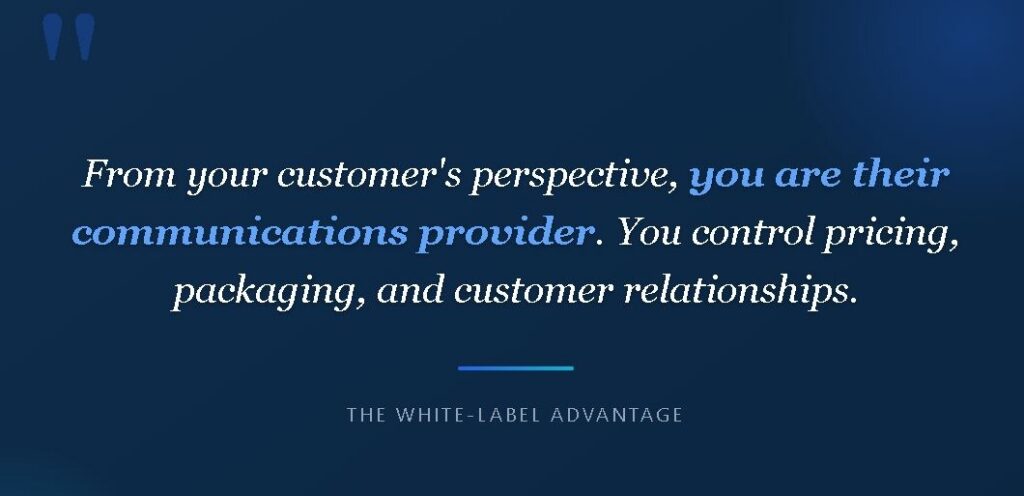
This model differs from traditional reselling or agent programs, where you earn commissions on another company’s branded product. With white-label partnerships, you control pricing, packaging, and customer relationships. You invoice customers directly. You provide first-line support. Your portal displays your logo and colors. From your customer’s perspective, you are their communications provider.
How White-Label Differs from Other Models
The telecom industry offers several partnership structures, but white-label stands apart. Agent or referral programs typically pay one-time or ongoing commissions while the vendor maintains the customer relationship and brand presence. These arrangements require minimal investment but offer limited control and lower long-term value. Wholesale models provide services at discounted rates but may still expose the underlying provider’s branding or restrict your pricing flexibility.
White-label solutions combine the infrastructure support of wholesale with complete brand ownership. You get access to enterprise-grade platforms with geo-redundant networks, advanced features, and professional support teams, all while your customers see only your brand. This positioning enables you to build a successful VoIP business with sustainable recurring revenue rather than transactional commissions.
Why Are Companies Migrating to Cloud VoIP and UCaaS?
Understanding the drivers behind cloud communications adoption helps resellers position their offerings. Businesses aren’t switching platforms for the sake of new technology. They’re solving specific pain points that legacy systems can’t address.
Cost Reduction and Predictability
Traditional PBX systems require significant capital expenditure for hardware, plus ongoing maintenance costs that can spike unexpectedly. Cloud VoIP eliminates most hardware requirements and replaces unpredictable expenses with predictable monthly subscriptions. Industry research confirms that companies are saving up to 50% on costs related to phone calls while reducing the financial burden of maintaining legacy equipment.
Flexibility for Hybrid Workforces
Remote and hybrid work trends have made cloud communications essential. Employees need to make and receive calls, join video meetings, and message colleagues from home offices, coffee shops, airport lounges, or anywhere with internet connectivity. Private-label UCaaS platforms deliver this flexibility through unified applications that work identically across desktop, mobile, and web interfaces. Workers maintain a single business identity regardless of location, which protects professionalism while enabling freedom.
Scalability Without Infrastructure Concerns
Growing businesses previously faced painful decisions about phone system capacity. Adding locations or employees meant purchasing new equipment, running cables, and managing complex configurations. Cloud VoIP platforms scale instantly through administrative portals. Adding a new user takes minutes, not weeks. Expanding to a new office requires only internet connectivity. Seasonal businesses can scale up for busy periods and back down afterward, paying only for what they actually use.
Integration with Business Applications
Modern cloud communications platforms connect with the software businesses already use daily. CRM integrations automatically log calls and surface customer information during conversations. Productivity suite connections enable click-to-call functionality and synchronized calendars. API access allows custom workflows that match specific business processes. Integration transforms communications from an isolated utility into a connected component of business operations.

How Are AI Integrations Transforming White-Label Cloud Solutions in 2026?
Today, AI-powered capabilities are standard expectations rather than premium differentiators. Gartner predicts that conversational AI deployments in contact centers will reduce agent labor costs by $80 billion, highlighting the transformative impact these technologies deliver.
Real-Time Transcription and Translation
AI-powered transcription converts voice conversations to searchable text in real time. Meeting participants can focus on discussion rather than note-taking, knowing that accurate transcripts will be available immediately afterward. Some platforms extend this capability with live translation, enabling communication across language barriers without human interpreters. For businesses with international customers or multilingual workforces, this functionality removes significant friction from daily operations.
Sentiment Analysis and Call Intelligence
Advanced AI analyzes what people say and how they say it. Sentiment analysis detects customer frustration, confusion, or satisfaction during calls, enabling real-time coaching for agents or automatic escalation to supervisors when conversations trend negative. Post-call analytics aggregate this intelligence across entire customer bases, revealing patterns that inform product decisions, training priorities, and service improvements. Resellers offering platforms with built-in AI-powered analytics position themselves as strategic partners rather than utility vendors.
Intelligent Call Routing and Virtual Agents
AI enables routing decisions based on far more than simple queue position or skill groups. Modern systems consider caller history, predicted intent, agent performance patterns, and real-time queue conditions to optimize each interaction. Virtual agents handle routine inquiries without human involvement, from appointment confirmations to account balance lookups, freeing live agents for complex situations that benefit from human judgment. The combination improves customer experience while reducing operational costs.
Automated Summarization and Action Items
After every call or meeting, AI generates summaries highlighting key discussion points and action items. Participants receive clear next steps without manually reviewing recordings or relying on memory. Sales teams achieve better follow-through on commitments. Support organizations ensure accurate ticket documentation. Busy executives reclaim hours previously spent on administrative tasks.
Cloud Solution Comparison: Deployment Models and Features
Choosing the right cloud communications approach requires understanding different deployment models and their tradeoffs. The following comparison helps MSPs guide customer conversations and select appropriate solutions for various use cases.
| Feature | Public Cloud UCaaS | Private Cloud/Hybrid | On-Premises PBX |
| Upfront Investment | Minimal | Moderate | High |
| Monthly Costs | Predictable subscription | Variable | Unpredictable maintenance |
| Scalability | Instant, unlimited | Requires planning | Hardware-limited |
| Remote Work Support | Native, full-featured | Varies by implementation | Limited without VPN |
| AI Feature Access | Automatic updates | Varies by provider | Rarely available |
| Data Control | Provider-managed | Customer control | Full customer control |
| Compliance Support | Built-in certifications | Configurable | Customer responsibility |
| Ideal For | Most SMBs, distributed teams | Regulated industries, specific sovereignty needs | Legacy integration requirements |
Public cloud UCaaS dominates the market for good reason. Public cloud deployment holds approximately 67% market share in cloud telephony, driven by cost efficiency, flexibility, and ease of implementation. However, hybrid approaches are growing fastest as organizations balance cloud benefits with specific compliance or integration requirements.
For resellers, understanding the differences between cloud PBX and UCaaS helps match solutions to customer needs. Cloud PBX focuses on voice services with basic features, while UCaaS provides comprehensive unified communications, including video, messaging, and collaboration tools. Most modern businesses expect UCaaS functionality, making it the stronger foundation for building recurring revenue.
What Are the Benefits of Private-Label UCaaS for MSPs?
The white-label model offers distinct advantages for MSPs and IT providers seeking sustainable growth through communications services.
Recurring Revenue with Healthy Margins
Unlike project-based IT services with feast-or-famine revenue patterns, private-label UCaaS generates predictable monthly income from every active customer. Industry-standard margins range from 50–70%, depending on packaging and pricing strategies. As your customer base grows, revenue compounds without proportional increases in operational overhead. This financial model supports business valuation growth, easier planning, and reduced vulnerability to economic fluctuations.
Brand Building and Customer Loyalty
When customers associate their communications experience with your brand, you build equity that competitors can’t easily displace. You’re no longer a vendor they might switch from. You’re their trusted provider embedded in daily operations. This positioning creates stickiness that reduces churn and enables expansion selling. Customers who trust you for communications are more likely to consider additional services you offer.
Competitive Differentiation
Many MSPs offer similar hardware, software, and support services. Adding white-label UCaaS creates differentiation that’s difficult for local competitors to replicate. You transform from a commodity service provider into a comprehensive technology partner addressing critical business communication needs. This positioning supports premium pricing and reduces pressure to compete solely on cost.
Reduced Customer Churn
Customers using your communications platform interact with your brand multiple times daily. Every call, every message, every meeting reinforces the relationship. Switching costs increase naturally as customers configure integrations, train employees, and establish workflows around your platform. The combination of frequent positive touchpoints and meaningful switching barriers creates stronger customer retention than traditional managed services.
How Do You Choose the Best White-Label Cloud VoIP Platform for MSPs?
Selecting the right platform partner determines your long-term success in white-label cloud solutions. Beyond features and pricing, consider factors that impact your ability to serve customers effectively and build a sustainable business.
Reliability and Infrastructure Quality
Your reputation depends on your platform’s uptime. Look for providers with geo-redundant architectures that survive data center outages without customer impact. Transparent status pages and proactive incident communication indicate mature operations. Ask about network peering relationships and capacity planning to understand how the provider handles growth and traffic spikes. Geo-redundant networks with multiple nodes across different geographic regions provide the resilience businesses demand for critical communications.
Comprehensive Feature Sets
Customers expect more than basic calling. Evaluate video conferencing quality, team messaging capabilities, mobile application functionality, and integration options. Contact center features matter as SMBs demand professional customer service tools. AI-powered capabilities like transcription, analytics, and intelligent routing differentiate leading platforms from commodity services.
Reseller-Focused Support
The best technology means nothing if you can’t effectively deploy and support it. Assess onboarding programs, training resources, and ongoing support structures. Look for providers offering technical certification programs, sales enablement materials, and responsive partner account management.
Billing and Operational Tools
Managing a communications business requires more than technical capabilities. Evaluate quoting tools, billing platform integrations, tax calculation support, and reporting capabilities. Providers offering quote-to-cash workflows simplify your operations. Consider how the platform integrates with your existing PSA or accounting systems, reducing administrative overhead as you scale.

5 Essential Features of Top MSP VoIP Platforms
When evaluating white-label cloud VoIP platforms, prioritize these capabilities that directly impact your ability to serve customers and build revenue:
- Auto-Provisioning and Self-Service Portals: Reducing deployment time from days to minutes improves customer satisfaction and your operational efficiency. Look for platforms that auto-provision phones based on MAC addresses and provide intuitive self-service portals for common administrative tasks. The faster you can get customers operational, the faster you realize revenue.
- Mobile-First Applications: With remote work, mobile apps must deliver full functionality, not stripped-down versions of desktop capabilities. Evaluate iOS and Android applications for call quality, feature parity, and user experience. Strong mobile apps enable you to serve businesses with distributed workforces and field-based employees.
- 200+ CRM and Business Integrations: Customers expect communications tools to connect with their existing software ecosystem. Evaluate integration breadth and depth for popular platforms like Salesforce, HubSpot, Microsoft 365, and industry-specific applications. API documentation quality matters for customers with custom integration needs.
- Advanced Call Handling Features: Professional businesses require capabilities beyond basic calling, including auto attendants, call queues, ring groups, call recording, and sophisticated routing rules. These features enable you to serve businesses of varying complexity and upsell additional capabilities as customers grow.
- Compliance and Security Certifications: Regulated industries require specific compliance postures. HIPAA compliance for healthcare, SOC 2 certification for general business security, and telecommunications regulations like STIR/SHAKEN and 10DLC compliance for SMS demonstrate platform maturity and enable you to confidently serve demanding customers.
Frequently Asked Questions
What’s the difference between white-label VoIP and UCaaS?
VoIP specifically refers to voice calling over internet protocols, while UCaaS encompasses a complete unified communications suite including voice, video conferencing, team messaging, mobile applications, and collaboration tools. Most modern businesses expect UCaaS functionality rather than simple VoIP. White-label platforms that offer comprehensive UCaaS capabilities provide greater customer value and higher revenue potential per seat than voice-only solutions.
How long does it take to launch a white-label cloud communications business?
The timeline varies by provider and your existing experience. Quality platforms offer structured onboarding programs that can have new resellers selling within 30–90 days. This includes technical training, portal configuration, billing setup, and sales enablement. More complex deployments involving custom integrations or large customer migrations may require additional time, but the basic launch timeline is measured in weeks rather than months.
Do I need telecommunications experience to resell white-label UCaaS?
While telecommunications experience helps, it’s not required for success. Quality white-label providers offer comprehensive training programs, technical support escalation paths, and sales enablement resources that help IT professionals without telecom backgrounds to serve customers. Your existing client relationships and IT expertise often matter more than specific telecom knowledge, especially with strong platform partner support.
Launch Your White-Label Cloud Business Today
AI capabilities, cloud infrastructure maturity, and permanent hybrid work adoption have created the ideal environment for MSPs to enter or expand into communications services. White-label cloud solutions remove traditional barriers to entry while enabling brand building, customer relationship ownership, and sustainable recurring revenue.
SkySwitch provides the complete white-label UCaaS platform MSPs need to succeed, including AI-powered features, geo-redundant infrastructure, comprehensive onboarding, and dedicated partner support. Visit the SkySwitch Partner Program to discover how you can start building your white-label cloud communications business and get started today.

Jessica is a marketing and sales strategist with deep expertise in VoIP telecommunications. As a Marketing Director, she specializes in channel marketing, account management, and product marketing within the communications industry. Jessica is passionate about helping partners grow through compelling messaging and hands-on support.