
How to Become a VoIP Service Provider

The VoIP and UCaaS markets are experiencing explosive growth, creating a prime opportunity for MSPs, system integrators, and IT providers to capture recurring revenue through white-label reselling.
- The global VoIP market is projected to grow from $176 billion in 2025 to nearly $389 billion by 2034, reflecting a CAGR of over 10%.
- White-label platforms eliminate infrastructure costs while offering resellers profit margins of 50–70%.
- Hybrid work isn’t slowing down, and businesses need communication partners they trust.
- AI-powered features, mobile-first capabilities, and integrated UCaaS solutions are reshaping buyer expectations.
If you’ve been considering adding voice and collaboration services to your portfolio, the time to act is now.
The concept of becoming a VoIP service provider has evolved. Offering cloud voice no longer requires massive infrastructure investments, dedicated engineering teams, and years of development. Resellers can launch fully branded communication services in as little as 30 days with the right white-label partner.
The market opportunity is substantial. The global VoIP market reached $176 billion in 2025 and is on track to nearly double by 2034. Meanwhile, the UCaaS market continues its upward trajectory, growing at a CAGR of 17.10% and expected to hit $276.9 billion by 2034. These figures reflect real demand from businesses that have permanently shifted how they communicate, collaborate, and serve customers.
VoIP vs. UCaaS: What Does It Mean to Become a VoIP Service Provider in 2026?
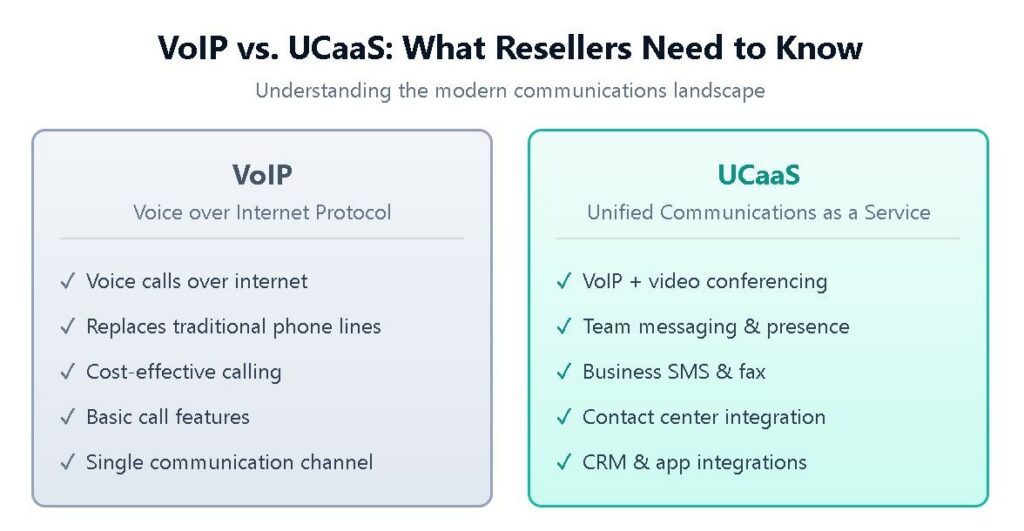
When people talk about VoIP, they’re referring to Voice over Internet Protocol, the technology that allows voice calls to travel over the internet rather than traditional phone lines. It’s a fundamental building block, but it’s rarely sold in isolation anymore.
UCaaS, or Unified Communications as a Service, bundles VoIP with video conferencing, team messaging, presence indicators, file sharing, and contact center capabilities into a single cloud-based platform. For businesses, this consolidation means fewer vendors to manage, lower total costs, and a more seamless experience for employees, whether they’re in the office, at home, or on the road.
Your customers aren’t just shopping for a phone system. They want a complete communication solution that supports their hybrid workforce and integrates with the tools they already use. Positioning yourself as a UCaaS reseller rather than a simple VoIP service provider opens doors to larger deals and stickier customer relationships.
Why White-Label Reselling Is the Fastest Path Forward
Building your own VoIP infrastructure from scratch is technically possible, but it’s rarely practical. You’d need to invest in softswitches, carrier relationships, redundant data centers, billing systems, compliance frameworks, and ongoing development resources. The capital requirements run into the millions, and the time-to-market stretches into years.
White-label reselling is the entry point. You partner with an established platform provider who handles the technology, infrastructure, and regulatory compliance. They give you a turnkey solution that you can brand as your own, complete with customer portals, billing integration, and support resources. Your customers never know there’s another company behind the scenes. They see your logo, interact with your team, and build loyalty to your brand.
This model works because it aligns incentives. The platform provider grows by helping you succeed, which means they’re motivated to deliver reliable technology, comprehensive training, and responsive support. You focus on what you do best, whether that’s sales, customer relationships, or industry-specific expertise, while leveraging enterprise-grade infrastructure you couldn’t afford to build yourself.
Why Is 2026 the Right Time to Start a VoIP Reselling Business?
Several trends make this moment particularly attractive for launching or expanding VoIP reselling operations.
Hybrid Work Has Become Permanent
According to Robert Half’s 2026 research, 88% of employers now provide some hybrid work options, and 55% of job seekers rank hybrid arrangements as their top preference. Businesses have permanently adjusted their communication strategies to support distributed teams. Companies need flexible, scalable solutions that work seamlessly across office locations, home offices, and mobile devices. Traditional on-premises phone systems can’t deliver this flexibility, which drives ongoing migration to cloud-based alternatives.
Legacy Systems Are Reaching End-of-Life
Many businesses still run aging PBX systems that are increasingly expensive to maintain and impossible to enhance. As these systems age out, decision-makers face a choice: replace with another on-premises solution or migrate to the cloud. The economics favor cloud migration, creating natural opportunities for resellers who can guide these transitions.
AI Integration Is Reshaping Expectations
Modern UCaaS platforms now include AI-powered transcription, sentiment analysis, intelligent call routing, and automated meeting summaries. Businesses evaluating communication solutions expect these capabilities as standard features rather than premium add-ons. Resellers partnering with forward-thinking providers can deliver these AI capabilities without building them internally.
Small and Mid-Sized Businesses Are Prime Targets
While enterprise deals grab headlines, the real growth opportunity lies with small and mid-sized businesses. The SMB segment is projected to exhibit the highest growth rate in the UCaaS market through 2034. These businesses want enterprise-grade features without the complexity or cost. They prefer working with local or specialized providers who understand their needs rather than navigating large national carriers. That’s exactly where independent resellers excel.
What Are the Key Benefits of Becoming a VoIP Service Provider?
Adding VoIP and UCaaS services to your portfolio delivers tangible business advantages that compound over time.
Predictable Recurring Revenue
Unlike project-based work that requires constantly finding new opportunities, communication services generate monthly recurring revenue from every customer you serve. Each successful implementation adds to your baseline, creating financial stability that makes your business more valuable and easier to manage. Top resellers achieve profit margins ranging from 50–70% on their UCaaS offerings, making this one of the most profitable service lines available.
Stronger Customer Relationships
When you become your customers’ communication provider, you’re handling a mission-critical business function. Phone systems touch every department, employee, and customer interaction. This centrality creates stickiness that project work can’t match. Customers who depend on you for daily communications are far less likely to shop around for other IT services.
Lower Switching Risk
Businesses hesitate to change communication providers because migrations involve porting phone numbers, retraining employees, and updating workflows. Once you’re established as a customer’s VoIP provider, competitive displacement becomes difficult. This protection works both ways. Customers who trust you for IT services or managed networks represent warm prospects for communication services because they already know your capabilities.
Expanded Market Reach
Adding VoIP solutions to your portfolio opens conversations with prospects who might not need your other services. A business looking for a new phone system might become a managed services customer once they experience your responsiveness. Cross-selling and upselling opportunities multiply when you can address more of a customer’s technology needs.
Minimal Capital Requirements
With white-label partnerships, you don’t need to invest in infrastructure, hire developers, or build billing systems. The per-seat pricing model means you only pay for services you’ve actually sold, eliminating inventory risk. Training and onboarding programs from quality providers get you to market within 30 days.
What Should You Look for in a White-Label VoIP Provider?
The provider you choose will impact your profitability, customer satisfaction, and long-term success. Here’s what matters most.

Technology Infrastructure and Reliability
Your reputation rides on service quality. Look for providers operating geo-redundant networks with multiple data centers and automatic failover capabilities. Ask about uptime guarantees and historical performance. The best providers operate georedundant networks with multiple data centers and automatic failover capabilities, ensuring business continuity even when issues arise.
Beyond raw uptime, evaluate the breadth of features available. Modern businesses expect video conferencing, team messaging, business SMS, virtual fax, and CRM integrations alongside core voice services. Providers offering comprehensive UCaaS platforms rather than basic VoIP give you more selling points and reduce the risk that customers outgrow your offering.
Onboarding, Training, and Ongoing Support
The transition from signing a partnership agreement to confidently selling services requires substantial education. Evaluate each provider’s onboarding program, asking specific questions about training timelines, certification requirements, and available resources. The best programs combine self-paced online learning with live training sessions and hands-on practice.
Support doesn’t end after onboarding. You’ll need responsive technical assistance when customer issues arise, sales coaching as you develop your pitch, and marketing resources to generate leads. Providers who invest heavily in partner success typically maintain dedicated account managers, extensive knowledge bases, and active partner communities where resellers share best practices.
Pricing Control and Profit Margins
True white-label arrangements give you complete control over pricing. You determine what to charge customers, how to package services, and what discounts to offer. Avoid programs that dictate end-user pricing or limit your ability to create custom bundles for specific markets.
Understand the cost structure completely before committing. Some providers charge setup fees, monthly minimums, or per-feature costs that can erode margins on smaller accounts. The most reseller-friendly programs offer transparent wholesale pricing with volume discounts as you scale, ensuring profitability improves as your customer base grows.
Compliance and Security
Communication services touch sensitive business data and must comply with various regulations depending on your customers’ industries. Healthcare clients need HIPAA compliance. Financial services have their own requirements. All customers increasingly expect robust security measures. Verify that potential providers maintain relevant certifications and can support your target markets without requiring custom configurations.
How Do Successful VoIP Resellers Differentiate Themselves?
The VoIP market includes many players. Standing out requires deliberate positioning and execution.
Target Specific Verticals
Rather than competing broadly against every provider, successful resellers often specialize in industries where they can develop deep expertise. Healthcare organizations have unique compliance requirements. Legal firms need specific call recording and billing integrations. Real estate agencies benefit from SMS capabilities and mobile-first features. Becoming the recognized expert in one or two verticals generates referrals and allows premium pricing.
Bundle Comprehensive Solutions
Customers prefer consolidated solutions over piecemeal services. Resellers who combine VoIP with contact center capabilities, SD-WAN connectivity, or managed security services create compelling packages that address multiple pain points simultaneously. This bundling increases deal sizes, improves retention, and makes competitive displacement more difficult.
Invest in Customer Success
The easiest path to growth is ensuring existing customers remain satisfied and expand their usage over time. Successful resellers implement proactive monitoring, regular business reviews, and responsive support processes that catch issues before they become problems. Happy customers provide referrals, agree to case studies, and represent your lowest-cost source of new business.
Stay Current with Technology Trends
Communication technology evolves in the blink of an eye. AI capabilities that seemed futuristic two years ago are now standard expectations. Mobile-first design has become essential as desk phones continue declining in relevance. Resellers who stay informed about emerging trends can guide customers toward modern solutions rather than reacting to competitor offerings.
Frequently Asked Questions
How much does it cost to become a VoIP reseller?
Startup costs vary by provider and program structure. Some white-label programs require upfront onboarding fees ranging from a few hundred to several thousand dollars, plus monthly minimum commitments. However, the best programs offset these costs through rebate structures tied to performance milestones. Compared to building your own infrastructure, which would require millions in capital, white-label reselling offers dramatically lower barriers to entry.
Do I need technical expertise to sell VoIP services?
Basic technical knowledge helps, but you don’t need deep telecom engineering experience. Quality white-label providers offer comprehensive training programs that cover product knowledge, provisioning procedures, and troubleshooting fundamentals. Many successful resellers focus primarily on sales and customer relationships while relying on their provider’s support team for complex technical issues.
How long does it take to become profitable?
Profitability timelines depend on your starting point. Resellers migrating existing customer bases from other platforms can achieve profitability almost immediately. Those building from scratch typically see meaningful results within six to twelve months. Industry data suggests average partners add approximately 80 endpoints within their first year, with top performers achieving higher growth rates.
Can I really brand these services as my own?
Yes, that’s the core premise of white-label programs. Your customers interact with portals bearing your logo, receive bills from your company, and contact your team for support. The underlying technology provider remains invisible throughout the customer experience. This complete branding control allows you to build equity in your own company rather than promoting someone else’s brand.
Build Your VoIP Business with the Right Partner
The opportunity to become a VoIP service provider has never been more accessible or more valuable. Businesses need modern communication solutions, and they prefer working with trusted local partners over navigating large national carriers. White-label platforms eliminate the traditional barriers to entry, allowing you to launch comprehensive UCaaS offerings within months rather than years.
Success requires choosing the right partner, someone who provides reliable technology, comprehensive training, responsive support, and the flexibility to build your business on your terms. SkySwitch offers a complete white-label UCaaS ecosystem built specifically for resellers, with everything from georedundant infrastructure to integrated billing tools and dedicated partner support. Get started with SkySwitch today to add high-margin recurring revenue to your business while helping customers modernize their communications.

Jessica is a marketing and sales strategist with deep expertise in VoIP telecommunications. As a Marketing Director, she specializes in channel marketing, account management, and product marketing within the communications industry. Jessica is passionate about helping partners grow through compelling messaging and hands-on support.