
White-Label VoIP for MSPs: Launch Without the Build

The fastest path to recurring voice revenue is plugging into a platform that already works.
- MSPs are sitting on the perfect customer base for VoIP, but most assume building a phone offering means hiring telecom engineers, securing carrier relationships, and managing E911 compliance solo.
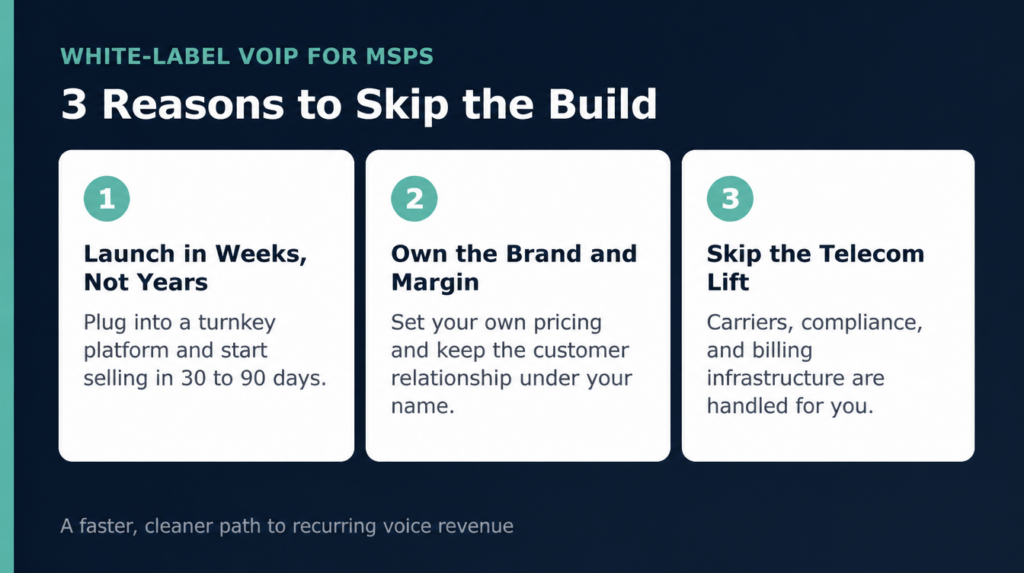
- White-label VoIP platforms hand you the infrastructure, billing automation, and compliance tooling so you can launch a branded voice service in weeks, not years.
- Margins on a private-label VoIP business typically land far above the commissions of an agent program, while keeping the customer relationship under your name.
- The right partner removes the technical burden entirely, letting you focus on selling, supporting, and scaling.
If your clients keep asking about phone systems and you keep referring them out, you’re handing recurring revenue to someone else. Time to take it back.
Your clients already trust you with their network, endpoints, security, and helpdesk tickets. So when they ask about modern business phone systems, why are you sending them to a third party? Most MSPs default to the agent or referral model because building a VoIP offering from scratch sounds expensive, technical, and risky. It can be all three, but that’s no longer the only option on the table.
The global Unified Communication as a Service (UCaaS) market is projected to grow from $78.15 billion in 2026 to $276.9 billion by 2034, exhibiting a CAGR of 17.10% during the forecast period. That’s the kind of growth curve you want exposure to, and your existing book of business is already asking for it. White-label VoIP for MSPs is your opportunity to become the partner your clients want.
Why Is White-Label VoIP for MSPs a Good Idea to Add to Your Service Portfolio?
The shift from on-premises phone systems to cloud voice has been steady for years, and your clients are noticing. They want fewer vendors, simpler bills, and one trusted advisor who handles everything from their Wi-Fi to their phone numbers. If you’re already that advisor for IT, voice is the natural next step.
The Recurring Revenue Is Hard to Ignore
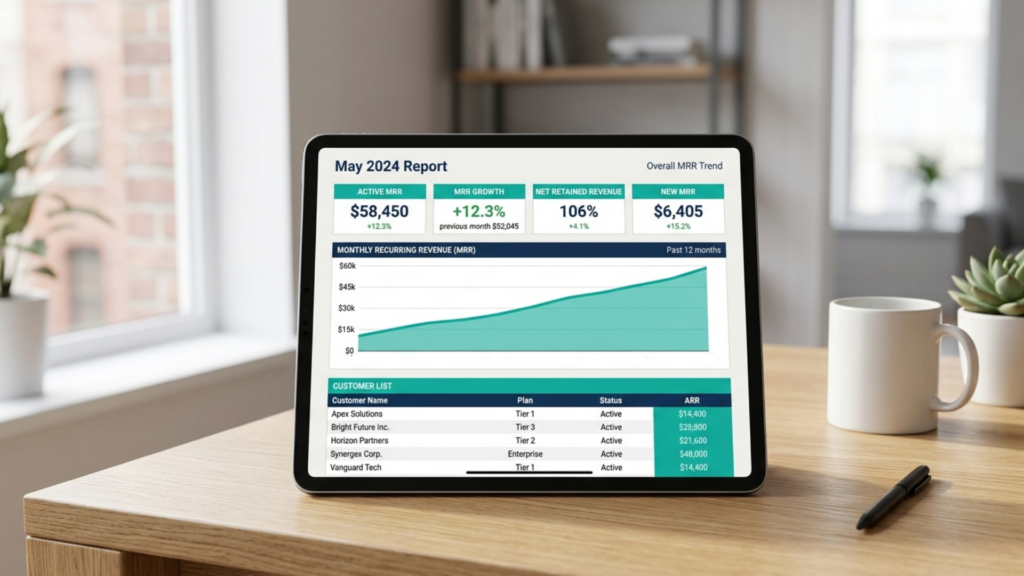
Most MSPs already understand the value of monthly recurring revenue, but voice services tend to have unusually high retention. Once a business ports its phone numbers to your platform, switching costs become real, both technically and operationally. That stickiness translates to predictable cash flow that supports valuation, hiring, and reinvestment in the rest of your business. While adding voice diversifies your revenue, it also stabilizes it.
Your Customers Already Want to Consolidate Vendors
Buyers are tired of managing five vendors for phones, internet, security, devices, and helpdesk. According to a recent industry analysis on MSP growth trends, the U.S. managed services market is projected to grow from roughly $71 billion in 2026 to nearly $120 billion by 2031, with smaller enterprises pursuing standardized, automated delivery from providers who can bundle multiple service lines. When you add VoIP for MSPs to your offering, you become the obvious consolidation choice for clients who’d rather pay one bill than five.
Margins Beat Agent Commissions Every Time
Agent programs typically pay 10–20% commissions on monthly recurring revenue, and the carrier owns the customer. In a reseller VoIP business model, you set the price, you keep the margin, and you own the relationship. White-label resellers typically see margins in the 50–70% range, depending on how they package their services.
What Does It Take to Build a VoIP Offering From Scratch?
Before we get to the easier path, it’s worth being honest about what the hard path looks like. Building a VoIP service end-to-end is doable, but it isn’t a side project. It’s a full operational pivot.
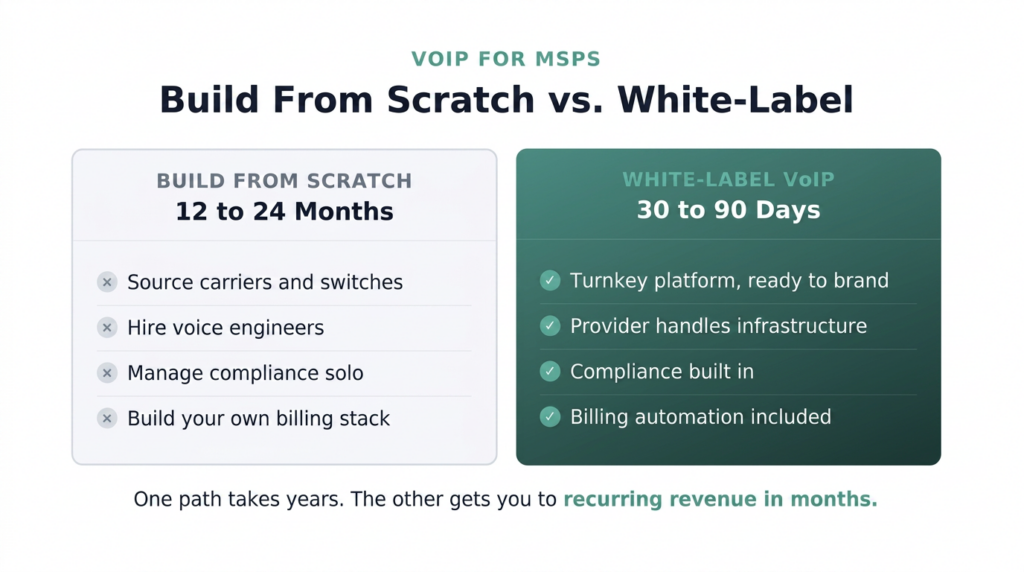
You’d need to source carrier relationships for PSTN connectivity and number inventory. You’d stand up a softswitch or PBX platform, often something like NetSapiens or a similar core system. You’d hire or contract voice engineers who actually understand SIP, RTP, codec negotiation, and the hundred small things that go wrong in voice networks. You’d also need to handle E911, STIR/SHAKEN, 10DLC registration for SMS, Kari’s Law, RAY BAUM’s Act, telecom tax calculation by jurisdiction, and the FCC reporting that comes with being an interconnected VoIP provider.
Then there’s billing. Voice billing isn’t like flat-rate managed services billing. You’re rating usage, applying taxes that vary by city and state, generating compliant invoices, and integrating that with your accounting stack. Build it yourself, and you’ve added a six-figure annual operating cost before you’ve sold a single seat. That’s the cliff most MSPs back away from, and reasonably so.
How Does White-Label VoIP for MSPs Work?
White-label VoIP for MSPs solves the build problem by letting an upstream provider operate the infrastructure while you operate the brand. Your customers see your logo on the portal, your domain in their email signatures, and your name on the invoice. Behind the scenes, the provider handles the switch, the carriers, the redundancy, and most of the compliance plumbing.
You Own the Customer, the Brand, and the Pricing
In a private-label VoIP arrangement, every customer-facing surface belongs to you. The web portal, the mobile and desktop apps, the billing platform, and the support email. Your end users never know a third party is involved. That branding control is the single biggest difference from an agent or referral model, and it’s why this approach has become the default for serious MSPs building communication practices.
The Provider Handles the Heavy Telecom Lifting
A good white-label provider gives you a turnkey backend. That means a geo-redundant voice network, number porting, fraud monitoring, billing automation, telecom tax handling, and integrations with the major CRMs and productivity suites your clients already use. If something goes wrong at the carrier or switch level, that’s the provider’s problem to solve, not yours.
You Get to Move Fast
Launch timelines for white-label VoIP usually run 30 to 90 days from contract signing to first paying customer. Compare that to the 12 to 24 months you’d need to build a comparable offering from scratch. The fastest-moving MSPs lean into structured onboarding programs, follow the provider’s playbook, and start selling to existing clients first.

What Should You Look for in a Private-Label VoIP Platform?
Not all white-label providers are built the same. Some are essentially wholesale dial-tone resellers with a thin coat of branding paint. Others are full operational platforms designed around how MSPs actually work. Here’s what separates the two:
- A truly branded experience across every touchpoint. This means your domain on the portal, your colors in the customer experience, and no surprise references to the underlying provider buried in fine print or notification emails.
- Built-in billing automation that handles the boring-but-critical stuff. Look for native quote-to-cash tooling, telecom tax calculation by jurisdiction, integrated payment processing, and the ability to bundle voice with your existing managed services on one invoice.
- A core platform built for reliability, not just features. Geo-redundant data centers with automated failover, real-time call quality monitoring, and a track record of uptime matter more than the marketing checklist of features.
- Comprehensive onboarding and ongoing support. A serious onboarding program with structured training, documentation, sales coaching, and a partner account manager will get you to revenue faster than DIY-ing a launch on top of a barebones platform.
- Compliance support. HIPAA-compliant calling, 10DLC SMS registration, STIR/SHAKEN attestation, RAY BAUM, and Kari’s Law support should all be included, not add-ons.
If a provider can’t check most of these boxes, you’re going to spend your first year building the missing pieces yourself. That’s not a partnership.
How Do You Set Margins and Pricing in a Reseller VoIP Business?
Pricing offerings in your reseller VoIP business is where a lot of MSPs leave money on the table or, less commonly, price themselves out of deals. You have full control but have to actually do the homework.
Start with your wholesale cost from the provider, then layer in a margin that accounts for your support overhead, sales costs, and the value you’re adding through bundling and service. Many MSPs land on tiered packages, often labeled something like Bronze, Silver, and Gold, that combine a per-seat voice price with usage allowances and feature tiers. This setup makes pricing easy to communicate and easy to upsell.
Bundle Voice With What You Already Sell
The winning MSPs aren’t selling voice as a standalone line item. They’re bundling it with managed network services, security, or device management so clients see one comprehensive bill and one number to call. Bundling tends to lift overall margin because it reduces price comparison shopping and makes your offering harder to unbundle later.
Don’t Forget the Hardware Margin
Desk phones, headsets, conference room devices, and ATAs are part of nearly every VoIP deployment. A good white-label partner will give you access to a curated equipment store with auto-provisioning and reseller pricing, so you can earn margin on the hardware while saving your team the manual provisioning work that used to eat hours per customer.
For a deeper comparison of how different platforms handle pricing structures and reseller economics, this wholesale VoIP providers comparison guide breaks down the trade-offs in detail.
FAQs About Launching VoIP for MSPs
Do I need telecom experience to launch a white-label VoIP offering?
No. Most MSPs entering this space come from IT, networking, or security backgrounds, not telecom. A good white-label partner provides structured training that covers the voice-specific concepts you’ll need to know, plus ongoing tier 2 and 3 support for the more technical issues. Your existing IT skills transfer well, and your relationships with SMB clients are the real asset.
How long does it take to actually launch and start generating revenue?
Most MSPs are fully onboarded and selling within 30 to 90 days of signing with a white-label provider, depending on how much time the team can commit to training. Generating meaningful revenue typically takes another three to six months as you migrate existing clients and close new ones. MSPs with a strong existing customer base often see profitability within six months.
What’s the difference between an agent program and white-label VoIP?
In an agent program, you refer business to a carrier and earn a commission, usually 10–20% of MRR. The carrier owns the customer, controls the brand, and handles billing. In a white-label or private-label VoIP model, you sell the service under your own brand at your own prices, you own the customer relationship, and you keep margins between 50% and 70%, depending on packaging.
How do I handle support for VoIP customers when I’m new to voice?
Most white-label providers offer Tier 2 and Tier 3 support that you escalate to when you can’t resolve an issue at Tier 1. Over time, your team learns the common issues through experience and the provider’s knowledge base. Some providers also offer optional branded Tier 1 support, which can be a useful bridge while your team gets up to speed.
Ready to Add VoIP Without the Build?
Launching a phone offering doesn’t have to mean hiring telecom engineers, navigating compliance alone, or rebuilding your billing stack. The path most successful MSPs take is partnering with a white-label provider who’s already done the hard work, then layering your brand, pricing, and service expertise on top. The result is a high-margin recurring revenue line that fits your business instead of forcing you to become a telco.
SkySwitch gives MSPs a turnkey UCaaS and VoIP platform with onboarding, billing automation, and ongoing support to launch fast and scale profitably. To see how the platform fits your business, get started with a conversation, and we’ll walk through what your reseller practice could look like.

Jessica is a marketing and sales strategist with deep expertise in VoIP telecommunications. As a Marketing Director, she specializes in channel marketing, account management, and product marketing within the communications industry. Jessica is passionate about helping partners grow through compelling messaging and hands-on support.