
The Rise of AI VoIP Features in White-Label UCaaS Platforms

AI VoIP features are becoming the competitive differentiator that separates successful resellers from those struggling to retain customers.
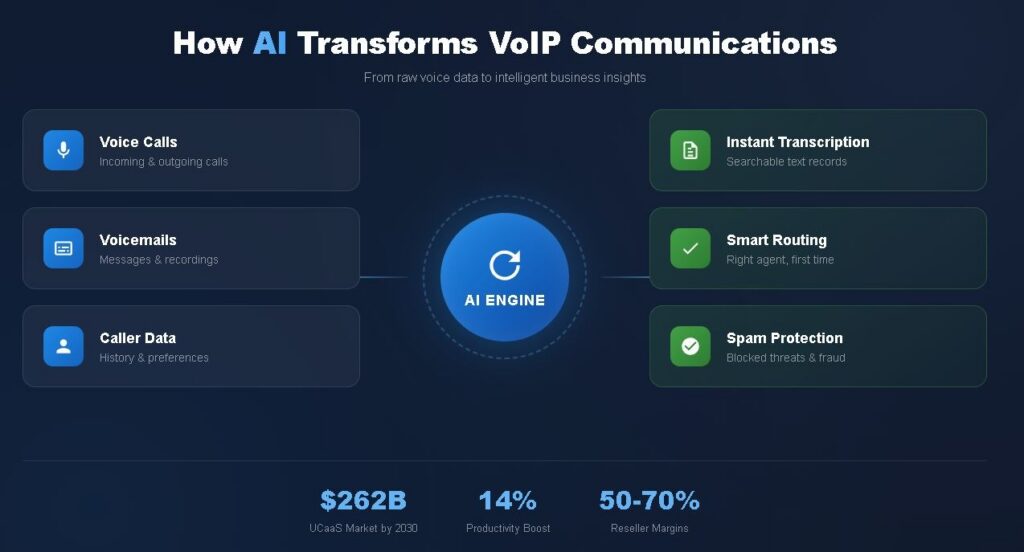
- The global UCaaS market is projected to reach $262 billion by 2030, with AI-powered capabilities driving much of this growth.
- Real-time transcription, intelligent call routing, and automated spam detection are transforming how businesses communicate.
- White-label platforms with built-in AI functionality enable resellers to offer enterprise-grade technology under their own brand.
- Resellers who embrace voice automation now position themselves for sustainable recurring revenue as SMBs demand smarter communication tools.
If you’re building a UCaaS practice, AI integration is the foundation of a differentiated offering.
The global UCaaS market is expected to grow at a CAGR of nearly 20%, reaching over $262 billion by 2030. What’s driving this explosive growth? Artificial intelligence integration across voice, video, and messaging platforms has become a must-have capability.
For MSPs, system integrators, and VARs building communication practices, AI VoIP features present both an opportunity and a challenge. Customers increasingly expect intelligent call handling, automated transcription, and predictive analytics as standard offerings. Meeting these expectations requires partnering with platforms that bake AI capabilities into their infrastructure rather than bolting them on as afterthoughts.
The resellers capturing market share understand that voice automation transforms basic phone service into a strategic business tool. They’re selling outcomes like reduced hold times, better customer satisfaction scores, and actionable call insights rather than competing on price per seat.
What Are AI VoIP Features in UCaaS Platforms?
AI VoIP features integrate artificial intelligence and machine learning directly into cloud-based voice communications systems. These capabilities extend beyond basic internet calling to include speech recognition, natural language processing, predictive analytics, and automated decision-making, enhancing every aspect of business communication.
Traditional VoIP systems handle call routing, voicemail, and basic PBX functions. AI-enhanced platforms add an intelligence layer that learns from call patterns, understands spoken language in real time, and automates tasks that previously required human intervention. The technology transforms passive phone systems into active business tools that improve with every interaction.
The Core Technology Behind AI Voice Communications
Modern AI UCaaS platforms leverage several interconnected technologies to deliver intelligent features. Speech recognition engines convert spoken words to text with increasing accuracy across different accents and languages. Natural language processing algorithms interpret meaning and intent from transcribed conversations. Machine learning models analyze historical data to predict outcomes and optimize call handling.
These systems operate in real time, processing audio streams as conversations happen rather than analyzing recordings after the fact. This immediacy enables features like live sentiment detection, instant transcription, and dynamic call routing that responds to caller needs as they evolve during a conversation.
The processing power required for these capabilities lives in cloud infrastructure, meaning resellers don’t need specialized hardware to deliver AI VoIP features to their customers. White-label platforms handle the complex AI operations behind the scenes while presenting a seamless, branded experience to end users.
How Do AI Voice Features Transform the Reseller Opportunity?
AI-enhanced voice services change how resellers create value for customers. Traditional VoIP margins face pressure as the technology commoditizes, but AI features create differentiation that supports premium pricing and deeper customer relationships.
Businesses investing in AI UCaaS solutions report measurable improvements in operational efficiency. Customer support agents using generative AI assistants boosted productivity by 14% on average. These concrete outcomes give resellers compelling stories to tell prospects beyond feature lists and price comparisons.
Real-Time Voice Transcription and Summarization
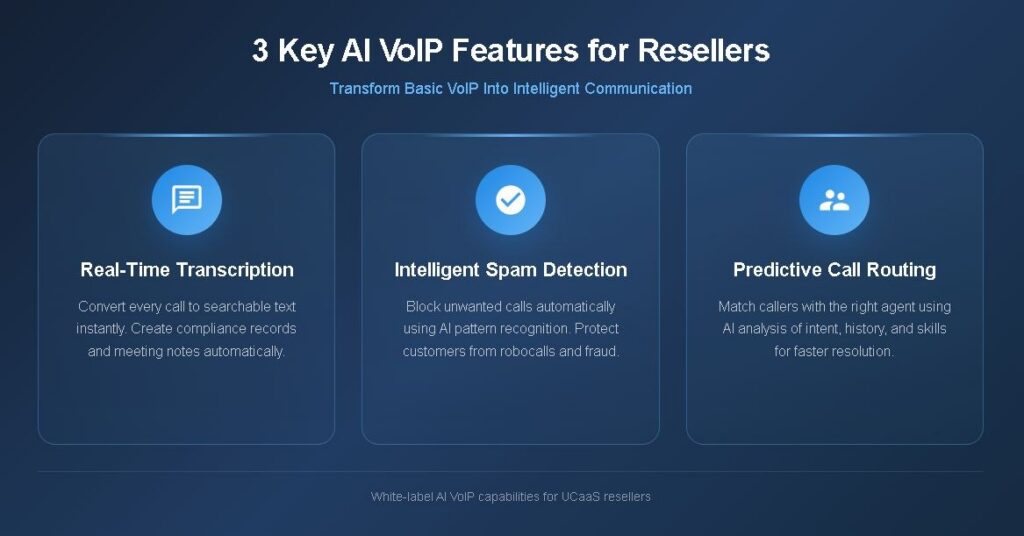
Automated transcription has become a critical business tool. AI-powered systems convert conversations to text as they happen, creating searchable records that enhance documentation, compliance, and knowledge management. The technology adapts to different speakers, accents, and industry terminology to deliver increasingly accurate results.
Post-call summarization takes this capability further by extracting key points, action items, and decisions from lengthy conversations. Instead of reviewing hour-long call recordings, managers can scan AI-generated summaries that highlight what matters. For sales teams, this means better follow-up. For support organizations, it means consistent documentation without manual note-taking.
The compliance implications are significant for regulated industries. Healthcare providers, financial services firms, and legal practices all benefit from automated, accurate records of voice communications. Resellers serving these verticals can position voice automation capabilities as solutions to regulatory requirements rather than optional upgrades.
Intelligent Spam Detection and Call Scoring
Spam and robocalls are more than annoyances for businesses. They consume employee time, frustrate customers, and create security vulnerabilities. AI-powered spam detection analyzes call patterns, caller behavior, and voice characteristics to identify and block unwanted calls before they disrupt operations.
Advanced platforms assign risk scores to incoming calls based on multiple factors. Known spam numbers get blocked automatically. Suspicious patterns trigger warnings. Legitimate calls route through normally, while potential threats face additional verification. This protection operates continuously in the background, learning from new spam tactics as they emerge.
For resellers, spam protection capabilities address a universal pain point that every business experiences. The feature sells itself during demonstrations when prospects see how many unwanted calls the system would block. It’s also a retention tool since customers who experience cleaner call quality rarely want to switch to platforms with less robust protection.

Predictive Call Routing and Skills-Based Distribution
Traditional call routing follows static rules. Calls go to specific extensions, departments, or the next available agent based on predetermined logic. AI-enhanced routing introduces dynamic decision-making that considers caller intent, agent capabilities, historical outcomes, and real-time conditions to optimize every connection.
Predictive routing systems analyze past interactions to anticipate what callers need before they explain their situation. A customer who called about billing issues last month routes directly to the billing department. A prospect who downloaded product information routes to the sales team member with the best conversion rate for similar leads. The system learns which pairings produce positive outcomes and adjusts accordingly.
Skills-based distribution matches callers with agents who have relevant expertise and availability. The AI considers factors like language preferences, technical knowledge levels, and personality compatibility to create connections more likely to resolve issues quickly. For businesses running contact centers, this intelligence translates directly to better metrics and happier customers.
What Are the Key Voice Automation Capabilities Resellers Should Know?
Understanding the full spectrum of AI VoIP features helps resellers identify opportunities within their customer base and articulate value propositions that resonate with different buyer personas. Here are the capabilities generating the most customer interest:
- Voicemail transcription and smart prioritization: AI converts voicemails to text and flags urgent messages based on content analysis, enabling faster response to time-sensitive communications.
- Real-time language translation: Multilingual support during live calls breaks down communication barriers for businesses with global customers or diverse workforces.
- Sentiment analysis during conversations: Systems detect frustration, satisfaction, or confusion in caller voices, alerting supervisors to escalation needs or coaching opportunities.
- Automated meeting notes and action items: AI extracts decisions, commitments, and follow-up tasks from conference calls, reducing administrative overhead.
- Noise cancellation and audio enhancement: Machine learning filters background sounds and improves voice clarity, ensuring professional call quality regardless of the caller’s environment.
These features create measurable value that customers recognize immediately. During product demonstrations, showing real-time transcription or spam blocking in action converts skeptical prospects into believers faster than discussing technical specifications.
Why Does White-Label AI VoIP Matter for Your Business?
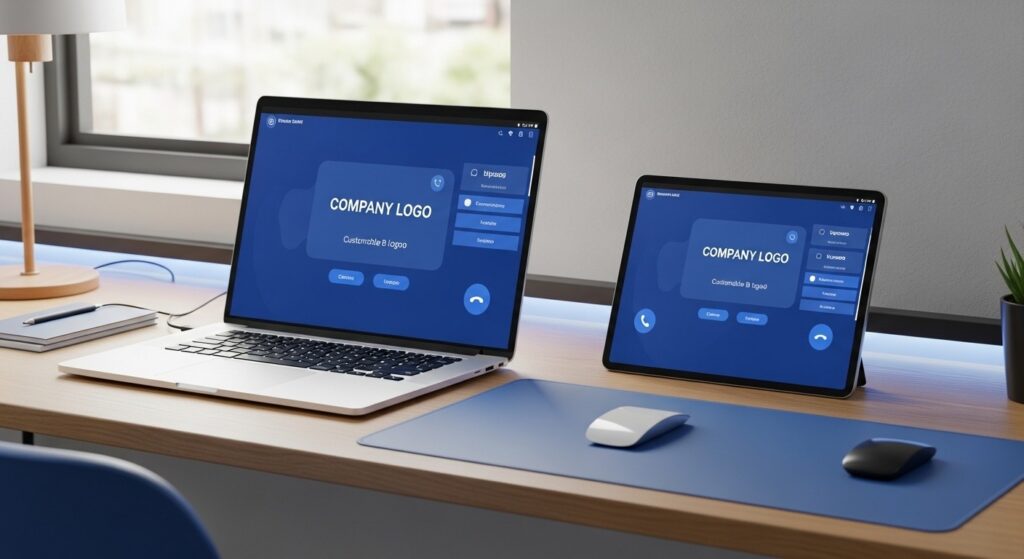
The decision between reselling branded services and building under your own identity has lasting implications for business growth. White-label AI VoIP platforms allow resellers to capture the benefits of advanced technology while maintaining the customer relationships and brand equity they work to build.
Margins tell part of the story. White-label arrangements typically offer profit margins ranging from 50–70% compared to the 10–20% common in agent or referral models. This margin advantage compounds over time as resellers add customers without proportional increases in support costs since the platform provider handles technical infrastructure.
Brand ownership matters equally for long-term positioning. When customers associate quality communications with your brand, they’re less likely to comparison shop. They call you when they need additional services. They refer colleagues. This loyalty becomes increasingly valuable as competitors enter your market.
Differentiation Through Technology Access
Partnering with platforms that prioritize AI development gives resellers access to innovation they couldn’t afford to build independently. The research and engineering required to create accurate speech recognition, effective spam detection, and intelligent routing are investments measured in millions of dollars. White-label relationships democratize this technology, allowing smaller resellers to compete with much larger providers.
The alternative approach of building basic VoIP services and adding AI later creates technical debt and integration challenges. Platforms designed with AI as a core component deliver more seamless experiences and more consistent results than those retrofitting intelligence into legacy architectures.
How Do You Choose a Platform That Delivers AI UCaaS Innovation?
Evaluating white-label AI VoIP providers requires looking beyond feature checklists to assess factors that determine long-term success. The best platforms combine current capabilities with roadmaps that anticipate where voice technology is heading.
Reliability forms the foundation. AI features lose value if the underlying voice platform experiences quality issues or outages. Look for providers operating geo-redundant networks with demonstrated uptime performance. Ask about their infrastructure investments and how they handle peak demand periods.
Integration depth determines how well AI features work within customer environments. Platforms offering extensive API capabilities allow resellers to customize solutions for specific industries or use cases. CRM integrations, for example, enable AI insights to flow automatically into customer records, multiplying the value of voice intelligence.
Support and Enablement for Reseller Success
The support infrastructure surrounding white-label platforms determines how quickly new partners become productive and how effectively they serve customers with complex needs.
Comprehensive onboarding programs accelerate time-to-revenue by teaching resellers not only how the platform works but also how to sell and support it effectively. Ongoing training keeps partners current as features evolve. Technical support availability matters for both the reseller and their end customers since someone needs to answer the phone when issues arise.
Marketing resources help resellers communicate AI capabilities to prospects who may not understand the technology. Look for partners providing brandable materials, sales playbooks, and demonstration environments that showcase intelligent contact center solutions and other advanced features.
Frequently Asked Questions
What types of businesses benefit most from AI VoIP capabilities? Any business handling significant call volume sees immediate benefits from AI VoIP features. Sales organizations gain from call transcription and analytics that improve coaching. Customer service teams benefit from intelligent routing and sentiment detection. Healthcare practices, legal firms, and financial services companies value automated compliance documentation and secure communication features.
How do AI VoIP features affect call quality and reliability? Modern AI processing occurs in cloud infrastructure with minimal impact on call quality. The same systems that handle AI features also include quality monitoring and optimization, often improving voice clarity through noise cancellation and adaptive audio processing. Reliability depends primarily on the provider’s network infrastructure rather than AI features specifically.
What should resellers know about AI feature pricing? Pricing models vary across providers. Some include AI capabilities in base seat pricing, while others charge for premium features separately. Understanding the pricing structure helps resellers build competitive packages while maintaining healthy margins. Look for transparent pricing without hidden fees for features customers expect as standard.
How quickly is AI technology in UCaaS evolving? AI capabilities in voice communications advance rapidly, with major improvements arriving quarterly rather than annually. Features like real-time translation and advanced sentiment analysis that seemed futuristic two years ago are now production-ready. Partnering with providers committed to ongoing AI investment ensures access to new capabilities as they emerge.
Build Your AI-Powered UCaaS Practice Today
Businesses recognize that intelligent communication tools improve operations, enhance customer experiences, and provide competitive advantages. Resellers who can deliver these outcomes under their own brand position themselves for sustained growth in a market projected to expand over the coming years.
SkySwitch provides the white-label UCaaS platform that powers successful reseller businesses with AI-enhanced communications, comprehensive support, and margins that make sense. Get started with SkySwitch to discover how our platform can help you deliver the intelligent communication solutions your customers are asking for.

Jessica is a marketing and sales strategist with deep expertise in VoIP telecommunications. As a Marketing Director, she specializes in channel marketing, account management, and product marketing within the communications industry. Jessica is passionate about helping partners grow through compelling messaging and hands-on support.